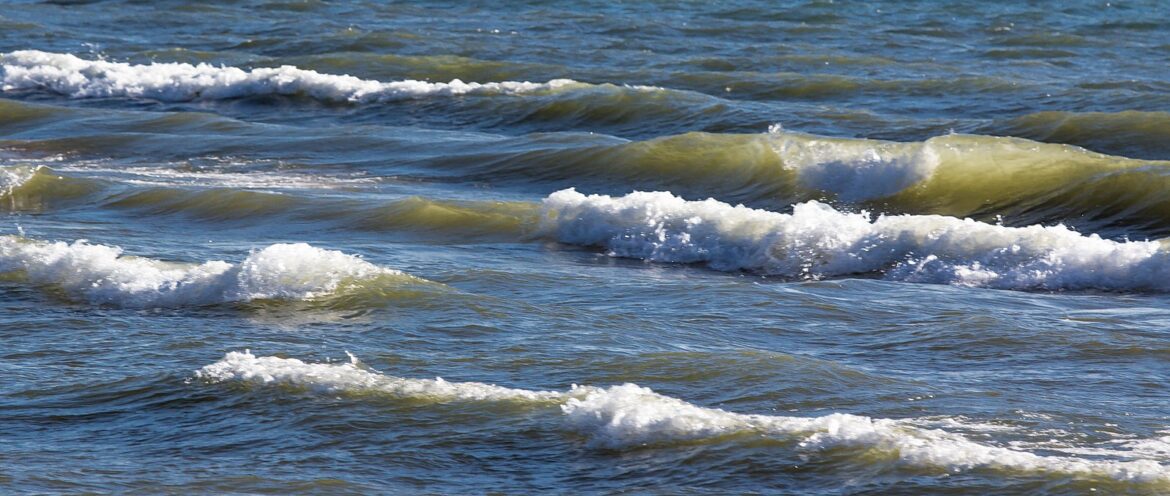
Paddle boarders cross Platte Lake, Michigan, where a decades-long campaign reduced algal blooms caused by runoff from a fish hatchery. Image: J. Carl Ganter/ Circle of Blue

Great Lakes beach closings are no protection from harmful pollutants

By Amalia Medina

A green flag flying on a Great Lakes beach does not necessarily mean it’s safe to swim. Checking beach monitoring websites like BeachGuard is not a surefire solution either. These two findings are central to a public health research project, the Great Lakes Microbial Water Quality Assessment, that set out to measure microbial and chemical threats in Great Lakes waters, and how to reduce the number of illnesses they cause each year. A report from the project, sponsored by the International Joint Commission said decades-old testing methods are inadequate and “advances in newer methods are critically needed.” The commission is bi-national agency that advises the U.S. and Canada on managing water along the border. The need for such research is considered urgent.

Deliberate sinking on Lake Ontario nets conviction

By Eric Freedman

A Rochester, N.Y., man who deliberately abandoned and sunk his 25-foot Bayliner in Lake Ontario must pay $15,442 restitution to cover the cost of unnecessary search-and-rescue operations. Vyacheslav Migitskiy admitted lying to federal investigators about his ownership of the boat, according to court documents. The U.S. Attorney’s Office said Migitskiy “intentionally sunk the vessel without reporting his actions” on Aug. 25, 2022. The next day, civilians spotted the partially submerged boat, triggering an immediate search-and-rescue operation by the Coast Guard, New York State Police and other agencies.

The tale of a haunted lighthouse

The smell of cigar smoke lingers as visitors walk through the dark living quarters of Gulliver’s Seul Choix Point Lighthouse.

“There are so many public ghost towns,” Tedsen said. “But to me, paranormal is very important — it begs the question ‘is there life after death?’”
Shocking news for Michigan fish

Walleye and pike surveys start in early spring, followed by muskie surveys. In May, the DNR starts surveying general fish communities like panfish and bass, and from July to September it surveys streams.