By Samantha Ku
Skin and liver tumors in fish may provide clues to ecosystem health in the Great Lakes region, according to a recent study in the journal Ecotoxicology.
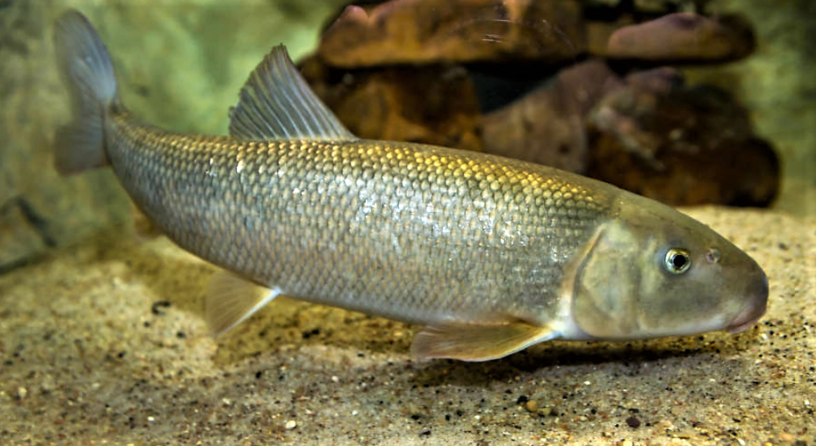
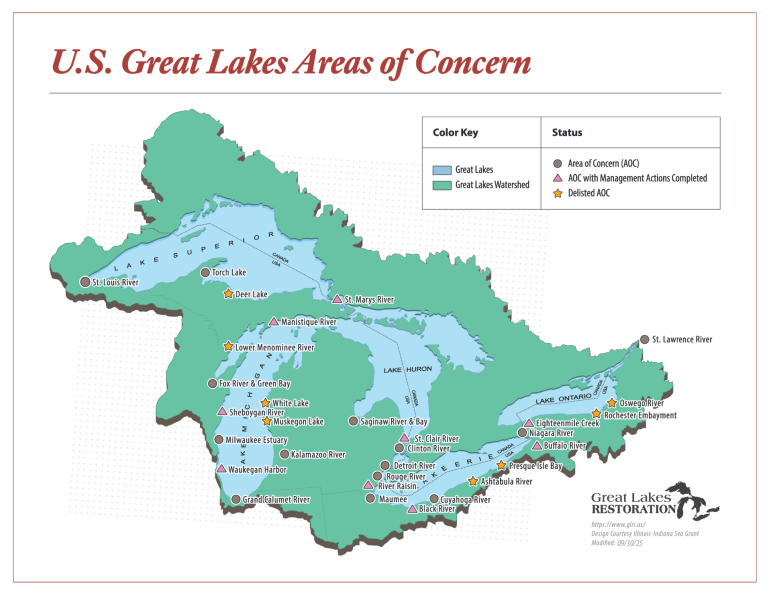
Researchers from the U.S. Geological Survey’s Eastern Ecological Science Center evaluated an indicator species, the white sucker (Catostomus commersonii), in the Sheboygan River and the Lower Green Bay/Fox River located within the Lake Michigan watershed in Wisconsin.
According to the study, the environment of the region has been impacted by human activities. Areas of Concern (AOCs) are geographic zones where local human activities have damaged ecosystem health and beneficial uses of the areas.
The two AOCs in the study, the Sheboygan River and the Lower Green Bay/Fox River, both include Beneficial Use Impairments (BUIs). They are changes in the chemical, physical or biological integrity of the Great Lakes system sufficient to cause significant environmental degradation, according to the U.S. Environmental Protection Agency.
Specific impairments include “fish tumors or other deformities,” “degradation of fish and wildlife populations” and “restrictions on fish and wildlife consumption,” said the EPA.
The study shows that abnormal levels of fish tumors persist in the Sheboygan River and the Lower Green Bay/Fox River AOCs.
The EPA attributes fish tumors and deformities to three primary causes: genetics, viral infections and chemical contamination.
EPA press officer David Shark said the Great Lakes National Program Office prioritizes water quality and sediment testing as a core diagnostic tool to identify pollutants and their sources, and to determine whether these sources are historical or ongoing.
Shark said that water quality and sediment testing is tailored to specific sites, projects or assessments of impairments, which includes setting sampling frequencies.
Vicki Blazer, a fisheries research biologist with the Geological Survey and an author of the study, said water quality analyses provide only a measure of the concentration of the relatively few potentially detectable chemicals in time and place.
As sampling often occurs monthly or less, infrequent testing can miss peak chemical concentrations, Blazer said.
While chemical sampling offers a snapshot of water conditions, it often misses the impact on the ecosystem.
Water quality analyses “don’t indicate what might be in the sediment or biomagnified in the food web,” Blazer said. “Tumors and other biomarkers are important because they integrate over time and may be responses to chemicals not even being routinely measured.”
White suckers were used as the environmental sentinel species for the study due to their widespread distribution.
This species tolerates a wide range of water conditions, from pristine to polluted, and temperatures both cold and warm.
“They are abundant, long-lived and reflect localized environmental conditions. There is also a great deal of historic data to compare to current findings and they are known to be sensitive to carcinogens at these sites,” said Blazer.
Blazer said that other species such as brown bullhead “may be required to better understand emerging contaminant issues” when AOCs are restored by removing or remediating carcinogenic contaminants like PAHs (polyaromatic hydrocarbons).
According to Blazer, another comparative study on the health status of brown bullhead or white sucker, and smallmouth or largemouth bass was conducted in other AOCs within the Great Lakes region.
That comparative study showed that although brown bullhead or white sucker exhibit similar responses, different species exhibit varying responses to specific stressors due to differences in habitat preferences, food habitats and physiological factors.
“It is important to use the right (sensitive) species for the issue being addressed,” said Blazer.
In 2021, researchers collected and weighed white suckers and examined them for external or internal abnormalities.
Researchers found fish with white spots, slimy lesions and red worms on their fins. They also discovered white cysts on their livers and within the abdomen.
The study said that the white spots and lesions are often early signs of skin disease or early-stage cancer.
It found skin tumors in 15.5% of the white suckers tested in the Green Bay AOC and 21.5% of fish sampled from the Sheboygan River AOC.
Liver tumors were present in 7.0% of fish from the Green Bay AOC and 6.0% of fish from the Sheboygan River AOC.
“The skin tumors and other external abnormalities are things that people see when they are fishing or recreating on the water and, hence, are the most likely to raise concerns,” said Blazer.
The prevalence of fish tumors in these areas raises concerns about how detrimental environmental factors may affect humans.
According to Blazer, public concerns involve potential drinking water and food safety issues.
While most people “may not have the constant exposure to these same chemicals” the way fish do in their habitat, humans may still be affected because “chemicals are likely to accumulate” in the fish we eat and the water we drink, she said.
According to Green Bay Water, the water utility for the city of Green Bay, the water supply does not come directly from the Fox River, but rather from Lake Michigan.
“With respect to protecting the public, it is important to first highlight that Lake Michigan is a safe source of drinking water,” Shark said, “The risk of physical exposure to contamination is mitigated as there are no public beaches open for swimming within these AOCs.”
As for fish, Blazer said “many of the chemicals associated with liver tumors do not accumulate in the muscle of the parts eaten by people. Mercury is different in that it does accumulate in muscle, although it has not been associated with tumors in fish.”
Both AOCs in the study have fish consumption advisories related to a common legacy contaminant, polychlorinated biphenyls (PCBs), according to Shark.
Compared to data collected in a separate study in 2012, the 2021 data indicates a decline in tumor prevalence at the Sheboygan River AOC. Occurrences of skin tumors have decreased from 32.6% to 21.5%, while liver tumor prevalence also declined from 8.3% to 6%.
The study noted the 2013 completion of habitat restoration and sediment remediation in the Sheboygan River AOC to validate the effectiveness of restoration efforts. Also, the EPA reported that approximately 400,000 cubic yards of contaminated material were remediated.
Blazer said that remediating toxic sediments reduces the risk of fish exposed to toxic chemicals in the sediments, but young fish may be exposed to chemicals that are suspended again during the remediation process.
“An early study showed an increase in tumors immediately after sediment remediation which was then followed by a decline. Hence, it can take a number of years to see the benefits,” said Blazer.
To minimize that risk, Shark said best management practices are applied during construction.
According to Shark, such practices include using specialized equipment like environmental clamshell buckets, reducing dredging rates and timing work to avoid fish spawning seasons.
“Risk is further mitigated during active sediment remediation through physical barriers and signage to ensure public safety around heavy equipment and contaminated dredge material,” said Shark.