By Eric Freedman
Flashing light on warning signs near curves can slow drivers and reduce the odds of a crash during winter weather conditions, says a new study by Michigan State University engineers.
Great Lakes Echo (https://greatlakesecho.org/category/transportation/)
By Eric Freedman
Flashing light on warning signs near curves can slow drivers and reduce the odds of a crash during winter weather conditions, says a new study by Michigan State University engineers.
By Emilio Perez Ibarguen
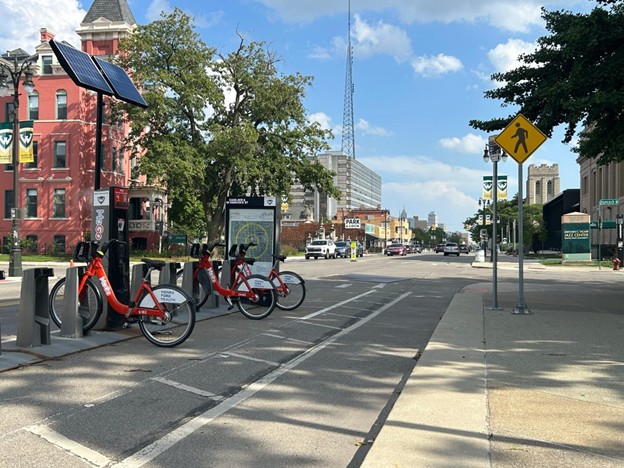
The popularity of groups like Wednesday Night Ride, Black Girls Do Bike and Soul Roll is an indicator that Detroit, long known for its ties to the auto industry, is making strides in becoming a cycling destination. However, Detroit streets remain unsafe for cyclists and pedestrians compared to other cities.
By Clara Lincolnhol
On a cool and cloudy summer day, Michigan high school students recently drove the car they’d been engineering for months around the block and parked it in front of the state Capitol. The three wheeled, sharply angled, gray, white and black camo-print car seats two people and is powered by solar-charged batteries.
By Emilio Perez Ibarguen
A new MSU study found that a community’s walkability – particularly the density of pedestrian crossings and public transit stops – influences residents’ health outcomes such as blood pressure, cholesterol and depression. Hamtamck ranks as Michigan’s most walkable city.
By Finn Mills
A Utica representative and a Rochester Hills senator want to authorize new funding for noise abatement projects along state highways. MDOT is studying the legislation and says Michigan has suspended construction of noise abatement measures due to a lack of funding since 2007.
By Victoria Witke A proposal would impose a 50-cent per delivery “retail delivery tax” to raise about $275 million a year to fix local streets. We hear from the Michigan Municipal League, which is floating the idea, and the Michigan Retailers Association and Small Business Association of Michigan which call it a no-go. An Ann Arbor legislator on the subcommittee that handles transportation funding says the money is badly needed.
By Anna Rossow
Capital News Service
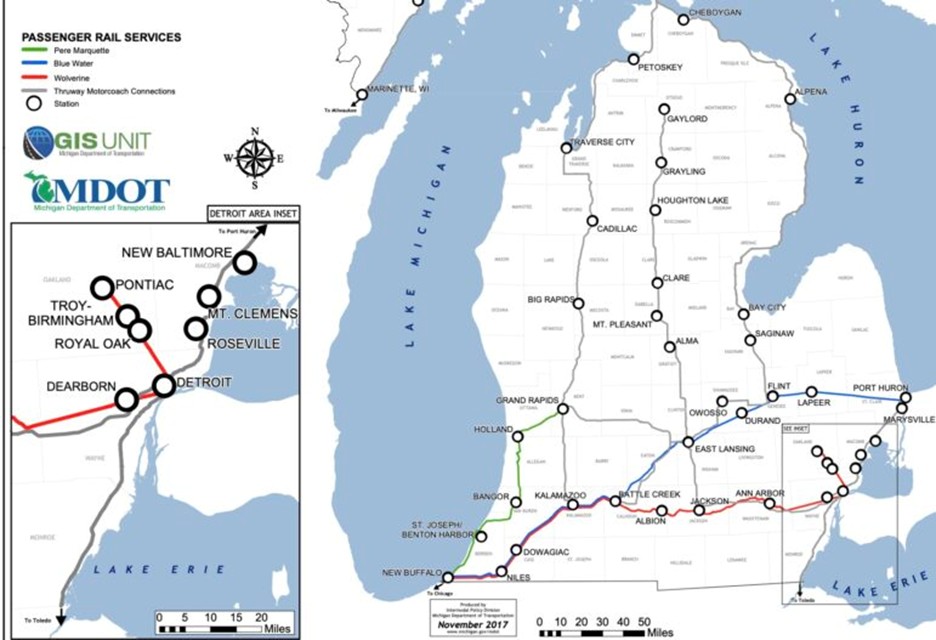
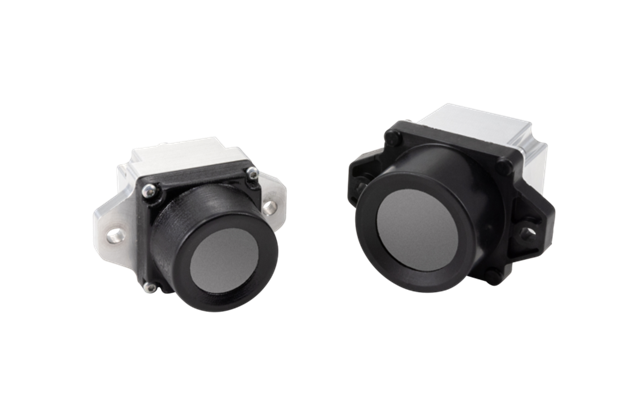
Federal grant money will help Michigan’s Department of Transportation implement increased safety measures for public transit drivers and pedestrians. MDOT will receive over $500,000 in funding to install thermal imaging cameras on public transit vehicles to help prevent collisions with people and animals in a variety of weather and light conditions. According to MDOT, the cameras will be installed on up to 60 vehicles at four rural and urban transit agencies: the Blue Water Transit Area in Port Huron, the city of Alma, the Community Action Agency of South Central Michigan based in Battle Creek and the Regional Transit Authority of Southeast Michigan. The state’s application for the technology started when Janet Geissler, a mobility specialist at the department, saw a news release on such cameras being used on cars to detect pedestrians, cyclists and animals
She said it is a good technology that is applicable to transit vehicles. She said, “Collisions between transit vehicles and people are a really serious issue.”
The cameras will be mounted on various-sized vehicles – large and small buses, vans and motor coaches – she said.
Geissler said visible light cameras are being used to alert drivers of obstacles but don’t work as well in poor lighting conditions.
“The thermal imaging cameras will detect that obstacle, the person, whether it’s nighttime, whether it’s a snowstorm, whether it’s foggy or whether there’s sun glare,” she said.
By Elinor Epperson
Capital News Service
Michigan is part of an effort to build hydrogen infrastructure in the Midwest.
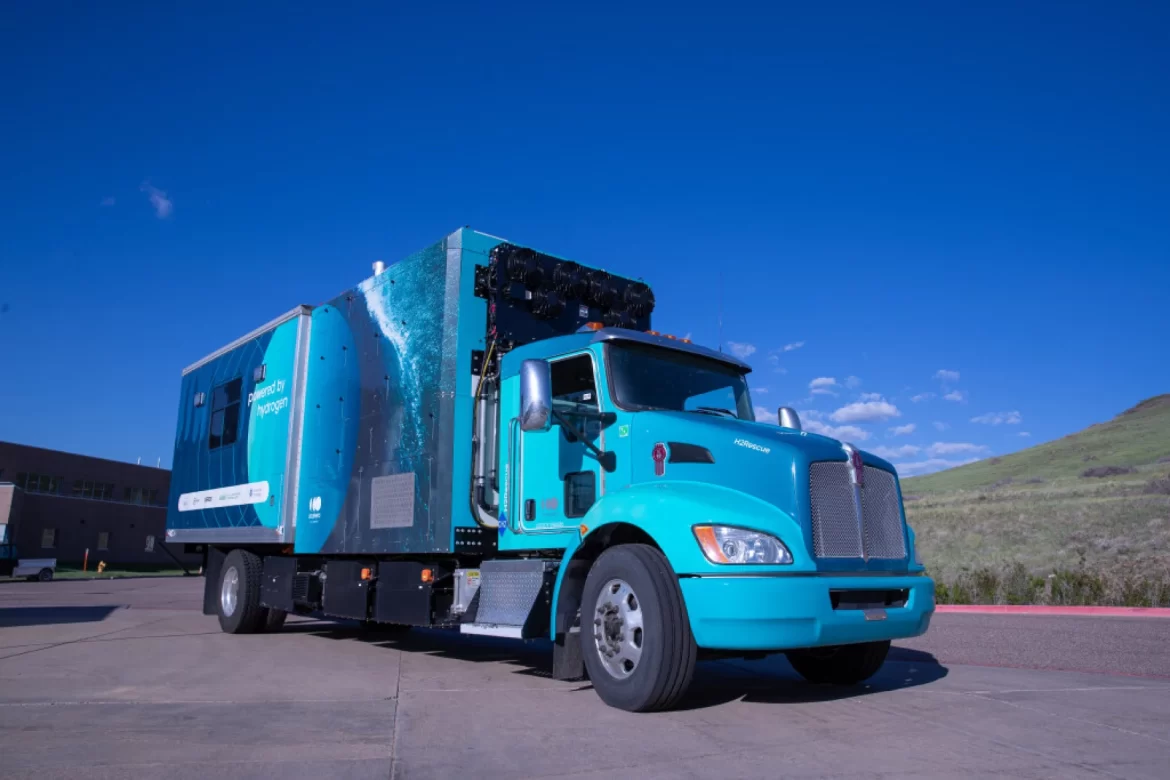
The Midwest Alliance for Clean Hydrogen (MachH2) has received $22 million from the U.S. Department of Energy to plan several projects, three of which are in Michigan. The alliance, backed by the Michigan Infrastructure Office, wants to expand the Flint Mass Transportation Authority’s fleet of hydrogen fuel buses.
There are plans to build a hydrogen production facility in Ypsilanti, in partnership with the American Center for Mobility. And the other proposed project would be a hydrogen fuel truck stop in Detroit. Hydrogen is a clean energy alternative to electrifying heavy-duty trucks, according to the alliance. Electrifying big trucks, especially for long-haul travel, is challenging with current technology because of the size, weight, and charge time of electric batteries.
By Elinor Epperson
Capital News Service
Three miles of westbound I-94 in Wayne and Washtenaw counties are already set up for connected and automated vehicles. Now the Department of Transportation wants public feedback on the proposed project, which would include almost 40 miles of I-94 if completed.
It’s proposed to eventually span about 39 miles between Ann Arbor and Detroit. The lane would be reserved for connected and automated vehicles, or CAVs for short. Connected vehicles aren’t quite driving themselves yet, but they’re equipped to talk to other vehicles. The department is assessing the project’s impact on the environment and communities around it.
By Donté Smith
As the crisp autumn air settles over Michigan, the gentle chug of steam engines echoes through Coldwater. The Little River Railroad, a historic steam railway, invites passengers to step back in time for a ride filled with charm and nostalgia. It’s one of 55 steam locomotives in the state, 15 of them still operational, according to Steam Locomotive Information. Among their other locations are Owosso, Benton Harbor, Buckley and Monroe, Dearborn, Lake Linden and Skandia. Heather Kaiser, a stoker for the Little River Railroad, shared the story of the locomotives that power these rides.
By Donté Smith
Capital News Service
Detroit’s streets are becoming a testing ground for future transportation, with automated shuttles like Accessibili-D and Connect AV offering mobility solutions. These shuttles, which started operating this year, help residents, particularly those with limited transportation, access essential destinations such as doctors’ offices and grocery stores. The Connect AV shuttle provides fully electric, scheduled autonomous transportation along a 10.8-mile route connecting Corktown, downtown Detroit and the East Jefferson Riverfront. Operating on weekdays with 10-15 minute intervals during peak hours, the service is free. In comparison, Accessibili-D is tailored for older adults and people with disabilities, offering free on-demand rides to vital locations such as medical facilities.