Land
New York winning the battle against giant hogweed
|
Giant hogweed, a plant that grows up to 14 feet tall and can burn and scar people, is on its way out in the state of New York.
Great Lakes Echo (https://greatlakesecho.org/prominence/homepage-featured/page/103/)
If you are using the Newspaper or Carousel optional homepage layout, add this label to posts to display them in the featured area on the homepage.
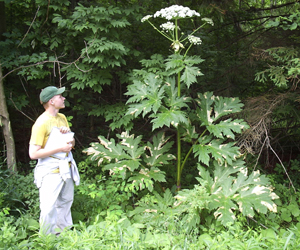
Giant hogweed, a plant that grows up to 14 feet tall and can burn and scar people, is on its way out in the state of New York.
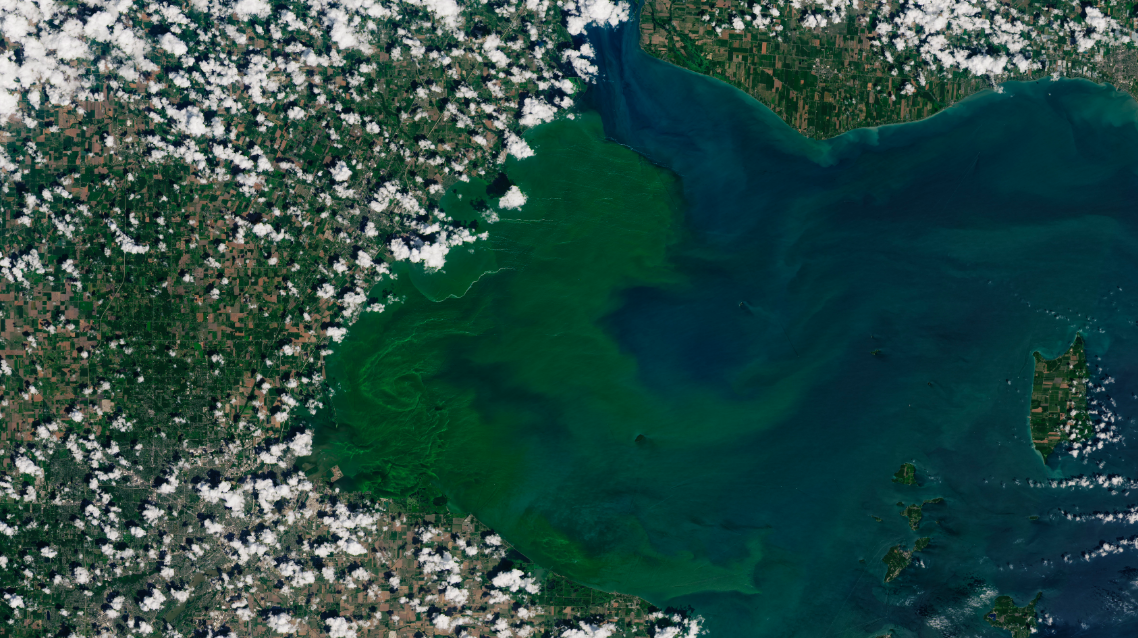
A new idea to manage the spread of non-native mussels: kill them with another Great Lakes headache, the algae that sometimes blooms too much and threatens water quality.

by Weiting Du
We like fish. And we are like fish. Two Michigan State University scientists recently displayed that similarity through art. Ingo Braasch and Julia Ganz, researchers at the university’s Department of Integrative Biology, compiled videos and photos taken during their research into artwork named “Life in Technicolor: The Art of Fish Development and Evolution.” They showed it at a recent MSU science-art exhibition. The art is a byproduct of differentiating types of cells to better study them.

Researchers found that fish can hear human-created, noises and that their ears are harmed by them.

A new study in the Journal of Great Lakes Research found that warming waters may be making it harder to get rid of sea lampreys.

A new study points to the importance of how birds use their own odors to communicate.

Prescribed burns do more than prevent wildfires. The Michigan DNR says they also “help regenerate forests, control invasive species, create wildlife habitat and promote healthy forests.”

Two men in Manistee County recently shot what they said they believed to be a goose. Their mistake may cost them $5,000 in fines and up to a year in prison.

Michigan researchers recently created a series of steps to show people how to rid Great Lakes islands of plants and animals that invade their ecosystems.

Michigan’s 3.9 million acres of state forests could be recruited for a fight to limit climate change by storing carbon emissions.