Researchers found mercury and PCB contaminants in every fish they sampled across the country, according to the Environmental Protection Agency’s first national lakes assessment that used consistent criteria.
Fish in about half of all lakes had dangerous mercury levels. And 17 percent of lakes had fish whose flesh contained health-threatening concentrations of PCBs.
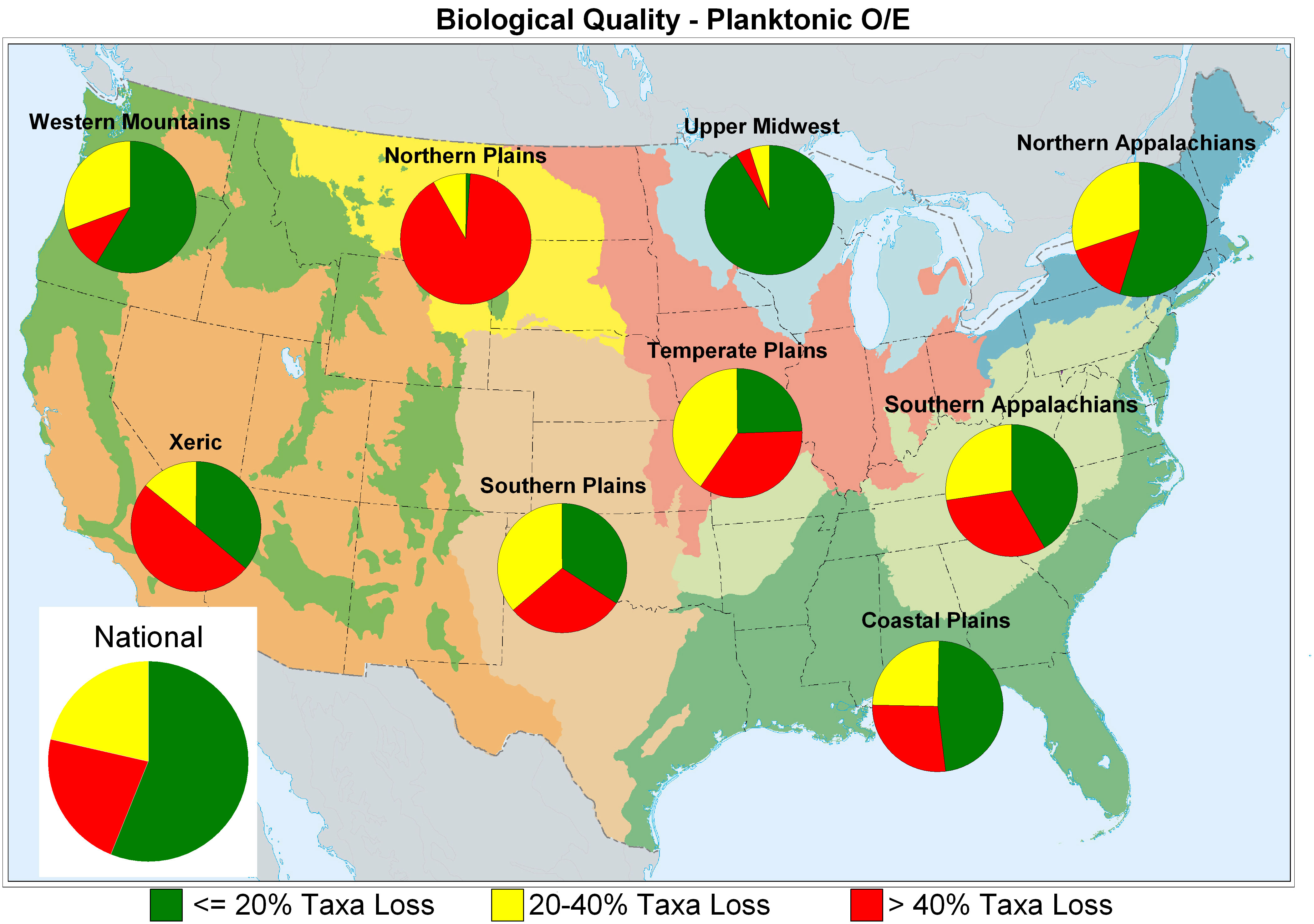
The overall condition of U.S. lakes is less than encouraging. But the study found thriving lakes in much of the Great Lakes region. Ninety percent of the lakes in the upper Midwest – including those in most of Minnesota, Wisconsin and Michigan – support healthy aquatic life.

This map shows the biological quality of nationwide lakes. Image: EPA
“That speaks to our having some precious resources here that we need to make sure we’re protecting and maintaining into the future,” said Tim Asplund, a Wisconsin Department of Natural Resources limnologist.
Researchers found that more than four of every 10 U.S. lakes are in only fair or poor condition, including about 90 percent of lakes in the northern plains.
The general picture of nationwide lakes seems accurate, said Steve Heiskary, a research scientist at the Minnesota Pollution Control Agency.
“When we look at the problems we have in many of the lakes, it wouldn’t surprise me that just over half could be considered basically real good,” he said.
The sample of more than 1,000 lakes across the lower 48 states – excluding the Great Lakes and the Great Salt Lake – found that man-made lakes are in far worse condition than natural lakes.
Toxin and contamination levels may make lake enthusiasts’ skin crawl.
The study was the first to examine toxins produced by algae nationwide. It showed at least a moderate risk of exposure to swimmers in more than a quarter of all lakes. While rarely producing severe health effects in humans, the toxins can produce skin rashes, eye irritations, respiratory symptoms, liver and kidney failure or death, according to the EPA. Pets and livestock can die from drinking the affected water.
Fish in about half of all lakes had dangerous mercury levels. And 17 percent of lakes had fish whose flesh contained health-threatening concentrations of PCBs, which have been banned in the U.S. for more than 30 years. Exposure to high levels of mercury can permanently damage the brain, kidneys and developing fetus, according to the Center for Disease Control. PCB exposure can cause skin irritation to adults and behavioral changes in children. The chemicals have caused cancer in animals.
Knowing where contaminant levels are dangerous helps natural resource managers investigate and address the sources, said Sarah Lehmann, the EPA’s national aquatic resource survey team leader.
The study showed that poor lakeshore habitat is the biggest problem in the nation’s lakes – affecting the health of one-third of all lakes surveyed. Lakes with poor lakeshore habitat were three times more likely to be unhealthy.
The Wisconsin DNR estimates that developed sites not separated from lakes by vegetation contribute five times more runoff, seven times more phosphorous and 18 times more sediment – all biological stressors – to a lake than do naturally forested sites.
“These poor habitats negatively impact aquatic life forms, as well as the wildlife that depend on the water bodies,” said Amber Finkelstein, spokeswoman for the Indiana Department of Environmental Management.
Asplund said the study doesn’t mean people can’t develop or live near lakes.
“It’s how do we use best management practices?” Asplund said. “If we live next to a lake, how can we live lightly in a way that protects those natural resources?”

This map shows lakeshore habitat conditions nationwide. Image: EPA
The study grouped lakes into nine regions, based on their similar climate, vegetation, soil type and geology. Looking at lakes across jurisdictional boundaries could facilitate more consistent monitoring between states and tribes, Lehmann said.
States have long monitored their own lakes, but they tend to be the lakes most heavily used, or those near population centers. Asplund said Wisconsin relies on volunteers who monitor about 1,000 lakes in the summer. But some of the lakes the survey examined had never been studied.
Researchers in some Great Lakes states enhanced the study by sampling additional lakes and examining different indicators of environmental quality. Minnesota and Wisconsin have released state-level assessments. Indiana and Michigan plan to release their results soon.
The study allowed Wisconsin researchers to look closer at lake quality indicators like pesticide concentrations, surface-water mercury, aquatic plants and invasive species, Heiskary said.
Minnesota Sea Grant spokeswoman Nancy Hoene said the study provides an important baseline for future research.
“This is really groundbreaking … that is something that we need to be doing,” she said. “And a baseline is where to start. I think that fact alone is exciting.”
Lehmann, a Minnesota native, said lake quality is especially important to people in the Great Lakes region. The study allows the EPA to “start talking about what we have to do to really protect that resource,” she said.