By Samantha Ku
Cultivated plants rarely match their wild type counterparts in their ability to support pollinators, according to research by pollinator ecologists at the Chicago Botanic Garden.
According to Nick Dorian, a post-doctoral researcher at the Chicago Botanic Garden and one of the study’s authors, cultivars are variants of wild plants bred to meet people’s aesthetic preferences, such as novel petal color or compact growth forms.
But these modified traits may hold less value for wildlife, the study said.
The study, published in the journal Ecosphere, notes that cultivar traits, including shorter plant height and a longer flowering period, are often considered less attractive to pollinating insects.
Researchers assessed the attractiveness of four wild type plant species and their cultivated varieties to pollinators.
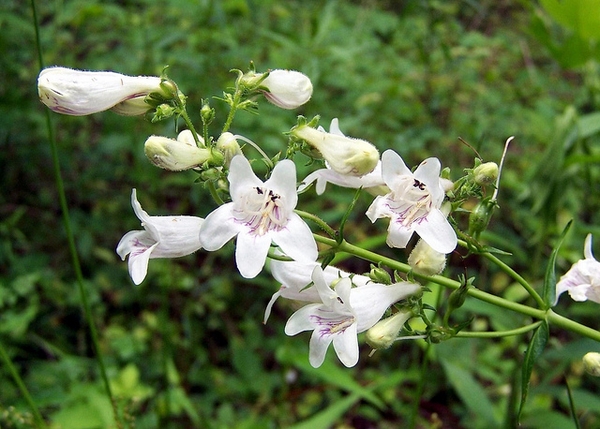
The plants studied included foxglove beardtongue of the Plantaginaceae family, orange coneflower (also known as black-eyed susan), New England aster and aromatic aster of the Asteraceae family.
The assessment data comes from a two-year common garden experiment conducted between 2019 and 2020 and the botanical garden’s community science project “Budburst” carried out in eastern North America between 2018 and 2022.
“A pollinator garden can be broadly defined as any area planted with flowers to attract and support pollinators like bees, butterflies and hummingbirds,” said Dorian.
He said that the plants selected for a pollinator garden should provide nectar and pollen, which serve as food sources for pollinators, and should not be treated with pesticides.
According to Dorian, pollinator gardening is an exciting idea because it offers fresh inspiration for practical approaches to biodiversity conservation and shows that conservation can take place even in small spaces, such as balconies, backyards and urban parks.
Given the decline in pollinator populations, planting a pollinator garden can attract a variety of insects, including endangered species such as the rusty-spotted bumblebee, Dorian said.
“Chicago is home to hundreds of pollinators, including bees, butterflies and moths, flies, wasps, beetles and birds,” said Dorian.
“Some of the most common pollinators are bees like honey bees and bumble bees, butterflies like swallowtails and monarchs, and ruby-throated hummingbirds,” he said.
Dorian said pollinators are essential to the reproduction of most flowering plants as they transfer pollen between flowers and help the plants produce fruit.
He noted that pollination also sustains a key ecological food web: three-quarters of crops such as apples, watermelons and even coffee depend on pollinators.
The study classified insects visiting the reproductive parts of flowers into eight morphogroups, including honey bees (Apis mellifera), bumble bees (Bombus spp.), small bees and flies, large bees and wasps, butterflies and moths, beetles, hummingbirds and unidentified species.
“We found that wild types were always the most attractive to pollinators, but some cultivars rivaled the attractiveness of wild type plants,” said Dorian.
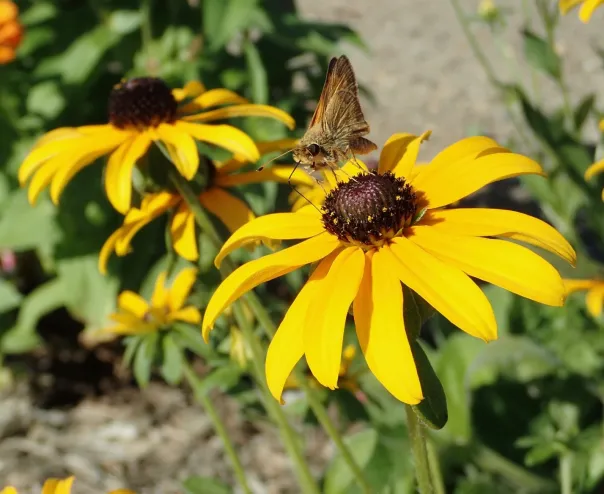
In terms of visitor frequency and morphological diversity, the foxglove beardtongue “Pocahontas” cultivar, the orange coneflower “Goldstrum” cultivar and aromatic aster “October Skies” cultivar showed similar attractiveness to their wild counterparts.
“Mounded” varieties of New England aster that produce shorter plants tended to attract fewer pollinators than the taller wild type plants, according to Dorian.
“While we cannot generalize that all short cultivars are inferior to wild type, our findings suggest that cultivar height might be something worth looking into in the future,” he said.
“Doubled” cultivars that produce extra petals are much less attractive to pollinators and should be avoided, he said.
Planting pollinator-friendly gardens
For those looking to make their gardens more attractive to pollinators, Dorian recommends the Illinois Native Plant Society as an online resource for information on native plant sales.
Red Stem Native Landscapes and Chicago Bird Alliance are retailers located in Chicago, IL, whose information is listed on the Illinois Native Plant Society website.
According to Eve Alexander, the native plant specialist at Red Stem Native Landscape, the company focuses primarily on designing and installing native gardens for residential properties.
A retail online store is also available for customers to order plants.
Alexander said that the company primarily sources plants from the nearest nurseries to minimize the transit, it orders bare roots (dormant plants without soil around their roots) for species that are difficult to obtain from nurseries.
“We work with reputable nurseries that we have ordered from four years now that are well respected in the industry,” Alexander said, “We rely on our suppliers to be reputable and to be selling us what we believe we are purchasing.”
Since cultivars are sterile and often fail to produce pollen, they don’t fill the “same niche in the ecosystem as the straight species,” which support pollinators more effectively, said Alexander.
While the company prefers the wild types or “straight species,” evolved naturally without human intervention because they are “the most beneficial for the ecosystem and encourage the most biodiversity,” it uses cultivars in a particular area for specific reasons, she said.
“The straight species of panicum virgatum called switchgrass is aggressive, so it can take over the garden,” Alexander said. “It doesn’t behave well with other kinds of plants, so that is one species that we generally use cultivars, for that will be more well-behaved and not push out its neighbors and become an entire garden of switchgrass.”
“Purple cone flower is a big one that people are familiar with, the Echinacea species, as well as the yellow coneflower species ‘Rebecca,’” said Alexander.
Despite these common native species, Alexander pointed out several lesser-known native species that she said are worthy of public attention.
“I think sedges as a genus, the Carex genus, are not well known and play a really important role in the garden and in the ecosystem, and in supporting wildlife and insects,” she said. “They’re mistaken a lot of the time to the untrained eye, and even the trained eye sometimes.”
The sedges often host species to certain butterflies and moths. Their root structure is fibrous and shallow, as opposed to a lot of other plants, so they do a lot to stabilize soil to prevent erosion to support the root system of the plants around them, according to Alexander.
For hummingbirds, Judy Pollock, a Chicago Bird Alliance board member, recommends planting native plants such as turtlehead and impatiens.
Until now, traditional landscapers have continued to use ornamental plants from all over the world, including lawns and sod, said Alexander.
As the public recognizes the importance of native species, nurseries now offer more native species. It is easier to find native species in nurseries today than 10 to 15 years ago, she said.
“Over the years since we started, there is more of an understanding in the public about what natives are and more of a demand, so that’s positive,” she said.
Pollock also recognizes the growing trend of customer demand for native plants, as sales of native plants at the Chicago Bird Alliance have been increasing every year.
Pollock said that if more nurseries began growing native plants, it would help expand the supply of native plants in the retail market, as “big nurseries have a poor selection of native plants.”