Test kitchen, production line could cook up jobs

Food entrepreneurs in Michigan could take an idea to a frozen meal on the shelves of your grocery store using a proposed mock production line.
Proponents hope to generate an additional $300 million to $400 million in sales and 1,000 jobs annually at the center proposed near Lansing.
The center would be one of a kind targeting medium-sized businesses.
Read more.

Michigan Gov. Rick Snyder: ‘atmosphere of crisis’ needed for faster action on Asian carp

Editor’s note: Great Lakes Echo commentator Gary Wilson sat down with Michigan Gov. Rick Snyder in Chicago for a one-on-one interview Friday. Here’s Wilson’s take on what the governor had to say. Michigan Gov. Rick Snyder brought his Great Lakes message to Chicago today as the region’s governors gathered in Chicago for an annual meeting. Snyder co-chairs the Council of Great Lakes Governors with Illinois Gov. Pat Quinn. The two executives revived the dormant governors group on Mackinac Island last year and the Chicago meeting is an attempt to maintain momentum.

Local officials convert paved roads to gravel as lawmakers debate funding repairs

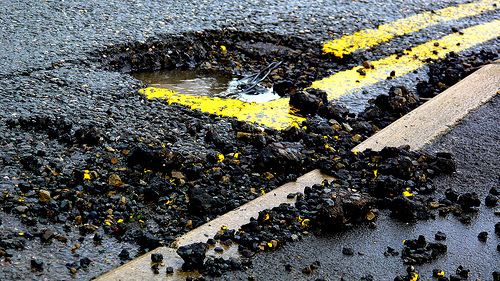
Michigan communities might see more local roads turned to gravel in coming months, thanks to winter’s remaining grip. The rough winter has given Michigan’s road funding concerns a violent push into statewide spotlight as discussion swirls at the Capitol. But road commissions across the state are eyeing the immediate impact that deeply rooted frost has on a local level. County road commissions have increasingly taken up the practice of permanently or temporarily turning paved roads into gravel in recent years to deal with issues of low funding and poor road conditions, said Joe Pulver, Clinton County Road Commission managing director. Last year, about half of Michigan counties were forced to convert paved roads to gravel, said Monica Ware, the communications and development manager for the County Road Association of Michigan.

Turtles vs. turbines

An Ontario court has ruled in favor of a wind turbine project that put environmental groups at odds with each other.
On one side are supporters of an alternative energy project. On the other are those favoring the protection of a threatened turtle species and fragile soil.

Authors “Canvas Detroit” for art’s impact on the urban environment

In “Canvas Detroit,” Nichole Christian and Julie Pincus profile the Motor City’s brightest and most diverse of up and coming street artists. From murals on boulevards to grass sculptures, their work can actively improve the urban environment and shine a light on previously ignored and abandoned cityscapes. Detroit is a city that needs “problem solving,” Christian says, and art won’t solve it all. But the city is fostering a wickedly creative atmosphere that is ripe for revitalization. ­Christian recently explained to Great Lakes Echo the importance of street art and how it can revitalize a city.

Waste to work: Penn State researchers use industrial waste in hydraulic fracturing

While the debate over the long-term environmental impact of what is commonly known as fracking  rages, researchers at Penn State University say they have discovered how to use industrial waste products to make the practice more sustainable. During the lifetime of a fracking well, millions of gallons of water are pumped deep into the ground, causing immense fractures and releasing natural gas from the underlying shale deposits. Mixed into the water are chemicals of variable toxicity. But it also contains sand particles to keep fractures open, allowing the natural gas to continue flowing. These particles, known as proppants, are the focus of Penn State material scientists John Hellmann and Barry Scheetz’s research.

Fracking sand mines credited for fluctuating property values

By Alison Dirr
Wisconsin Center for Investigative Journalism

Perry Schmitt describes himself as pro-mining but blames the frac sand mine across the highway from his home for driving down the asking price by more than $25,000, to $189,000. His neighbors made out better. Kari Curran and her husband sold 130 acres for $1.5 million to a company affiliated with Unimin Mining Corp., operator of the mine. The property was previously valued at about $225,000. “It was kind of bittersweet,” Curran said.