Falconry is a team sport with Great Lakes roots

The first falconry field meet in North America was in 1938 in Pennsylvania. It’s a sport that continues to be cherished throughout the Great Lakes states.

“It’s like a front row seat to an I-max movie to nature,” said Kory Koch, communications director of the Michigan Hawking Club.

Jeff Gillies

IJC study: Lake level lament

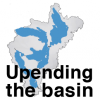
This summer, Echo ran a five-part series on a controversial study of a possibly human-driven drop in Lake Huron and Lake Michigan. The $3.6 million, International Joint Commission-funded study started in 2004 and a final report of the results  came in Dec., 2009. The study looked at erosion in the St. Clair River, which runs between Lake Huron and Lake Erie. The researchers found that the “head difference” between the two lakes — that’s a measure of how high the Lake Huron surface is above the Lake Erie surface — has dropped 9 inches since 1963.

Lake politics: Stimulate America?

Stimulus funds for wind turbines and materials for other clean energy projects should go to companies that manufacture them in the U.S., three Great Lakes senators say. Democratic Sens. Chuck Schumer (D-NY), Sherrod Brown (D-Ohio) and Bob Casey (D-PA), along with Montana’s Jon Tester, introduced legislation to include a “buy American” provision on stimulus funds. The senators say more than three-fourths of $2 billion spent on wind-enery projects have gone to foreign companies. “Stimulating” American – rather than foreign companies – seems to be a sensible use of U.S. tax dollars.

Daily carp bomb: Is it carp season?

Perhaps direct confrontation is the best way to repel an invasion. “He’s doing his part to control the invasion of Asian Carp at Leelanau State Park,” writes casglass on the Echo carp bomb flickr group. Want in on the carp bomb photoshop fun? Learn how to create your own.

Reporting with bias

Washington Post columnist David Broder made an odd confession recently:

“If you want to be a stickler for journalistic ethics, I shouldn’t even be writing about the Great Lakes, because I have a huge bias – especially when it comes to Lake Michigan.”

Broder recalled youthful summer visits to a cabin on Lake Michigan and explained that for the past 50 years he has enjoyed another cabin on the lake’s Beaver Island. “Like everyone who comes under its spell, I love Lake Michigan,” he wrote. Broder felt a need to reveal that background before explaining his support of a new federal plan to clean up the Great Lakes. But is it an embarrassing impingement of journalistic purity to favor a clean environment? Environmental journalists are rightly cautious about getting painted green.

Lake politics: Legislation would send $3 billion to the Great Lakes

A bipartisan group of Great Lakes congressmen introduced legislation Thursday to provide $650 million annually for the next five years for programs to restore the Great lakes. The more than $3 billion in federal money would fund programs to clean up toxic pollution, control invasive species and restore habitat.

Daily carp bomb: Think of the children

Think we need to stop the Asian carp to preserve the beauty of the Great Lakes for future generations? Flickr member gbensinger indicates that the future generations aren’t scared. I’m pretty sure that fat slug up there is a common carp, which already sneaked into the lakes. But who’s to say that they won’t adapt to the arrival of their Asian kin by bulking up to hideous proportions? Probably scientists!

Great Lakes states’ toxic woes (and wins)

Contaminated sites in the Great Lakes are all over the news this week.  And it’s a grab bag of good news/bad news. According to the Detroit News, there are more than 4,000 contaminated orphan sites in Michigan and hardly any money left to clean them up.  (Orphan sites are abandoned by industry and left to the tender mercies of state coffers.)

And then the newswires started buzzing with reports that the EPA has added 10 sites to its Superfund list.  Nearly half of those sites are in Great Lakes states. Next came the news that the EPA also made a list of eight sites to add to the National Priorities List.  Three more sites for the Great Lakes states. Check out EPA’s news release for a list of the superfund and priority sites. So while state money dwindles, we’ve got some federal money zooming our way.  Of course, how long it taes to see the cleanup in action is another matter entirely.