Land

Can the Farm Bill prevent Great Lakes dead zones?
|
Little additional land has been converted to cropland since the 1950’s, but a recent study reports that changes in its use could pave the way for more dead zones in the Great Lakes.
Great Lakes Echo (https://greatlakesecho.org/tag/agriculture/page/17/)
All stories related to farming, including urban agriculture.
Little additional land has been converted to cropland since the 1950’s, but a recent study reports that changes in its use could pave the way for more dead zones in the Great Lakes.

A long winter and a wet spring are a recipe for manure management headaches and potential water quality threats in the Great Lakes region.

Runoff from urban and agricultural activities has a bad rap–a recent white paper said nonpoint source pollution accounts for 76 percent of Great Lakes water pollution. The Ohio Department of Natural Resources said nonpoint pollution can range from “lawn chemicals, fertilizers, road salts and petroleum products to sediment (dirt) and excessive nutrients from cities, malfunctioning home-sewage treatment systems and livestock operations.”
Ohio is taking the problem into its own hands to clean up Lake Erie. But how do you attack the source when you don’t know where it is? An easy answer: educate the humans. The Ohio Department of Natural Resources granted $75,000 toward three coastal nonpoint pollution education specialists in Lake, Lucas and Ottawa counties.

As the state’s agricultural sector continues to grow, so does the need for young farmers, according to the Michigan Farm Bureau.
While the average age of the state’s farmers was about 54 in 2007, the Department of Agriculture believes that number is currently higher.

Detroit native Mark McInnis is giving away seeds to help introduce his new film on the explosion of urban gardening in his home city. In Urban Roots, McInnis connects the decline of the city’s auto industry to the rise of vacant lots that now provide space for gardens. McInnis’s mother worked for Ford Motor Co. in Detroit throughout his childhood. “That job put braces on my bother’s teeth, paid for our skateboards and our weekend trips up north,” he said.
An operation must have a certain number of animals or animal units to be considered a CAFO, according to the Environmental Protection Agency.
An animal unit is a method of measurement equal to 1,000 pounds of live animal weight.
Concentrated Animal Feeding Operations are farm operations where large numbers of animals are raised in confined facilities. The farms themselves also tend to concentrate.
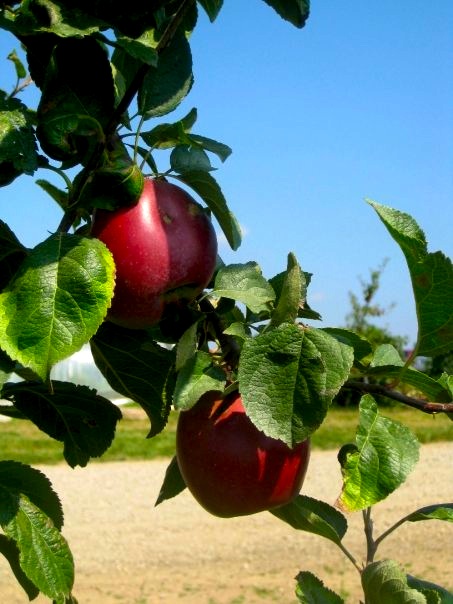
A new federal grant program to raise the competitiveness of specialty crops may give apple growers a boost.
It supports conservation, innovation and promotion. That includes marketing, research and ways to promote sustainability.
By Hyonhee Shin
Oct. 31, 2009
LANSING, Mich. — Ethanol is promoted as an eco-friendly tool to reduce air pollution because it can be made from common crops such as sugar cane, potato and corn. Is it the key to a renewable energy future? In Michigan, the number of gas stations selling E-85 — a mixture of 85 percent ethanol and 15 percent gasoline — has risen from two in 2003 to 117 in 2008. The state has five ethanol plants able to produce nearly 50 million gallons a year.
By Haley Marie Walker
Oct. 30, 2009
Jim Luby is a fruit forensics investigator. The University of Minnesota horticulture professor is among 29 researchers on a project using genetics to create fruit with characteristics consumers want. “It is similar to human forensics,” Luby said. “The way we are able to relate differences in DNA from one individual to another, we will now do with differences in traits of fruit.”
The project, called RosBREED, targets five fruits in the Rosaceae plant family: strawberries, apples, peaches and sweet and tart cherries.