This broad category encompasses fish. It is further divided on the main menu with tags for mammals, insects, amphibians, birds, mussels, invaders and endangered wildlife.
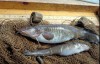
Burbot, a native Great Lakes fish species, are slimy, big-mouthed bottom feeders. They’re also threatened in many parts of the world. They’ve recovered in the Great Lakes, but that could mean trouble for plans to restore lake trout.
Between 3,000 and 5,000 wild hogs inhabit 69 of Michigan’s 83 counties. They ravage crops and forests and carry diseases. The Michigan Wildlife Conservancy – with help from the U.S. Department of Agriculture Wildlife Services branch – has developed the Michigan Wild Hog Removal Program. It aims to set 100 traps – that cost $450 each — to round them up. Want a piece of the action?
Feral pigs are an increasing environmental problem in the Great Lakes region. They can dig up ground a foot or more deep, destroy crops and carry diseases that infect domestic livestock.
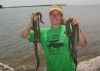
An Ohio activist dubbed “The Snake Lady” and a university researcher have been honored for their efforts to conserve the threatened Lake Erie watersnake. Kristin Stanford and Richard King of Northern Illinois University are among this year’s 18 recipients of the recently announced U.S. Fish and Wildlife’s Recovery Champions awards. According to a U.S. F&W press release, the pair has put in a combined 35 years of work to save the snake and its habitat. King has been working since the 1980s and identified early declines in the population and threats to the species. Stanford has “worked tirelessly to reach out to residents of the Lake Erie islands” to teach them how to live with the snake.”
“The dedication of Ms. Stanford and Dr. King to the conservation of the Lake Erie watersnake, through both scientific methods and strong public involvement, has recovery efforts for this species to the point that the next step is to propose removing it from the list of endangered and threatened species. There is no greater measure of recovery success,” said Midwest Regional Director Tom Melius.
Surveyors in the Great Lakes states are poised this spring to count frogs and toads by listening to their songs. It is a chance for volunteers to document amphibian declines and discover new populations. Find out how to count.
Echo reader Stephanie Ariganello pointed out a typo in Thursday’s Great Links section: “Volunteers sought to protest sturgeon in Michigan – Detroit Free Press”
She writes: “Those pesky sturgeon. We ought to be having rallies against them alright, with their snotty prehistoric scutes and their smarmy shark-like fins. Whether it was a simple mis-typing or subconscious comment on someone’s part, not sure. But I believe it should be ‘protect.’”
It was a simple typo, I swear. We like to be transparent about our biases around Echo. And I feel fairly confident that no one on the staff has it in for sturgeon.