Wildlife

Great Lakes Echo (https://greatlakesecho.org/category/wildlife/page/58/)
This broad category encompasses fish. It is further divided on the main menu with tags for mammals, insects, amphibians, birds, mussels, invaders and endangered wildlife.

Oswald Bear Ranch in Newberry has allowed the public to interact with bear cubs for 15 years, but Michigan law and animal rights activists would end the practice unless a bill passes to make the activity legal.

An uninvited outsider is rapidly showing up in new freshwater territory in Wisconsin–and a recent scientific study indicates the increasing impact of the small fish. Researchers at the University of Wisconsin Center for Limnology found the invasive round goby has increased 10-fold in some of the state’s lakes and rivers. In addition to the Great Lakes, the fish are now showing up in 175 miles of inland streams, according to Matthew Kornis, doctoral candidate at the Center for Limnology. Like many of the known invasive species inhibiting the Great Lakes, the round goby arrived by an ocean-bound ship and was first seen in the Saint Clair River in 1990. “The study,” Kornis says, “raises significant concern of negative effects round gobies will have or already have on Great Lakes tributaries.”
Researchers found a related dramatic decline in native fish in places where gobies thrive.
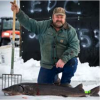
These fish live more than 70 years and grow to be more than six feet long. But they are so rare that the season ended this year once six were landed. The Black Lake Shivaree festival celebrates the prehistoric species.

Native mussels have rapidly declined in the Great Lakes region, casualties of the zebra and quagga mussels brought in the ballast of ships. The foreign mussels attach to the native ones so that they can’t open, feed, breathe or breed.
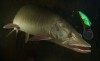
The muskie production program of the Department of Natural Resources (DNR) has turned a huge corner by stocking only Great Lakes muskies. The department has raised muskellunge for stocking for decades but had always used northern muskies. This is the second year it produced strictly Great Lakes muskies.

Killer shrimp are on a list of organisms scientist fear could yet invade the Great Lakes.
They are among at least 53 potential invasion threats researchers have identified on a new watchlist.

Michigan Highway Hazard Recovery is contracted to clean up deer and other animal roadkill in several counties across the state of Michigan. Oakland County pays about $20,000 a year on deer cleanup.
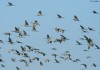
Sandhill cranes have been spotted in record numbers this year at the Phyllis Haehnle Memorial Audubon Sanctuary near Chelsea, Mich. The Michigan Audubon Society reported 8,177 cranes gathered in the sanctuary Monday, November 19, the most birds ever seen there since the 1900s. Once on the verge of extinction, sandhill crane populations have been on the rise across the United States for the past decade, according to Audubon Society spokesperson Mallory King. “They were almost extinct at the beginning of the 1900s, their feathers were in high demand and they were being overhunted,” King said, “That started to turn around as environmental legislation was passed starting in the 1930s and 40s, and now they’ve been steadily recovering.”
The birds return to their birthplace each year to find a mate. “We’re seeing so many birds here because the sanctuary has the right habitat for them and because enough of the cranes born here last year survived to return,” King said.

Beachcombers report large and unusual salamanders called mudpuppies washed ashore on many Lake Huron beaches during super storm Sandy.
A Sarnia man had to use a snow shovel to remove them.