beach

Great Lakes drownings down over last year


The number of Great Lakes drowning deaths are down from last year, possibly because of the colder spring. Twelve people have drowned in the Great Lakes since Jan. 1, eight less than this time last year, according to the Great Lakes Surf Rescue Project, an educational water safety group based in East Lansing, Mich. and Matteson, Ill. The record drownings in 2012 may have been due to unusually warm weather.

Photo Friday: Minnesota lakes take their time “icing out”


Some lakes in Minnesota are taking their time to thaw this spring, setting new “ice-out” records. Attributed to unusually cool spring temperatures, this satellite image shows lingering ice and white lake landscapes. The first photo was captured on May 12, 2013, when NASA’s Terra satellite passed over northern Minn. “Ice-out” is defined in this context as a lake being free of ice, but the definition often varies. Some define it based on ease of navigation, while others believe a lake has “iced-out” when it’s 90 percent free of ice, according to a report from the Minnesota Department of Natural Resources.

Restoring the Great Lakes 2.0: Keep it simple

One of the strongest arguments for the Great Lakes Restoration Initiative is that everyone knew what needed be done, we just needed the money to do it.
My advice? Keep it simple, take on the big projects and prioritize values over metrics.

Comparing the states: Hazardous waste violations


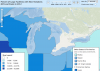
Indiana has the highest percentage of facilities with hazardous waste violations in 2012 among the Great Lakes states, according to the Environmental Protection Agency. New York has the lowest. The figures come from an EPA map that reports state compliance with regulations. The map’s dashboard allows users to choose different measures and different years. Here are the percentages of large facilities with new hazardous waste violations for each state:

Indiana: 15 percent of 567 large facilities.