Energy

Ohio wind turbine shutdown raises issue of migratory bird safety
|
Environmental groups have won what they call a victory for birds with the suspension of a plan to build a wind turbine in Ohio.
Great Lakes Echo (https://greatlakesecho.org/category/energy/page/21/)
These stories are about traditional and alternative energy sources and challenges.
Environmental groups have won what they call a victory for birds with the suspension of a plan to build a wind turbine in Ohio.

In an effort to increase the U.S.’s renewable energy portfolio, the wind industry has grown tremendously. Michigan is now home to just under 700 turbines, but not everyone is happy about the growing wind farm industry.
A new conservative group is hoping to open up the conversation about renewable energy. The Michigan Conservative Energy Forum is working to increase the state’s investment in energy efficiency and renewable energy programs.

The Michigan Court of Appeals has upheld state permits for DTE Energy Co.’s modifications of its coal-fired power plant on the Lake Erie shore in Monroe, despite objections by a major environmental group.

Smart meters are easy to read and an accurate way of measuring how much electricity is used by utility customers.
The Michigan Public Service Commission recently approved rules to control how data collected by the meters is used.
But some customers worry that the meters are a technological invasion of privacy.

Check out this map for a scary picture of wind over the Great Lakes around 9 p.m. Sunday. This static shot doesn’t do it justice. Click the image to catch the animation. Of course, if you’re seeing this long after the wind has died, it won’t be as impressive. Just know that Sunday evening would have been an exciting time for a Chicago to Mackinac Island reach.

A recent University of Wisconsin study looked at whether genetically modifying poplar trees to more easily produce ethanol could also make them vulnerable to insect pests.
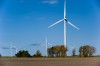
The state of wind power in Michigan by Great Lakes Echo
Michigan was one of the fastest growing states for wind power in 2012. That’s according to the American Wind Energy Association’s annual market report. But the nuts and bolts of harnessing wind energy is a complicated issue, with its fair share of supporters and detractors. Jim Dulzo of the Michigan Land Use Institute in Traverse City joined Current State to explain where the state stands in moving forward on wind power.
This week Mr. Great Lakes discusses dam investments, a nature photo contest and “solar-ready” communities in Michigan.

More than 44 billion gallons of water were extracted daily from the Great Lakes-St. Lawrence River Basin in 2011, according to a new report. Of the region’s states and provinces, Ontario withdrew the most water, at about 37 percent and Pennsylvania took the least at .07 percent. Uses for the water include irrigation, public drinking and industrial needs. That amount does not include water used for hydroelectric energy.