Dog wearing a beekeeping suit in a field

Meet Maple: Former K-9 now beekeeper  

By Clara Lincolnhol 

Meet former K-9 Maple. She made a big career switch earlier this year—from a human remains detection dog to a beekeeper at Michigan State University’s Pollinator Performance Center. The friendly brown-and-white dog, with a long tongue that hangs out of her mouth, dons her own beekeeping suit and uses her powerful nose to detect American foulbrood — a bacteria that left undisturbed, means certain death for an entire honeybee colony.

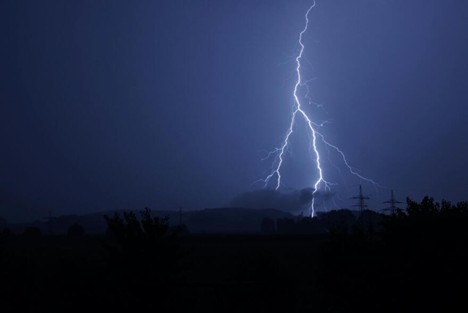
Lightning strike

Michigan residents have surprisingly higher risk of being struck by lightning

By Clara Lincolnhol

Michigan experiences hundreds of thousands of lightning strikes each year and ranks 25th in lightning density per square mile, according to data from last year. Lightning strikes in Michigan are on the lower side of the scale because the state gets fewer storms than many others. But the number of people struck by lightning in the state is disproportionately high.

Wild turkeys in a field

Michigan residents encouraged to report wild turkey sightings this summer

By Clara Lincolnhol

The Michigan Department of Natural Resources is asking state residents to report the number of wild turkeys they see this summer. The statewide survey will be used to get a sense of the turkey population to find out if baby turkeys are replacing adults. The survey, which runs through the end of August, asks residents to report when and where they’ve seen the birds in Michigan.

A bat held by gloved hands

New state program encourages Michigan residents to report bat roosts

By Clara Lincolnhol
The Department of Natural Resources is encouraging residents to report bat roosts. These are the places where bats sleep and raise their babies like chimneys, trees and bridges. DNR bat specialist John DePue says the Michigan Bat Roost Monitoring Program will collect data that will help scientists better understand bat behavior and improve conservation methods.