By Samantha Ku
A $5.75 million federal grant has been awarded to the Lake Forest Open Lands Association (LFOLA) to support a preservation project along the Lake Michigan shoreline in Illinois.
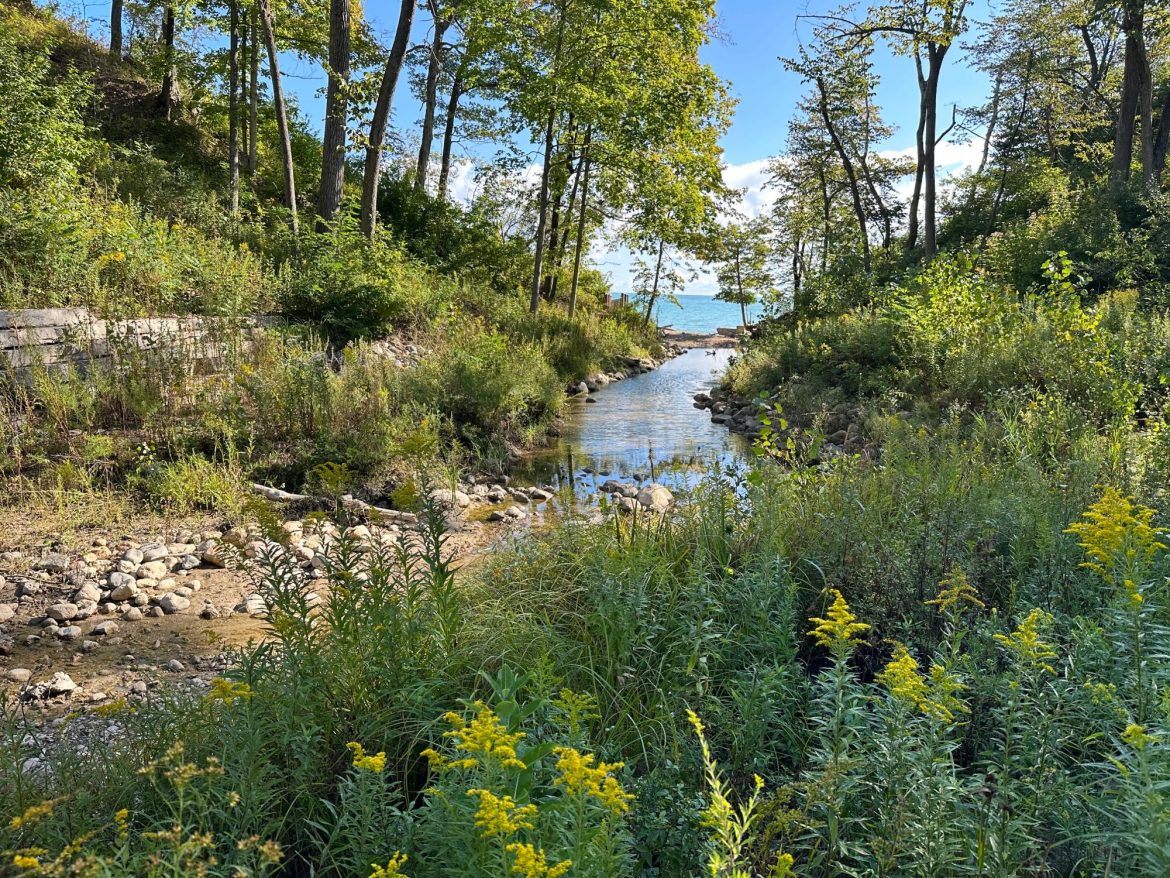
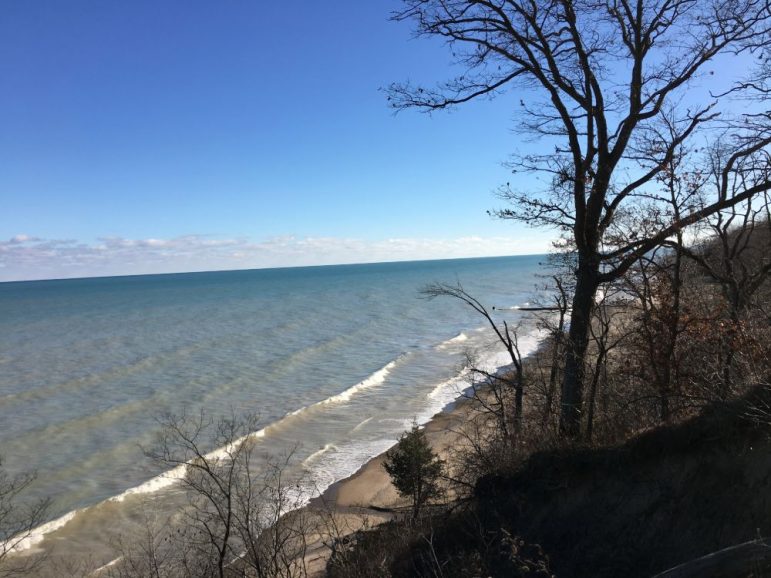
The Jean and John Greene Nature Preserve at McCormick Ravine includes 57 unique ravine systems stretching 22 miles along the shoreline of Lake Michigan, according to Ryan London, the association’s president and CEO.
According to London, LFOLA has been working in the region on a voluntary basis since 1977, removing invasive species and monitoring rare plants. LFOLA then acquired the property rights from the city of Lake Forest, which had been developing the site until 2019 and turned the site into a nature preserve open to the public in 2023.
There is a common misconception that ravines are carved by glaciers, said London.
“When the glaciers most recently came through about 12,000 to 14,000 years ago, they left unique landforms along Lake Michigan called moraines,” London said. “As it [the glacier] receded backwards to the north, it left these piles of material and caused more rain.”
London said that the soil pattern of moraines is different because its largest particles are unconsolidated gravel, sometimes interbedded with multiple layers of clay.
“These moraines are not really stable soils because they’re the large materials, the sand and the gravel. They erode very easily with water, and that’s what actually creates ravines, which can be up to 75 to 90 feet deep,” said London.
London said that the microclimate in the ravine bluff ecosystem features lower average temperatures and higher humidity than surrounding areas. That means natural fires occur far less frequently in the region than on prairies and savannas.
Since fire is less common in the region, species are able to persist without risking exposure to fire threats, said London.
The LFOLA said the wooded corridors formed in the ravine-bluff ecosystem create a unique microclimate, providing habitats for 48 rare plant species and over 100 animal species.
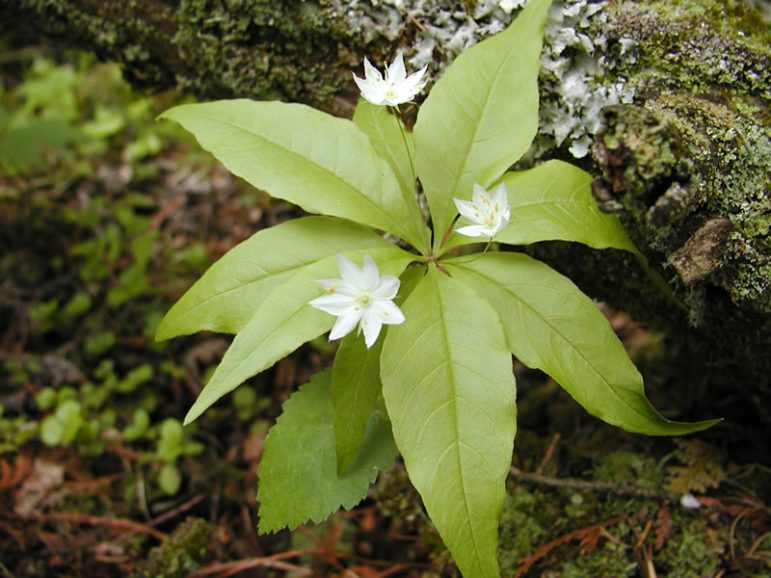
According to London, unique flower species in the area include starflower (Lysimachia borealis), shinleaf (Pyrola elliptica) and rare orchids. He said the McCormick Ravine is the only ravine where the starflower is known to grow.
“Starflowers are short in stature with whorled leaves that have white star-shaped flowers with seven petals,” said Heather Decker, the managing ecologist of the Chicago Botanic Garden.
Decker said that ravines are an ideal habitat for starflower because it grows through rhizomes, which are horizontal growths that establish new roots and shoots, to form large colonies in moist, shaded forests.
According to Decker, starflowers and other northern species in the ravine are gifts of glaciers.
Approximately 10,000 to 12,000 years ago, as the glaciers advanced, these plants hitched a ride southward. When the glaciers retreated, the plants were left behind.
The ravine-bluff ecosystem represents one of Illinois’ rarest and most fragile landscapes, as its river channels are formed from highly erodible soils, according to London.
LFOLA said that decades of urbanization and shoreline modification accelerated erosion and destabilized the ravines, leading to widespread vegetation loss and habitat degradation.
“As the surrounding areas have become developed and urbanized, these ravines are accepting water at a much higher volume and a much higher rate than they were before pre-European settlement conditions,” said London.
Climate change has led to an increase in the frequency and intensity of storms, pushing landscapes beyond their natural limits, according to London.
Stormwater is “scouring through the ravine, and when you have all that erosion taking place, all that sediment gets pushed out into a big plume in Lake Michigan and many municipalities,” said London.
The ravine-bluff wooded corridors also serve as natural infrastructure, filtering stormwater and protecting water quality, according to LFOLA.
London said the plants prevent erosion, so less sediment washes into Lake Michigan.
According to London, this project will stabilize the slope in the ravines using nature-based solutions. Natural materials such as tree trunks will be woven into the slope surface, and vegetation will be replanted in areas where it is absent.
The preservation is considered the third phase of the “Advancing Innovative Great Lakes Habitat Solutions” project, according to London. It’s expected to last 2.5 years, with restoration work scheduled to begin in March.
“There are no portions of the site that will be hazardous during the construction. We might close some trails there, but we’re trying to keep most of the site open,” said London.
London said that in addition to federal partners such as NOAA, LFOLA also works with partners in Northern Illinois.
The Chicago Botanic Garden’s Plants of Concern program has continuously monitored rare plant species within the Jean and John Greene Nature Preserve since 2008, said the program manager Gretel Kiefer.
Kiefer said that the botanic garden also partnered with LFOLA in 2024 to collect seeds from multiple species in the nature preserve for use in the restoration project.
“We’ll collect the seeds and we’ll grow the rare plants at the Chicago Botanic Garden,” said London.
According to Decker, the garden’s natural areas team will collaborate with LFOLA during seed collection because timing and communication are crucial.
“We use this as a learning opportunity for our Stewardship and Ecology of Natural Areas restoration technicians to bag developing seeds to assist in our collection efforts,” said Decker.
London said, “We’ve been working out there for nearly 50 years. It’s a long-term commitment to coastal resilience through adaptive management.”
“I do think that there will be unexpected surprises along the way, and we’ll continue to grow our knowledge with this work as we go through this project,” said London.