Water

Great Lakes month in review: What’s next in algae fight?
|
For today’s Great Lakes Month in Review we’re focusing on the Toledo water crisis, which was in the news for several weeks this month, and could be again
Great Lakes Echo (https://greatlakesecho.org/tag/water-quality/page/13/)
This tag is further segmented with tags for pharmaceuticals, plastics, sewage, algae
For today’s Great Lakes Month in Review we’re focusing on the Toledo water crisis, which was in the news for several weeks this month, and could be again
Minnesota will ban an anti-bacterial chemical in consumer products. Canadians considering similar move.

The money is for cleanup , civil fines and penalties for failure to properly remediate three sites with leaking underground storage tanks in Berrien County. The ruling could be appealed.

They told Ohio’s Lake Erie legislators what should be done to reduce the lake’s toxic algae — and protect drinking water for millions of residents.

Ohio’s new fertilizer certification law may be a step toward better management of algae threats to drinking water. But critics say its voluntary nature, delayed implementation and failure to address manure are significant flaws.

Let’s focus on critical thinking of the Toledo water crisis and challenge a few assumptions.

Karen Schaefer, an independent public radio journalist based in Ohio who has been covering algae blooms in Lake Erie for years, reported on the recent Toledo water crisis for Great Lakes Echo. Here she gives deeper background on the development of the threat posed by algae and what may lie ahead. Additional stories here. This report first appeared on WKAR’s Current State public affairs program and is produced as a partnership with Great Lakes Echo.
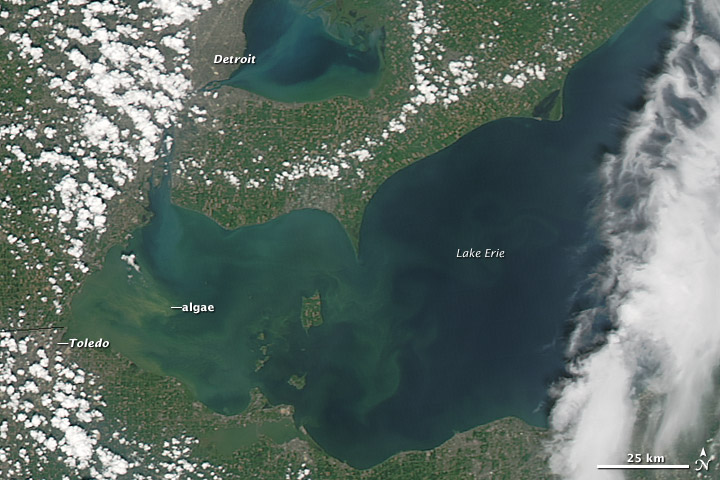
The Great Lakes region and the rest of nation face more fertilizer-fueled algae attacks on water quality.

Commentary
Toledo citizens were without water this past weekend as life-threatening toxins caused by harmful algae far surpassed safe levels. That’s 400,000 people left to scramble for water wherever they could find it. Ohio declared a state of emergency and it was one of those all hands on deck situations. Toledo without water because of toxic algae? We shouldn’t be surprised.
These are tough times for water. And we’re still in our infancy when dealing with it in the Great Lakes.