Echo

Some honeybee deaths may be preventable, experts say
|
Insecticides used on corn and soybeans are linked to honeybee colony deaths. But there may be other factors to blame.
Great Lakes Echo (https://greatlakesecho.org/tag/echo/page/111/)
Insecticides used on corn and soybeans are linked to honeybee colony deaths. But there may be other factors to blame.

We asked Great Lakes photographers to send us their favorite and toughest Great Lakes shot. Scott Thomas of Scott Thomas photography sent us this photo. Star Burst Sunset
A favorite daily ritual of people who live or vacation along the eastern shore of Lake Ontario is coming down to the beach each evening to watch the sunset from spring to fall. Most nights the show is spectacular with deep colors that paint any clouds in the sky the lower the Sun gets on the horizon. I have witnessed many nights Nature was given a standing ovation for her efforts.

It’s hard to turn on the television or read a magazine without seeing pill ads that claim cures for everything from sleeplessness to restless legs. But a growing number of Michiganders are choosing plants over pills to improve their health.

Chemicals used for more than 60 years in carpet, furniture, clothing, cardboard and Teflon are showing up in the eggs of Great Lakes birds.

How does a scientist use sound to save a 150-million-year-old fish? In Wisconsin, Ron Bruch and Chris Bocast are trying to help restore sturgeon stock by listening for the sound they make when spawning that some call “thunder.” The sound can be heard here. “It’s a real low frequency, you can almost feel it instead of hear it,” said Bruch, fish supervisor with the Wisconsin Department of Natural Resources. “One of the important measures of success is knowing your stock is spawning.”
Bocast, a University of Wisconsin-Madison doctoral student in acoustic ecology, discovered the sound while working on an audio book about sturgeons.
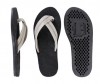
A Detroit collaboration aims to recycle, battle poverty and create jobs by turning old tires and other recyclables into sandals. Treads Motor City Sandals is a small business spurred by the efforts of University of Michigan students and Cass Community Social Services.

The U.S. EPA recently built a tool to help people find the chemicals polluting nearby waterways. It uses information from annual EPA monitoring reports and presents top 10 lists to determine which pollutants or polluters cause the greatest harm. People can search by city, state, watershed, industry or pollutant. “It was pretty easy to figure out,” Rita Chapman, the clean water program director for the Sierra Club’s Michigan Chapter, said after recently giving it a try. “Everything had hotlinks on it, so if you didn’t know what chlorine was used for, you could click on it and it would probably tell you why it’s on there.”
But while the tool may be user-friendly, Chapman said most people outside the scientific community would overlook it.

Warm March weather could spur earlier insect emergence on Great Lakes regional rivers and streams. Precipitation and melting snow also play a role, but the record breaking weather may trick fly anglers who like to “match the hatch.”

We asked Great Lakes photographers to send us their favorite and toughest Great Lakes shot. Tim Trombley of Great Lakes Photography sent us these pictures of his toughest shots. North Windows
This cave was only accessible by kayak. I had to land way down the shoreline and got wet feet making my way inside. Once there, the shot required me to crouch and back into the sandstone recesses allowing sand to drop down my collar.