Skip to content
  • logo
  • logo
  • Home
  • Solutions
  • Agriculture
  • Water
  • Cities & Suburbs
  • Nearshore
  • Recreation
  • Wildlife
  • Energy
  • Waste
  • About
  • Contact

Great Lakes Echo - Environmental news of the Great Lakes region

Great Lakes Echo (https://greatlakesecho.org/tag/contaminants/)

  • Home
  • Solutions
  • Agriculture
  • Water
  • Cities & Suburbs
  • Nearshore
  • Recreation
  • Wildlife
  • Energy
  • Waste
  • About
  • Contact
Subscribe

Contaminants

Waste

Firefighters, environmental advocates push for safer foam

By Emerson Wigand | December 10, 2021

Michigan has disposed of more than 50,000 gallons of potentially harmful firefighting foam since 2019. Firefighters and environmental advocates say that isn’t enough.

Contaminants

Advocates push ban of chemicals in food packaging

By Vladislava Sukhanovskaya | November 26, 2021

Some lawmakers and environmental advocates want to ban chemicals in food packaging that they say threatens the health of Michiganders. 

Water

Drinking water filters eyed as better option to testing in Michigan schools and day care centers

By Vladislava Sukhanovskaya | October 20, 2021

Children’s health advocates are pushing to install drinking water filters in Michigan schools and child care centers to protect them from lead poisoning. 

Contaminants

Michigan expanding PFAS testing capacity

By McKoy Scribner | September 3, 2021

The Michigan Department of Environment, Great Lakes and Energy is expanding its testing capacity for monitoring a family of so-called “forever chemicals” called PFAS.

Echo

Guilty plea expected in Allegheny River pollution case

By Eric Freedman | July 6, 2021

A former supervisor of a Pittsburgh Water and Sewer Authority plant is expected to plead guilty to a felony charge for allegedly ordering employees to discharge sludge into the Allegheny River.

Contaminants

Michigan polluter ordered to jail for illegally discharging untreated waste

By Eric Freedman | May 28, 2021

By Eric Freedman

A federal judge has sentenced a Flint, Michigan, polluter to one year behind bars for illegally discharging more than 47 million gallons of untreated waste into the city’s sewer system. Robert Massey, the 70-year-old president and owner of family-owned Oil Chem Inc., pleaded guilty to violating the Clean Water Act over an 8½ year period between 2007 and 2015. “That amounts to over 72 Olympic-size swimming pools. The crime was driven by greed. Oil Chem received over a million dollars to dispose of the (material),” the U.S. Attorney’s Office said in its sentencing memorandum to U.S. District Judge Stephanie Davis.
Contaminants

Tsunamis caused by air pressure could resuspend Great Lakes contaminants

By Brandon Chew | April 29, 2021

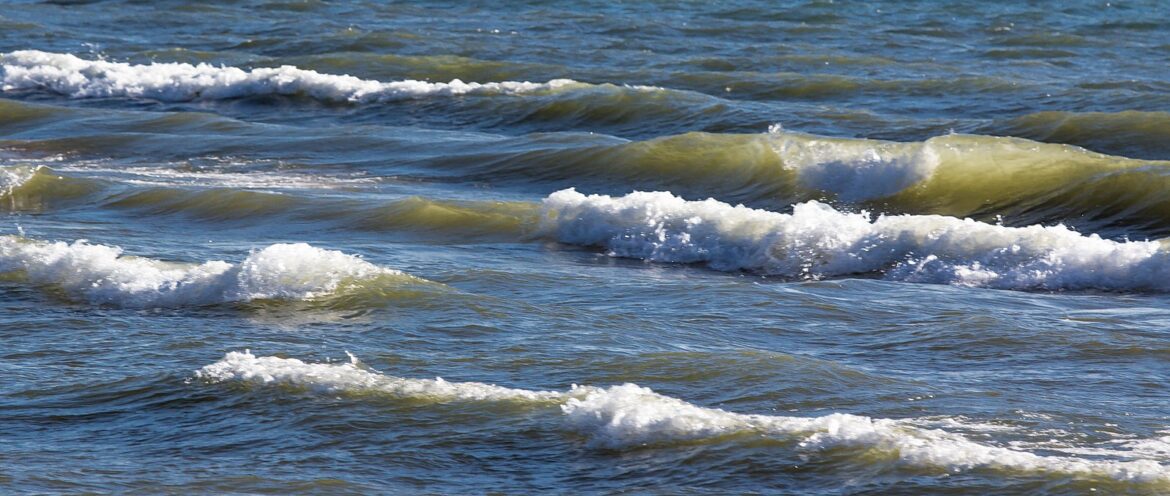
Meteotsunamis also threaten the ecosystem by increasing erosion and releasing contaminants within sediments. 

Contaminants

Massive filter keeps Detroit River contaminants in place

By Brianna M. Lane | March 9, 2021

Thanks to a spongy M&M-like technology, contaminated soil in the Detroit River downstream of the MacArthur Bridge has been contained.

Areas of Concern

Cuyahoga cleanup means it’s safer to eat Cuyahoga fish

By Andrew Blok | April 26, 2019

It is one step in a decades long cleanup after the river and its fires helped spark environmental awareness nationwide.

Contaminants

Firefighting chemical linked to water safety concerns

By Jeremy Wahr | September 17, 2018

A firefighting foam has been linked to a group of chemicals known to be harmful to infants, toddlers and pregnant women. But it is still kept on hand because firefighters say they don’t have effective alternatives.

Load more articles

About Great Lakes Echo

Environmental news of the Great Lakes region from the Knight Center for Environmental Journalism at Michigan State University.

  • How seeds from the past are saving a unique flower of the Great Lakes

    By Kyrmyzy Turebayeva More than 30 years ago, a group of scientists planted just 4,200 seeds of the rare Pitcher’s thistle in the sandy dunes of the Great Lakes. At the time, no one knew if the new populations would survive. Today, three decades later, the restored populations are thriving and spreading.

  • Henderson holding a swan
    From otters to butterflies: How Minnesota became a pioneer in nongame wildlife conservation

    By Kyrmyzy Turebayeva In the late 1970s, when most wildlife conservation programs in the United States focused almost exclusively on game species, a quiet but historic shift began in Minnesota. It was here that one of the nation’s first state programs dedicated to protecting so-called nongame wildlife emerged from butterflies and bats to bald eagles and river otters. That story is now told in detail by Carrol Henderson in his new book, “A National Legacy: Fifty Years of Nongame Wildlife Conservation in Minnesota."

  • Michigan’s water infrastructure sees improvements, work still needs to be done

    By Clara Lincolnhol The U.S. would need to invest nearly $3.4 trillion over the next 20 years to fix and update drinking water, wastewater and stormwater infrastructure, says researchers from The Value of Water Campaign. Much of that infrastructure was built 40 to 50 years ago and shows its age. Michigan’s is no exception. The American Society of Civil Engineers gave the state a D+ for its drinking water infrastructure, a D in storm water management and a C for its wastewater infrastructure. Funding is a major problem. Proposed data centers would put more stress on the infrastructure.

  • Mussels in a green net.
    Endangered spectaclecase mussels reintroduced into the Chippewa River

    By Ada Tussing To combat the population loss of spectaclecase mussels, researchers with both the Minnesota and the Wisconsin Department of Natural Resources released over 177 mussels into the Chippewa River in Northwest Wisconsin.

  • Michigan allocates $77 million to clean thousands of contaminated sites

    By Clara Lincolnhol Michigan is pouring $77 million into clean-up of contaminated abandoned real estate such as former factories. The director of the Department of Environment, Great Lakes and Energy says the goal is to make the cleaned-up sites safe for housing, commercial developments and other uses.

  • Winter makes curved roads dangerous; researchers seek solutions

    By Eric Freedman Flashing light on warning signs near curves can slow drivers and reduce the odds of a crash during winter weather conditions, says a new study by Michigan State University engineers.

  • The cover of “Dead Moose on Isle Royale: Off Trail with the Citizen Scientists of the Wolf-Moose Project." The cover is moose antlers on the ground.
    Great Lakes books for your holiday gift list 

    By Eric Freedman   Looking for a holiday gift for a reader who loves the Great Lakes? Here are five prospects to consider – and what our reporters learned from interviewing their authors this year.

  • A side-by-side of the historic Portage Canal and modern Portage Canal from an aerial view.
    Restoration of historical site improves quality of life for Portage, Wisconsin residents

    By Joshua Kim Following the completion of segments 1 and 2 of the Portage Canal, local residents and visitors can use the historic site and its amenities following years of disrepair.

  • What herring gulls tell us about plastic pollution

    By Victoria Witke Christina Petalas, a doctoral student McGill University, studies herring gulls to learn about plastic pollution near the St. Lawrence River. Across two studies, she found plastic additives in every bird sampled, which could have human health consequences.

  • Scientists update geological map of northern Wisconsin, Michigan’s Upper Peninsula 

    By Kyrmyzy Turebayeva The U.S. Geological Survey has began large-scale low-level airplane flights over Michigan's Upper Peninsula and northern Wisconsin to obtain high-resolution data on subsurface mineral structures and bedrock composition. The data will be used to create two- and three-dimensional maps to better understand the geological structure at depths of about 10,000 feet.

  • Great Lakes Echo

Contact Us

Email: GreatLakesEcho@gmail.com
Phone: 517-432-1415

Search This Site

Browse Archives

© Copyright 2026, Great Lakes Echo

Built with the Largo WordPress Theme from the Institute for Nonprofit News.

Back to top ↑