Land
Which book best captures the feel of your state’s environment?
|
Brooklyn Magazine came out with a rather audacious list recently called The literary history of the United States: A map of the best book or every state.
Great Lakes Echo (https://greatlakesecho.org/tag/catch-of-the-day/page/41/)
Brooklyn Magazine came out with a rather audacious list recently called The literary history of the United States: A map of the best book or every state.
Mr. Great Lakes, Jeff Kart, discusses cellulosic ethanol and the United States at the bottom of the list in sustainable behavior.
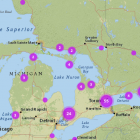
An organization focused on connecting the cultures of the Great Lakes region is raising money to share the stories of indigenous leaders. These leaders are Anishinaabe women, members of Native American groups living in the Canadian Great Lakes area. Their stories will be told in photos, sound, video and text and shared on the Great Lakes Commons Map, said creator of the Great Lakes Commons map Paul Baines. The Great Lakes Commons is an organization that fosters a community dedicated to protecting the Great Lakes, Baines said. The online map is a collaborative project to share photos, videos and personal stories about the Great Lakes.
Mr. Great Lakes (Jeff Kart) reports from Bay City, Michigan’s Delta College Q-90.1 FM. This week, Kart discusses Great Lakes Action Plan 2, a new wildlife preserve opening in Midland and the large expansion of Lake Huron’s Thunder Bay National Marine Sanctuary. Text at Mr. Great Lakes.

Four of the top 10 states in energy efficiency are from the Great Lakes region, according to WalletHub, a personal finance advice website that measured the energy use of cars and homes in each of the lower 48 states. Of the Great Lake states, New York (2), Wisconsin (3), Minnesota (6) and Michigan (10) are in the top 10. Other Great Lakes states ranked as follows: Indiana (19), Ohio (23), Illinois (26) and Pennsylvania (39). WalletHub determined efficiency in homes by “calculating the ratio between total residential energy consumption per capita and annual degree days.” Car-related efficiency was measured as a ratio between annual vehicle miles driven and gallons of gasoline used. Data from the U.S. Census Bureau, the National Climatic Data Center, the U.S. Energy Information Administration and the Federal Highway Administration suggests that home energy use was proportionally larger than car-related energy use, according to WalletHub.
Mr. Great Lakes (Jeff Kart) reports from Bay City, Michigan’s Delta College Q-90.1 FM. This week, Kart discusses a new wind park spinning in Huron County, funding available for Watershed Initiative Network grants and faulty septic systems that can pollute local waterways and contribute to harmful algal blooms.
Text at Mr. Great Lakes.
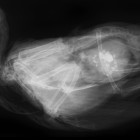
You can even touch the rare skeleton of the extinct bird – sort of.

LANSING — Bills that would prohibit people from using drones to shoot wildlife and harass legal hunters likely won’t be taken up until November. But little opposition has arisen and proponents expect them to pass. Two Michigan senators on the Natural Resources, Environment and Great Lakes Committee sponsored the bills — SBs 926 & 927 — which the Senate approved 38-0 on Sept. 24. The bills, sponsored by Sens.
A story about illegal fishing in West Africa is coupled with an interactive web game. It lets you play the role of a reporter tracking down the story.
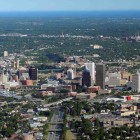
We’ve always known that the Great Lakes are the center of the freshwater universe. But who would have thought that they are the intersection of affordability and walkability? A group that’s developed a method of scoring a community’s walkability recently listed neighborhoods in a dozen U.S. cities that are not only easy to get around, they’re affordable to live in. They produced the list with Walk Score data – which measures walkability – the Cost of Living Index and the average rents for every major city in the country. And guess what?