Air

Great Lakes legal expert discusses challenge to EPA mercury rules
|
Michigan’s challenge to EPA emissions rule lands in front of the U.S. Supreme Court.
Great Lakes Echo (https://greatlakesecho.org/tag/renewable-energy/page/4/)
Michigan’s challenge to EPA emissions rule lands in front of the U.S. Supreme Court.
A new conservative group is hoping to open up the conversation about renewable energy. The Michigan Conservative Energy Forum is working to increase the state’s investment in energy efficiency and renewable energy programs.
In 2008, the state legislature passed Michigan’s Renewable Portfolio Standard. The law requires that by the year 2015, utilities must generate at least 10 percent of their energy from renewable sources. As 2015 approaches, state officials are working to determine the next steps for Michigan’s energy policy.
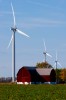
Nearly 70 percent of all new power plants built in the Great Lakes region since January 2012 use wind as an energy source, part of a nationwide trend of increasing reliance on wind power.
Mr. Great Lakes (Jeff Kart) reports from Bay City, Michigan’s Delta College Q-90.1 FM.
This week Kart discusses renewable energy investments and the trash count from the Adopt-a-Beach Great Lakes cleanup program. Text at Mr Great Lakes

Proposed legislation in Michigan may encourage the use of small-scale clean-energy devices by exempting them from property taxes.
Local governments say they must weigh clean energy’s impact on economic development against the loss of property tax revenue.
Native American tribes in the Northern Lower Peninsula and Upper Peninsula are seeking to develop renewable energy, but a lack of money is impeding many projects, experts say.
Michigan tribes have a potential for wind energy and wood-based biomass, said Roger Taylor, the principal project manager of the Tribal Energy Program.

Echo recently covered the prospect of the Great Lakes states supplanting their steady diet of coal with biomass — that’s trees, crop waste and other plants that can be burned for energy. It’s an attractive but tricky plan. If done right, it could be a “carbon-neutral” fuel because crops can be managed to absorb carbon dioxide and the vegetation would theoretically decompose and release its carbon anyway. If done wrong, we’ll rack up a carbon debt from still-recovering forest resources instead of fossil fuels. If it wasn’t already complicated enough, try figuring out how biomass emissions ought to figure into Senate climate legislation released this month by Sens.
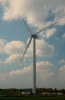
The first U.S. offshore wind project was approved last week off of the Massachusetts coast.
Could it encourage offshore wind production in the Great Lakes?
By Emily Lawler
Nov. 8, 2009
LANSING, Mich. — Turning sunshine into money isn’t a new concept, but it may become a more profitable one in Michigan. A proposed “feed-in tariff” plan would allow individuals and businesses to generate renewable power and sell it to utility companies with a guaranteed “reasonable profit” of 10 to 30 percent. “It ensures you’re going to cover your cost and not lose money,” said Stanley Pruss, director of the Department of Energy, Labor & Economic Growth (DLEG).