Echo
Y’all in the Great Lakes wouldn’t have just slaw with your Coke and crawdads
|
Regional language differences make for an interesting mapping project.
Great Lakes Echo (https://greatlakesecho.org/tag/great-lakes/page/10/)
Regional language differences make for an interesting mapping project.
Lana Pollack, chair of the International Joint Commission’s U.S. delegation, discusses past victories and future challenges of cleaning up the Great Lakes.
The Great Lakes formed thousands of years ago when a glacier moved across the region and melted. The film “Project:Ice” depicts the important role ice continues to plays in the Great Lakes Basin. The documentary’s director and executive producer Bill Kleinert joined, WKAR’s Current State to discuss “Project: Ice.” To read more about the film, you can check out an article we published earlier this year about the documentary. Film explores Great Lakes region’s relationship with ice by EmanueleB

While playing small ball is necessary, we should reach higher. If the Great Lakes region was a country, it would have the fourth largest economy in the world.
It deserves world-class solutions to its problems.
High bacteria levels plague Great Lakes beaches by EmanueleB
Climate and infrastructure both play a role in beach health. Extreme weather events and old sewage systems are enabling bacteria to pollute Great Lakes beaches. According to a 2012 report by the Natural Resources Defense Council, bacterial levels measured in 2011 of Great Lakes beaches exceeded national recommended health standards more than beaches in any other region. Dr. Joan Rose is the Nowlin Endowed Chair of Water Research at Michigan State University. She joined Current State’s Mark Bashore to discuss beach health.

Study indicates Asian carp may already be in Great Lakes by EmanueleB
A new study released in April finds Asian carp may in fact be reaching the Great Lakes. The Asian carp is an invasive species with an appetite large enough to potentially decimate the food chain ecosystem of the Great Lakes. There have been many efforts to contain the spread of the fish in the Chicago Area Waterway System to connects to Lake Michigan. The study now raises new questions about the effectiveness of that system. Current State’s Mark Bashore talks with study co-author Dr. Andrew Mahon, assistant professor of biology at Central Michigan University, and Dr. Tammy Newcomb, senior water policy advisor for the Michigan Department of Natural Resources.

The Great Lakes appear through the clouds in this photo taken from the International Space Station by Canadian astronaut Chris Hadfield. He posted it recently on his Twitter account as part of a social media campaign to promote his team’s mission. Hadfield is the commander of Expedition 35, marking the first time a Canadian astronaut has been in command of the station, according to the Canadian Space Agency.
The dependent relationship between energy and water is important, but in a water-rich state like Michigan, it’s easy to overlook. Skip Pruss discusses the water-energy nexus and its potential impact on the future of the Great Lakes. Pruss is a Principal at 5 Lakes Energy and former Deputy Director of the Michigan Department of Environmental Quality. Current State: Water-energy nexus in the Great Lakes Basin by Great Lakes Echo
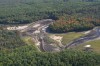
Dam removal in the Great Lakes region exposes nutrient-rich bottomlands.
That creates prime real estate for invasive plants.
Restoration solutions include poisoning the invaders with pesticides and spreading native plant seeds to revegetate the bottomlands.
Great Lakes advocates should focus less on federal funding and more on state issues, such as mining threats, groundwater conservation and risky oil shipments.