Echo

Chicago rower makes it home after 1,500 mile journey around Lake Michigan
|
The trip may be over, but Chicago rower Jenn Gibbons isn’t finished raising money for Recovery on Water.
Great Lakes Echo (https://greatlakesecho.org/tag/echo/page/93/)
The trip may be over, but Chicago rower Jenn Gibbons isn’t finished raising money for Recovery on Water.
University-based news organizations can hit the trifecta of higher education.
They teach. They report news that otherwise is unreported. They experiment with how news is gathered, disseminated, conceived.
Sounds like education, outreach and research to me.

A virus has killed more than 900 white-tailed deer across eight Michigan counties this summer, 600 more than last summer.
State biologists struggle to explain the increase, but believe it could be related to warmer, drier weather.

It may be a dirty job, but cleaning up pet waste is important. Some dog owners assume that because waste is natural, it can be left anywhere to decompose without risking health, said “dog waste digester” demonstrator Cathy Dueck. But dog waste carries more bacteria than human waste, posing a greater risk to human and environmental health, according to RAIN, a Green Communities Canada program that aims to end non-point source pollution. But dog owners, have no fear! This video from a Canadian environmental group illustrates how to take care of pet waste in a creative way.

This week Echo reporters asked the public and an expert to name Michigan’s state stone.
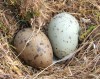
The color of Great Lakes herring gull eggs indicate how contaminated they are, according to a study in the Journal of Applied Ecology. And that may provide clues about the level of contamination in the surrounding environment. Researchers examined subtle differences in egg color. They found that the more contaminated eggs were less blue-green in color. Contaminants are eaten by birds and passed to their eggs. The mother also passes on the blue-green and brown pigments found naturally in her body to her eggs, Daniel Hanley, a postdoctoral fellow at the University of Guelph and an author on the study, told the Toronto Star.

All Photos taken by Jennifer Kalish.

The increasing unpredictability of extreme weather makes it hard to adapt U.S. crops to climate change. So says, Phil Robertson, a crop and soil scientist from Michigan State University, in a recent video released by the Yale Forum on Climate Change and the Media. Adjusting planting strategies and adapting new crop genetics are straightforward approaches farmers and crop scientists can take to respond to new climate conditions, he said. The variability of extreme weather complicates these tactics, though. “Extreme events, with the longer heat waves, with seasonal droughts, which are much more difficult to predict, and much more important in their effects on crops will be, I think, probably the hardest aspect of climate change to anticipate and adapt to,” Robertson said in the video.

For those who think state parks are just places to camp and picnic, think again.
In Michigan, they are turning into health and recreation centers.
From hosting triathlons and ultra marathons, to teaching people how to get an extra thirty to forty yards in their disc golf throw, state officials have spent years evolving ways state parks get used.

A new study will show how dangerous Great Lakes currents develop.
It may enable their prediction, leading to warnings broadcast to swimmers who increasingly fall victim to rip current related drownings.