Community group gets $16,310 to plant trees along St. Lawrence Seaway


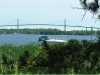
A community-based conservation group has received a $16,310 grant to plant native trees and other vegetation along a stretch of the St. Lawrence Seaway near Cornwall, Ontario, according to the Seaway News. The vegetation is to help restore natural riverbank habitat, which provides food and cover for wildlife. The Raisin Region Conservation Authority received the grant from the Great Lakes Guardian Community fund, which is operated by the province’s Ministry of the Environment. The fund gives out grants to community associations and other groups every year, including grants to the Toronto Zoo and the Walpole Island First Nation tribe.

PSA: Mercury – It can be recycled

Mercury, a hazardous material found in many common household items, can be safely recycled by local health departments, according to this public service announcement from the Michigan Department of Community Health. “Mercury that is recycled will be purified so that it can be used for industrial and laboratory applications,” said department toxicologist Christina Bush, “There are some instances where mercury is the best or only option to use. But mercury-containing items in homes, schools, and medical settings can be replaced with safer alternatives.” Additional information on the safe disposal of mercury, as well as the health risks the substance presents, can be found at the health department’s mercury website. The full series of health department mercury PSAs can be found here.

Fiscal cliff could dump sewage into Great Lakes

A program for fixing sewers is at risk because of the federal budget crisis. It comes as climate change is expected to bring more heavy rains that cause sewers to overflow. Advocates say the program helps struggling cities, the environment, the economy.

Report grades Great Lakes states’ water efficiency


A report grading water efficiency gives the Great Lakes states some low marks. Wisconsin scored the highest in the region with a B-. Michigan, Ohio and Pennsylvania were tied for the lowest grade with a D.

Wisconsin got high marks for availability of technical assistance and for water conservation planning, according to the Alliance for Water Efficiency, a non-profit group, and the Environmental Law Institute, a legal consulting firm. “Wisconsin represents how water conservation planning can vary by source,” the report said. “Wisconsin has one generally applicable planning process for public water suppliers, and another planning process only applicable to large withdrawers from the Great Lakes Basin.”

The report also showed dryer, southwestern states with higher grades than the national average, C. Perhaps dry states are more efficient because they must make due with less.