Illinois study shows perennial biofuels give off less nitrogen


Perennial crops like the tallgrass miscanthus can be turned into ethanol like corn, but give off less nitrogen into the atmosphere, according to a University of Illinois study. Limiting nitrogen is important because it can produce nitrous oxide, a greenhouse gas that furthers global warming. And nitrate can contaminate drinking sources and leach into lakes where it contributes to lethal dead zones for fish life. Ethanol is added to gasoline to reduce dependence on the fossil fuels that contribute to global warming. But it’s counterproductive to produce ethanol in a way that makes yet another powerful greenhouse gas – nitrous oxide.

Great Lakes pizzas raise $6,000 for litter reduction, Belle Isle restoration

DETROIT — Which Great Lake is the most popular? Going strictly by pizza preference, it appears to be Huron and Michigan. They were marginally the most-ordered pizzas in a promotion that raised $6,000 for the Alliance for the Great Lakes. “They were all pretty close,” said Wesley Pikula, vice president of operations at Buddy’s. “They were within about twenty pies of each other.”

Last year, Echo reported that the popular Michigan pizza chain Buddy’s Pizza launched its Great Lakes Pizza Collection with a pledge.

Where’s the Concern? Week One

Each week, Great Lakes Echo features a photo story about a different Area of Concern designated by the U.S. or Canadian governments in the Great Lakes basin.

Guess where the area is located, based on the description of the site.

The Grand Calumet’s road to recovery

Great Lakes Echo looked at the toxic brew that Indiana’s Grand Calumet River carries to Lake Michigan yesterday.

Today: A look at the multi-million dollar investment in its recovery.

It’s an investment not only in the river but in the near shore ecosystem of Lake Michigan.

When in Drought: Satellites show low Great Lakes groundwater

The drought plaguing the country continues to sap the groundwater and soil water of the Great Lakes region, according to new NASA satellite data. The two maps, constructed using data from NASA’s Gravity Recovery and Climate Experiment satellites, show low near-surface and subterranean water levels across the region between January 8 and 14, 2013. These satellites have been used to examine surface soil and ground water levels since they were launched in 2002. While not as low as some areas of the southeast or west, much of the region remains below the 1948-2009 average. Average levels are denoted by white space on the maps, while above-average is blue and below-average appears red.

Grand Calumet River delivers toxic load to Lake Michigan

Here’s a look at the toxic brew Indiana’s Grand Calumet River carries to Lake Michigan. Municipal and industrial effluent make up 90 percent of the river’s flow. But there’s hope for what is one of the nation’s most polluted rivers.

Video: What the Frack?

This video is among those produced by students at Kent State University’s Stark campus under the direction of biology and journalism faculty.

It is part of a multidisciplinary study of the local environment called OurWaterWebs and based south of Cleveland.

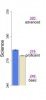
Wisconsin 4th graders exposed to lead got lower grades


The more Milwaukee public school fourth graders were exposed to lead, the lower their grades, according to a University of Wisconsin study. Comparing 3,757 students, those who tested higher for lead exposure scored worse on the state’s Knowledge and Concepts Exam, which measures math, reading and other skills, according to the study. Exposure among African American and Hispanic children were roughly double those of white children. Differences in scores ranged from 5.2 in social studies to 9.8 in reading, said Mike Amato, a doctoral candidate in psychology and environmental studies. The differences made up a large chunk of the distinction between “basic” and “proficient” competence in a given subject.