Echo
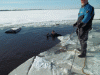
Making a living on thin ice
|
Climate change affects the economy in a variety of ways.
It’s tough on winter festivals.
But operating on thin ice is good for at least one business.
Great Lakes Echo (https://greatlakesecho.org/tag/echo/page/75/)
Climate change affects the economy in a variety of ways.
It’s tough on winter festivals.
But operating on thin ice is good for at least one business.

It turns out that 2012 was a great year for the birds. Until hunting season came around. Then it became a good time to be a hunter. Hunters dubbed the 2012 Minnesota waterfowl season a success on the opening day of the season according to the Minnesota Department of Natural Resources. The season benefited from fewer waterfowl hunting regulations and an earlier opening season date. It even seemed that the hunting season had some assistance from Mother Nature herself.

Drug traffickers have been conducting business deep within the lush canopy of Michigan’s forests since at least 2008. After five years of eradication efforts, police say the problem shows no signs of going away.

Many teachers may not think twice about dumping the contents of the class aquarium into a stream when the school year is through. Now, while living on an island in Lake Erie, they can learn why that’s a bad idea. The Great Lakes Education Workshop, which incorporates Great Lakes environmental issues into teachers’ curriculums, is offered for the first time in three years, thanks to a recent Great Lakes Restoration Initiative grant. It is an interdisciplinary course where teachers can take part in field work and hands-on labs, said Rosanne Fortner, who heads the Ohio State University-based program. Held at Stone Laboratory at Lake Erie, teachers meet researchers and gain access to EPA equipment while living on the islands of Lake Erie.
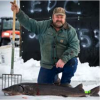
These fish live more than 70 years and grow to be more than six feet long. But they are so rare that the season ended this year once six were landed. The Black Lake Shivaree festival celebrates the prehistoric species.
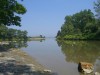
Each week, Great Lakes Echo features a photo story about a different Area of Concern designated by the U.S. or Canadian governments in the Great Lakes basin.
Guess where the area is located. And check out the answer to last week’s feature.

Lake Superior faces environmental threats as diverse as crude oil tankers and mining.
Cities on other Great Lakes should care.
We aren’t immune from each others’ problems.
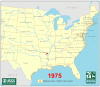
Here’s a nifty animated graphic that plots the spread of Asian carp.
It was produced by the U.S. Geological Survey and the National Wildlife Federation.

What do you do with urban territory that has fallen out of the literal economy?
A University of Michigan architecture professor suggests community gardens flourishing in empty lots, artists using fire-damaged buildings as palettes and neighborhood fairs in alleys.