Photo Friday: Ice atop Lake Erie

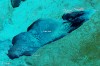
When last week’s snowstorm and cold spell made its way through the Great Lakes, nearly 90 percent of Lake Erie froze over, according to the NASA Earth Observatory. The colorized picture above shows ice (pale blue) and snow (blue-green) formed on top of the lake. A report by Jeff Masters, director of meteorology at Wunderground.com, showed that these high levels of ice coverage had not been seen on the Great Lakes since January 1994.

Ice forming along Chicago River

The Chicago River just west of where it enters Lake Michigan with what is known as  brash ice, floating fragments of ice usually less than two meters across. Image: Greg Monahan

Big Ten’s Eco Efforts: University of Michigan

In the spirit of our “Green Gridirons” series (but just in case college football wasn’t your thing), the “Big Ten’s Eco Efforts” series highlights creative off-the-field sustainability efforts. In January, the University of Michigan launched an online certification program to promote sustainable behaviors and culture. Students, faculty and staff are encouraged to join the Planet Blue Ambassadors by completing brief modules about energy, food, waste, water and community. “Ambassadors earn points per sustainable pledge they complete on their dashboard and earn badges the more pledges they complete,” said Dana Elger, media relations representative at the Office of Public Affairs. “The program is designed to educate the campus on the various ways they can assist in creating a culture of sustainability and motivate them to act.

Landscope: Southfield explosion

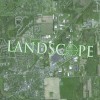
Now a booming suburb of Metro Detroit, Southfield has come a long way from a small agricultural town.

The city grew from around 18,500 residents in 1950 to more than 78,000 residents in 2000 before declining to 71,758 residents by 2010.

This increase was due to the growth of suburbs, where fresh air and having your own backyard was advertised by real estate agencies, as opposed to city living, where housing was crowded and dense.