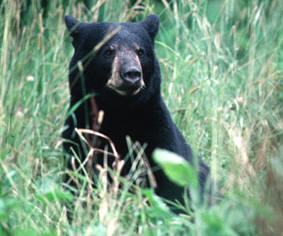
Sponsored by Rep. Wayne Schmidt, R-Traverse City, the bill would raise the 4.626 million acre cap on land and allow the Department of Natural Resources to acquire more.
In this installment of our “Landscope” series, get a bird’s eye view of the western Michigan city of Grand Rapids – and its evolution from farming town to one of the most popular cities for young professionals.
Mr. Great Lakes (Jeff Kart) reports from Bay City, Michigan’s Delta College Q-90.1 FM. Jan 24 2014 – The Environment Report – With Jeff Kart – Mr Great Lakes by jeffkart
This week, Kart discusses low water levels in the Great Lakes and a new nickname for Euclid Linear Park. Text at Mr. Great Lakes
Ecologist James Ludwig spent his career studying the chemical pollution of the Great Lakes – most notably with the help of his cross-billed cormorant, Cosmos.
Great Lakes Echo recently spoke with Ludwig about his new book, “The Dismal State of the Great Lakes.”
In the spirit of our “Green Gridirons” series (but just in case college football wasn’t your thing), the “Big Ten’s Eco Efforts” series highlights creative off-the-field sustainability efforts. In order to create a “living building,” Purdue University needed a small building with an apartment and classroom for an ecologist-in-residence. They wanted to build it to the standards of the Living Building Challenge, said Michael Gulich, director of sustainability at the school. The Living Building Challenge requires 20 prerequisites for certification, said Gulich. The requirements include net zero energy, which means producing as much energy as it consumes; net zero water, which requires a person’s water use to only come from collected precipitation or reused, purified water; an area for agriculture and an education component explaining how the site was built and how it functions.
Before it was buried in the late 19th Century, Singapore, Mich. was a bustling lumber town on the southwest coast of Michigan. As time passed, it was lost under the shifting dunes.