Echo

Flowering plants are Michigan’s fairest and rarest
|
Flowering plants top a Michigan list of extremely rare species groups. Threats are as diverse as climate change and off-road vehicles.
Great Lakes Echo (https://greatlakesecho.org/tag/echo/page/172/)
Flowering plants top a Michigan list of extremely rare species groups. Threats are as diverse as climate change and off-road vehicles.

Some Great Lakes power companies are looking to biomass to lower their carbon footprint while keeping the lights on. But critics are leery of cutting down forests to power refrigerators and say biomass is only carbon neutral in a political sense.

The Red Cedar River adds beauty to Michigan State University’s East Lansing campus.
But it can also become polluted with trash as it runs runs through a campus of more than 47,000 students.
The university’s Fisheries and Wildlife club recently hosted a day where volunteers cleaned up the river. See video.
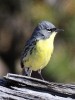
The number of Kirtland’s warblers recorded in the Great Lakes region in 2009 was the highest since a census of the birds began in 1951.
The rare bird faces challenges from climate change and funding for its protection.
It lives only in parts of Michigan, Wisconsin and Ontario.

Colony collapse disorder is a scientific mystery in which bees suddenly disappear from their hives.
Large research projects are underway to determine the causes.
Scientists are looking at food sources, nutrition, diseases, viruses and parasites.
An operation must have a certain number of animals or animal units to be considered a CAFO, according to the Environmental Protection Agency.
An animal unit is a method of measurement equal to 1,000 pounds of live animal weight.
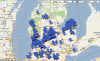
Concentrated Animal Feeding Operations are farm operations where large numbers of animals are raised in confined facilities. The farms themselves also tend to concentrate.
Twelve women line up, bows in hand. At the chirp of a whistle, they pick up their arrows, draw their bowstrings, and hit their targets with loud thwacks.

Michigan fishery managers recently released 325,000 coho salmon into the Grand River in the state’s capital.
Planting the Grand was skipped in 2007 and 2009 due to funding shortages.
The planting pause will let biologist study movement and survival of the fish.
When Echo launched a little more than a year ago, our intent was to upend the Great Lakes basin with a journalism that looked at the environment in an innovative manner. At the same time we vowed to remain faithful to fundamental values of fairness, accuracy, credibility. So we’re happy to report that the Society of Professional Journalists has named an Echo report on water pollution from coal plants as a national finalist for an online in-depth journalism award. The four-day Cleaning Coal series by Sarah Coefield, Elisabeth Pernicone, Yang Zhang and Rachael Gleason examined how clean air has come at the cost of dirty water and why coal-fired power plant waste water is poorly regulated. It previously won an SPJ regional award.