Echo

Competitors flex mussels in first round of SmackDown!
|
It’s time for the first two competitors in the Great Lakes SmackDown! to flex their mussels: The zebra mussel vs. the quagga mussel.
Great Lakes Echo (https://greatlakesecho.org/tag/echo/page/165/)
It’s time for the first two competitors in the Great Lakes SmackDown! to flex their mussels: The zebra mussel vs. the quagga mussel.
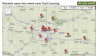
A group of Michigan natives have created an innovative way to help empower people with knowledge about where their local food comes from. Realtimefarms.com provides a way for individuals to find locally sourced food items using a variety of maps.

The latest round of Department of Agriculture (MDA) grants will promote new cost-effective ways to manage wastewater from food processing — a rising concern in growing specialty crops.
The grants to companies in Frankfort and Grand Haven and to Michigan State University are part of a larger initiative to enhance the state’s agriculture industry, including food processing.

Michigan environmental groups say the Senate has unjustifiably delayed a bill to ban a chemical linked to brain damage among breast-fed children.
New research shows increasing concentrations of flame retardants in women’s breast milk in the Great Lakes basin.
Studies show the chemical can harm human health and is finding its way into soil, water and wildlife in Michigan.

When, a coalition of public health and environmental organizations recently had 50 canned food and beverages analyzed, they discovered what they believe to be the highest levels of Bisphenol A ever found in the United States. And the sample responsible for setting this record came from a home pantry in Wisconsin.
The can of DelMonte French Style Green Beans contained 1,140 parts per billion of BPA, a chemical often used in plastic baby bottles, water bottles, printer inks, receipt paper and as a lining inside cans.

Which invasive species is the most ecologically destructive to the Great Lakes? That’s what the “Great Lakes Smack Down!” will find out.
We chose eight of the Great Lakes’ most formidable invasive species and we’ll pit them against each other in “lake fights” over the next few weeks.

Whether consumers should be allowed to purchase unpasteurized milk has been a hot topic in Michigan for years.

Michigan’s bats are under attack — not from tennis racquet-swinging bat swatters or vampire-hunters but principally from a deadly fungus with the potential to disrupt the ecosystem.
Nationwide, white-nose syndrome has wiped out an estimated 1 million bats since it was initially seen in a New York cave in 2006. Since then, it’s been identified in 14 states and two Canadian provinces and is moving westward.

When the U.S. Senate abandoned greenhouse gas-curbing legislation, they also pulled the plug on 1.9 million new clean energy jobs, according to a report released by a coalition of business groups.
The Great Lakes states total of 481,000 jobs is around the nationwide average for people making new requests for unemployment benefits each week.

New events in the Great Lakes aim to deal recycle items that can’t be recycled on the curbside and “Recycle Rama” is one such event.