Just what is an environmentalist?

Is everyone who favors protecting the  environment an environmentalist? Or is environmentalist a divisive word, one out of favor even with some people with a strong conservation ethic? Journalists often value an economy of expression. They strive — or at least should — for the precise word when summarizing complex issues. I got to thinking about this after a Great Lakes Echo reader took issue with a recent headline: Environmentalists worry that proposed Lake Ontario wind farm threatens wildlife.

Queen of England to take bite out of Great Lakes lamprey headache

Queen Elizabeth II will be served a Great Lakes  lamprey pie at her Diamond Jubilee in June. The Detroit Free Press reports that the dish has been given to British monarchs as a delicacy on special occasions since the Middle Ages. Of course, back then the parasitic fish was sourced locally. But apparently it is so scarce there now that it is a  protected species. That’s not the case here where the critter has decimated native Great Lakes fish after invading the freshwater seas through the St.

Weather, staffing fuel forest fire fears in Michigan

By Jon Gaskell

Capital News Service

LANSING — Michigan can expect more wildfires this year, officials warn. The state’s Department of Natural Resources is predicting a greater number of forest fires and more acres burned as a result of an unusually warm winter. To make matters worse, long-term shrinking of firefighting resources has reduced the state’s capacity to quell blazes, according to department Director Rodney Stokes. The department’s fire supervisor Scott Heather said Michigan is already seeing blazes much earlier than usual. “Usually for the Lower Peninsula, the season for fires begins around the third week of March,” Heather said.

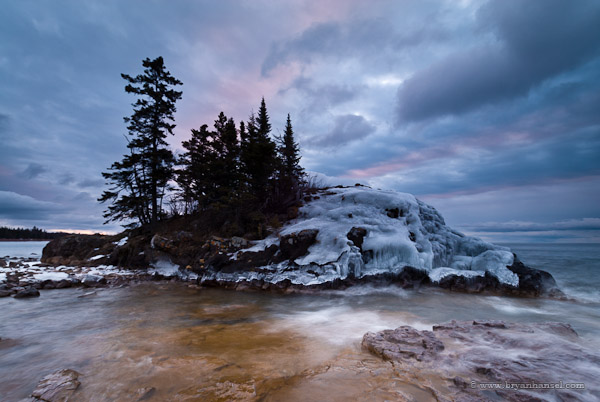
Flash Point: Bryan Hansel’s toughest Great Lakes photos

We asked Great Lakes photographers to send us their favorite Great Lakes shots. Bryan Hansel of Bryan Hansel Photography sent us these photos. I was on a 45-day, 800-mile kayaking expedition from Port Huron, MI to Grand Marais, MN when I heard about an upcoming storm that was predicted to blow gales for days. I was on a deadline and needed to get to Houghton to jump a ferry to Isle Royale before the storm hit, so I was paddling 30+ mile days. Before I got this photo, I had paddled about 33 miles and got to camp just as the sunset started.

Scientists, orphan beetles and a brand new Wisconsin species

Most people do not get excited about little brown beetles — especially those that don’t bite, cause disease or have economic value. But a researcher that has dedicated his life to finding “orphan beetles” has discovered a previously unidentified beetle species endemic to two Wisconsin counties. The findings are in the March issue of The Coleopterists Bulletin. Darren Pollock, a professor at Eastern New Mexico University’s department of biology, examined dead beetles (three male and six female) that were housed at the University of Wisconsin Insect Research Collection and the Carnegie Museum of Natural History. As an expert on little brown beetles, or LBB’s as he calls them, he saw something right away.

Monitor the effects of climate change as a citizen scientist

The USA National Phenology Network lets citizen scientists monitor the behavior of plants and animals to track climate change effects. Phenological events like plant flowering and bird migrations are influenced by the climate, so if those events continue to change, that could shed light on a changing climate. You can participate by scanning historical data from The North American Bird Phenology Program, sharing data you’ve kept from past years or observing plants and animals. Just sign up on the National Phenology Network website to learn what plants and animals you can observe, how to observe them and how to submit your information. You can see the data here and track phenological events across the country.

Americans want more and better environmental reporting; help us get some

Advocating for improved reporting on the environment is central to my job at Michigan State University’s Knight Center for Environmental Journalism. But apparently most of you agree that it’s a good idea. In fact, nearly 80 percent of Americans believe news coverage of the environment should be improved, according to a national poll commissioned by the Project for Improved Environmental Coverage. The Opinion Research Corp. conducted the poll April 14-15.

Flash Point: Craig Blacklock’s favorite Great Lakes shot

We asked Great Lakes photographers to send us their favorite Great Lakes shot. Craig Blacklock of Blacklock Photography sent us this photo, also the cover image from his book Apostle Islands – From Land and Sea. Bear Island, Apostle Islands National Lakeshore
 I discovered this small arch the previous afternoon. I took the time to set up and make an image. I was ecstatic about the composition, which seemed to contain all the elements of the Apostle Islands, but was not satisfied with the light.

Teach a child to fish and, well, you know the rest

By Patrick Lyons

Capital News Service

LANSING – Project FISH is focused on teaching a new generation of anglers, hoping to reverse the decline of Michigan fishing license sales. The project teaches water ecology, fishing techniques, rules and ethics of fishing and other skills like cleaning and cooking. A Project FISH – Friends Involved in Sportsfishing Heritage – workshop will be held March 6-7 in East Lansing. Project FISH was started in 1995 by the Michigan Department of Natural Resources, Michigan United Conservation Clubs and the Great Lakes Fishery Trust, said Mark Stephens, the education program coordinator. Since then the program has spread to 37 other states.

Network to find your water-conscious neighbors

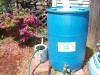
If you’re the only one in your neighborhood with a rain barrel, rain garden, green roof or porous driveway, don’t worry. You’ll never feel alone again. Networked Neighbors for Eco-Conservation Online connects you to other water-conscious people in the Great Lakes region. You can map projects around the region, calculate how much water you’re conserving and share pictures of your water conservation efforts. The site, developed by the Institute of Water Research at Michigan State University, has fostered friendly competition among neighbors who want to see who can save the most water with home projects like rain gardens.