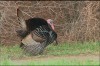
Wildlife cameras put you in the nest

Ever since Panda Cam hit the watching-baby-zoo-animals-from-the-comfort-of-your-office-chair scene, other animal cams have appeared to give viewers a look into the lives of wildlife. That’s including cameras following some Great Lakes birds. You can see Ms. Harvey, the great horned owl at The Feather Rehabilitation Center in New London, Wisc.; Big Red and Ezra, a pair of red-tailed hawks at the Ornithology Lab at Cornell University in Ithaca, N.Y. and a great blue heron at the Ornithology Lab. “It allows people to build a connection with birds from their computer screens,” said Charles Eldermire, BirdCams project leader at the lab. The Ornithology Lab at Cornell University has been monitoring birds with minute-by-minute photos for over 10 years, but launched their high-definition BirdCams in March.

Flash Point: Ken Scott’s toughest Great Lakes photo

We asked Great Lakes photographers to send us their toughest Great Lakes shots. Ken Scott of Ken Scott Photography sent us this photo. South Manitou Lighthouse

Lit by a full moon, this is a stack of 350, 30-second exposures. The hard part was getting the timing to work out so I could travel out to the island when there would be a full enough moon to light the landscape and no clouds to interfere with the shoot. It was a crap shoot and took a few trips out to get the timing the way I wanted it.

Recalls of unsafe children’s products drop

By Xinjuan Deng

Capital New Service

LANSING — After an increase in 2010, federal recalls of unsafe children’s products dropped by 24 percent last year. Nursery products were the most-recalled category, accounting for 30 percent, followed by toys at 26 percent. But some advocacy groups say the figures from the U.S. Consumer Product Safety Commission are incomplete. Kids in Danger, a nonprofit organization in Chicago, said injuries and other incidents associated with those recalls grew 7 percent. “We don’t know if the Consumer Product Safety Commission looked to recall more products and were unable to persuade manufacturers, or if this represents a decrease in dangerous products in the marketplace,” said Nancy Cowles, executive director of Kids In Danger.

Caramel Apple official summer flavor for Michigan’s state parks

This summer families cuddling underneath a warm blanket to watch the sunset at one of Michigan’s state parks can enjoy Pure Michigan Caramel Apple ice cream. That’s the state park system’s official flavor. “So many people get ice cream and watch Michigan’s great sunsets, in state parks or along our shorelines,” said Maia Stephens, a recreation programmer with the state’s Department of Natural Resources. Dawn Dummer of Houghton Lake created the new signature flavor, Stephens said. The state and the Holland-based Hudsonville Creamery and Ice Cream Co.

Warmer weather isn’t changing hummingbird migration

The warm weather in the Great Lakes region this March is unusual, but it should not change hummingbirds’ migration patterns and instincts, according to a hummingbird enthusiast. Lanny Chambers from St. Louis, Mo., is licensed to band hummingbirds, which is when a band with a unique number is placed around the bird’s ankle. This is for educational purposes and reveals a lot about migration habits. He also runs a website where people post when and where they have seen the birds migrating.

Youth hunting may boost Michigan’s economy

By Jennifer Chen

Capital News Service

LANSING — More turkey hunting licenses will be issued this year to lure young people outdoors, a step which may help improve the state’s economy said Rodney Stokes, director of the Michigan Department of Natural Resources. A new $7.50 mentored youth hunting license package started on March 1. The spring turkey season which runs from April 25 to May 13. “It is a good way to teach children about the importance of conserving the state’s unmatched natural resources and ensure the hunting tradition continues to thrive,” Stokes said. The new mentoring program will eliminate the minimum hunting age and let parents decide if and when their child is ready to hunt.

Michigan wetland restoration snags millions for two projects

By Xinjuan Deng

Capital News Service

LANSING — Two federal grants of $1 million each will help restore wetlands and migratory bird habitats in Michigan. The projects include work on water control and distribution structures in the Saginaw Bay area, Southeast Michigan and the Lake Michigan area. Tom Melius, Midwest regional director of the U.S. Fish and Wildlife Service, said, “Wetlands in the upper Midwest not only serve as indicators of water quality for our communities, but also serve as the breeding and resting grounds for hundreds of species.”

More than 3 million waterfowl annually migrate through or breed in the Great Lakes region, many in the corridor that extends from Saginaw Bay to western Lake Erie, including Lake St. Clair and the Detroit River. The corridor has vital breeding grounds for mallards and wood ducks, as well as American black ducks, redheads, shovelers and blue-winged teal.

Is that a shark or a submarine? Diving machines could be coming to a Great Lake near you

Move over, jet skis — there’s a new watercraft terrorizing the lakes. Seabreachers, sold by Innespace, are like one-person submarines that can dive about five feet, go 40 mph on the surface and up to 20 mph under the water. I’ve never seen one in action, but this video caught my attention. Just imagine one of those popping up next to you on the lake. Seabreachers  look like animals — sharks, killer whales and dolphins.

Mild winter, early runoff spur swirling sediment in Lake Erie

A mild winter left Lake Erie nearly ice-free. On the first day of spring last week, a NASA satellite snapped a picture of the southern Great Lakes region and showed sediment clouding up the shallow lake. The colors in the image are accurate. The tan colored-water swirling around the shoreline is sediment rushing in from streams and rivers. The warm winter brought more rainfall than snow, so there was increased runoff.

Handheld pathogen sensor detects bugs in food, environment

When there’s an outbreak of foodborne illness, health inspectors are on the case looking for clues that lead to the tiny culprit making people sick. But instead of sending samples to an off-site lab, inspectors could soon hold the answers in the palm of their hands. Michigan researchers came up with a quick, easy and cheap way to test for toxins and germs using nanotechnology, the study of things on a molecular scale. “It’s a chemical, electrical way of telling the presence of something you’re looking for in a very quick manner,” said Fred Beyerlein, CEO of NanoRETE, the company developing the technology. If contaminated spinach is the suspect, an inspector would put a spinach leaf in a bag of clean water, swish it around until particles wash off the leaf, then test the water for germs. The sensor picks up on changes in the electrical conductivity of the water to find pathogens.