This gardening chore requires a hazmat suit

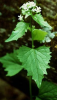
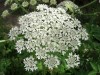
Sheesh, and you thought Asian carp are threatening invaders. WKAR public radio in East Lansing, Mich., has a great interview with a botanist taking on a giant hogweed given to a Michigan resident. The Asian invasive can grow up to 14 feet tall and sports flowers that are two-feet across. So what’s the big deal? Well, as botanist Peter Carrington explains, chemicals on the outside of the plant can cause huge fluid-filled blisters to erupt on your skin.

Tour a Thunder Bay shipwreck without getting wet

Calling all shipwreck enthusiasts! Always wanted to explore an underwater shipwreck but not a fan of getting wet? This Saturday is your lucky day. Anyone with an Internet connection will have access to an underwater shipwreck tour at the Thunder Bay National Marine Sanctuary in Alpena, Mich. Saturday.

Michigan catfish don’t quite measure up

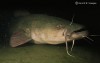
As monstrous as it may seem, Michigan’s recent record-breaking 49.8 pound flathead catfish catch  doesn’t measure up to record-breaking flatheads from other Great Lakes states. The largest is Indiana’s 79.8 pounder. Michigan’s record breaker was caught May 22, by Rodney Akey, on the St. Joseph River, in Berrien County. Pennsylvania is the only Great Lakes state with a smaller flathead catfish (48.6 pounds) on record.

Think Earth is the water planet? Think again


This infographic produced by the United States Geological Survey makes it easy to visualize why water is not to be squandered. It displays just how much of the Earth’s water is available for use. It’s not as much as you’d think when you look at it in relationship to the size of the Earth. The largest of three spheres represents all the water on Earth, salt and fresh. The second largest represents just freshwater.

Ontario proposes Great Lake Protection Act


Ontario lawmakers are introducing an act to restore and protect the Great Lakes. The Great Lakes Protection Act would establish a Great Lakes Guardian Council with members from provincial and local government, the First Nations and the sectors of science and agriculture. A Great Lakes Community Action Fund would provide $1.5 million for community projects designed to help the Great Lakes. It would also allow the provincial minister of the environment to implement problem-solving targets, requirements and initiatives. The action comes at a time when critics say a proposed federal budget bill in the Canadian Parliament guts environmental protections.

Invader crusader billboard coming soon to regional highways

Billboards in the Great Lakes region will soon feature a Louisiana high school senior’s prize-winning painting of a “silent invader.”

Monika Daniels’ painting of a largemouth bass swimming through zebra mussel infested waters will be used to remind Great Lakes boaters how to prevent the spread of invasive species. Daniels won an art contest held by Wildlife Forever, a Minnesota-based nonprofit conservation group that supports environmental education. This is the first year the group’s K-12 State-Fish Art Contest had a category dedicated to invasive species. Contestants also write an essay explaining what they’ve learned about how invasive species harm fish and their habitats and how that’s represented in their artwork. The group has a free lesson plan for educators called Fish-On!

Here’s a chance to check out your neighborhood from space

Here at Echo we have a special fondness for satellite imagery. Sometimes outer space offers the best vantage point from which to get a sense of Great Lakes issues. Check out this view of the ice break up on Lake Erie and the subsequent agricultural runoff bringing the nutrients that feed the lakes algae headaches later in the summer. Want more? NASA and the U.S. Geological Survey are customizing local landscape images for six U.S. citizens who enter the “My American Landscape” contest.  Just send them an e-mail describing the landscape changes near you and what you hope to learn about them.

Feds to provide $10 million in funding for Great Lakes phosphorus reduction programs

Federal officials are giving out $10 million in grants to reduce phosphorus in the Great Lakes. The element is tied to the production of algae, which can be toxic to wildlife and people. The funding is part of the Great Lakes Restoration Initiative, launched in 2010 to tackle a diverse set of environmental problems.

High levels of phosphorus are often due to farm runoff and poorly treated sewage, according to the initiative’s action plan. The grants are aimed at farmers who are looking for more efficient conservation programs for their land and nearby water sources. The U.S. Department of Agriculture Natural Resources Conservation Service is the primary agency administering the grants aimed at phosphorus reduction.

More volunteers means less invasive plants

As more invasive species attack the state parks, more hands are needed to fight them. The Michigan and Indiana recreation officials are calling for volunteers to help remove invasive plants from the state parks and recreation areas.  

“It is a great opportunity for families and friends to enjoy the outdoors, improve the conditions of parks and be engaged in its protection,” said Laurel Malvitz-Draper, stewardship coordinator for the Michigan Department of Natural Resources. Volunteers search for and pull invasive plants such as non-garlic mustard, Japanese bittersweet, shrubs, common buckthorn and vines. Invasive plants can contain chemicals that kill native plants and limit the native species growing nearby.