Internet provides easy access to Great Lakes beach closures

It is now easier than ever for people to find out if a Great Lakes beach is safe for swimming. Excluding New York, all of the Great Lakes states have websites dedicated to statewide beach closure information, so people can better avoid possible sickness. “The source of the data comes from all of the local health departments that collect water samples, get them tested, then report results according to public health code,” said Shannon Briggs, toxicologist at the Michigan Department of Environmental Quality. Many of these websites are a result of funding from the U.S. Environmental Protection Agency’s BEACH act grants. Grants have been given to eligible Great Lakes states since Congress passed the Beaches Environmental Assessment and Coastal Health act in 2000 to improve beach monitoring and notification programs.

All of the Great Lakes states were given around $220,000 this year in BEACH act grants, according to the agency’s website.

What’s your favorite Canadian adventure in the Great Lakes basin?


Only one of the top 10 Canadian Adventures recently identified by Outside Magazine falls within the Great Lakes basin. It’s a cool adventure – mountain biking near Quebec. But I have to admit that what really appeals to me about this one is the description of enjoying a beer in view of the St. Lawrence River at a ride’s end. Ontario picked up another nomination with the paddling of the Missinaibi River.

How are Anglo-Nubian goats like Asian carp?

To answer that riddle you need to first review Monday’s Catch of the Day. It describes how communities in Texas and elsewhere still import Asian carp to clear an invasive plant out of vegetation-choked waterways. The carp are sterile to avoid substituting one invasive headache for another. (The carp threatening the Great Lakes are definitely not sterile and the longterm concern is that they will proliferate and dramatically change the native ecosystem.)

Where do the goats fit in? A reader notes a similar land-based phenomenon on New York’s Staten Island.

Carp: Shunned in Great Lakes, welcome in Texas

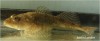
While resource managers and other conservationists worry about keeping Asian carp out of the Great Lakes, in Austin they’re giving them a real Texas welcome. In fact, just last week city officials dumped 3,000 of the fish into Lake Austin, according to the Austin-American Statesman. That’s on top of 10,000 they already put in the lake to control hydrilla, an aggressive plant that clogs the lake, fouls propellers and overtakes native plants. The grass carp is one of the species of Asian carp that wildlife experts fear could bypass an electric barrier at the Chicago River and eventually get into Lake Michigan. The concern is that the voracious eaters will thrive, disrupt the ecosystem and threaten the survival of native species.

News dance: Bees do it. How about journalists?


It’s a complex world. How best to explain it? That’s the challenge facing journalists — particularly those who cover the environment. Technology increases our communication tools. But can we also use less techy techniques?

Carp land attack: Highway to Canada

The Chicago River waterway gets much of the attention as the route Asian carp could use to enter the Great Lakes by way of Lake Michigan. But Canadian authorities say Lake Ontario is also a vulnerable entry point. The Northumberland News recently reported that Canadian border officials have stopped six truckloads of the voracious eaters in the past two years. The average truckload contained about 6,000 pounds of the fish which many fear could disrupt the Great Lakes ecosystem. Two of the six cases have been prosecuted, the Ontario publication reported.