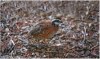
Hunting this threatened species is not the reason for its decline

When a species is red listed by the International Union for Conservation of Nature it is rare for it to be hunted. But Michigan’s northern bobwhite is an exception.  
The Michigan Audubon Society recently reported the northern bobwhite, commonly known as quail, is Michigan’s only bird that is both hunted and on the International Union for Conservation of Nature’s red list, which identifies species at a high risk of extinction. The quail hunting season in Michigan lasts three weeks from Oct. 20to Nov.


Where’s the Concern? Week Eight

Each week, Great Lakes Echo features a photo story about a different Area of Concern designated by the U.S. or Canadian governments in the Great Lakes basin. Guess where the area is located, based on the description of the site.

Photo Friday: The beaches of the Indiana Dunes

[cincopa AMKAhELKqO7K]

Although Kathleen Stachowski now resides in Montana, the Great Lakes, and Lake Michigan in particular, will always hold a special place in her heart. Born and raised in Michigan City, Ind. near Indiana Dunes National Lakeshore, Stachowski’s life has always been tied to the dunes and the lake. Her childhood was filled with family trips to the lake and the dunes, seeing it then as a place of both wonder and solace. “The dunes had a truly wild feel in those days and not many people went there,” she recalled.

Current State: The future of Michigan’s climate

Climate change is continuing to influence Michigan’s environment. Last March a sudden thaw and freeze devastated the state’s berry crops. While recently, record low water levels have forced the government to spend millions on dredging. Jeff Andresen,  Michigan Climatologist and assistant professor of geography at Michigan State University discusses Michigan’s climate future.

Muskegon and White lakes reach cleanup milestones

Cleanup efforts at two Michigan Areas of Concern, Muskegon Lake and White Lake, have reached important milestones, according to the Michigan Office of the Great Lakes. The Environmental Protection Agency on Feb. 26 lifted Beneficial Use Impairments on both lakes pertaining to fish consumption, allowing local residents and anglers to fish these lakes with fewer restrictions. Recent studies by Grand Valley State University on the lakes revealed that fish there did not possess higher concentrations of PCBs or mercury than fish in lakes that were not listed as Areas of Concern. Both lakes remain subject to the same fish consumption advisories as the other lakes in the area.

Mr. Great Lakes: Earth, wind and restoration

 
Mr. Great Lakes (Jeff Kart) reports from Bay City, Michigan’s Delta College Q-90.1 FM.  


This week Kart discusses advocacy for Great Lakes restoration funding, an Earth Day festival in Huron County and the strength of the U.S. wind energy industry in 2012. Text at Mr Great Lakes

Current State: EPA may end SS Badger’s long run on coal

The iconic Michigan steamship, the SS Badger, may lose its permit to dump spent coal into Lake Michigan. The Ludington company that owns and operates the Badger, Lake Michigan Carferry, expects to hear soon from the U.S. Environmental Protection Agency about its request to continue the practice. Hugh McDiarmid, communications director  for the Michigan Environmental Council, discusses the impact of the SS Badger on the environment.  

Photo Friday: Hungarian Falls freezes over

[cincopa AwDA3FrEqa4N]

A February snowshoeing trek to lower Hungarian Falls, near the town of Hubbell in Michigan’s Keweenaw Peninsula, revealed the 50-foot cascade to be largely encased in ice. Water could be heard trickling beneath the frozen surface, running into the winter-diminished Dover Creek and out into nearby Torch Lake. Photos by Julie Dau.