Invasive Species: Zebra Mussels


Zebra mussels are one of five aquatic invasive species that The Nature Conservancy has deemed “‘the usual suspects’ doing the most damage in the Great Lakes basin and beyond.”

Originally from Eastern Europe and western Russia, zebra mussels are the only freshwater mussels that can attach directly to other objects. They most likely have come over attached to the bottoms of ships. Once here, the mussels grow in population rapidly. Zebra mussels can produce 100,000 to 500,000 eggs per year, according to The Nature Conservancy. Nicknamed “the Silent Strangler,” these pests smother native freshwater mussels and kill plankton that some fish need to survive.


Flash Point: Laura Miller shoots Maumee River ice

We asked Great Lakes photographers to send us some of their favorite or toughest Great Lakes shots. Photographer and artist Laura Miller sent us these photos. Late January 2014 has been particularly difficult along the Maumee River in Ohio because of the amount of snow and rain we received with near-record precipitation.  These photos of an ice jam reflect the challenge of the river environment with the next challenge being flooding in the spring. Although this part of the river had an ice jam, farther upstream the water was flowing freely as the ice had been swept away.  The Maumee River is the largest Great Lakes watershed and feeds into Lake Erie.  There is a wonderful park system that follows the river providing abundant opportunities to enjoy the river.  Getting to the river isn’t the easiest during the winter months. The most difficult aspect of this photo adventure was knowing where the river bank ended and the river began.  You can’t help but respect the power and beauty of the ice when you’re actually on the banks of the river.   As you get closer to the water’s edge, you can easily go through the ice not knowing there is water flowing underneath.

Landscope: A landfill is born

In this installment of our “Landscope” series, get a bird’s eye view of the “birth” of a landfill in Kent County, Mich.

Great Lakes ice cover surpasses 88 percent

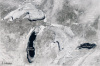
Ice cover on the Great Lakes reached 88 percent this month for the first time in a decade, according to NASA’s Earth Observatory. Since 1973, average ice cover of the lakes has been just more than 50 percent. It has only exceeded 80 percent five times in the past 40 years. This image of the Great Lakes was taken by NASA’s Aqua satellite on February 19, 2014. NASA reported that NOAA’s Great Lakes Environmental Research Laboratory put ice cover at just over 80 percent.

Invasive Species: Sea Lamprey

By Evan KreagerGreat Lakes Echo

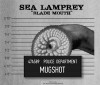
The Nature Conservancy has named sea lampreys one of the five “usual suspects” invading the Great Lakes basin. These eel-looking parasites find a host and suck the life out of it. During the length of one life cycle, a sea lamprey can kill up to 40 pounds worth of fish and can grow up to 3 feet long. Sea lampreys are native to the Atlantic Ocean, Lake Ontario and the St. Lawrence River.

Illinois, Wisconsin differ in culling deer to control disease

By Elizabeth DagresGreat Lakes EchoHunting combined with the controversial practice of culling can help control chronic wasting disease (CWD) in white-tailed deer better than hunting alone, according to a recent study done in Illinois and Wisconsin. Culling removes breeding animals to minimize reproduction. It’s been used in both Illinois and Wisconsin to control the spread of the contagious neurological disease that infects deer, elk and moose. CWD causes a spongy degeneration of the brain and results in emaciation, abnormal behavior, loss of bodily functions and death, according to the Chronic Wasting Disease Alliance. Illinois and Wisconsin are among the Great Lakes states experiencing an increase of white-tailed deer amid continued concern about the fatal disease.

Calling all students and teachers: Young Reporters for the Environment Competition

Student reporters and educators alike — the National Wildlife Federation’s “Young Reporters for the Environment Competition” is looking for your environmental work! The contest is open to students ages 13-21. Eligible submissions should demonstrate investigation about an environmental topic, offer solutions, and reflect knowledge of how the topic relates both globally and to the community. Contest entries are accepted as:
-Single photograph
-Photo essay, consisting of no more than 12 photos
-A written article, no more than 1000 words
-Video, no more than three minutes long

The deadline for submissions is March 15, 2014. National winners, which are announced at the end of April, are then entered into the competition’s international level.

Mr. Great Lakes: Canadian trash, the Weadock Plant, and trees

Mr. Great Lakes (Jeff Kart) reports from Bay City, Michigan’s Delta College Q-90.1 FM. Feb. 21, 2014 – Mr. Great Lakes (Jeff Kart) – Delta Q 90.1 FM – Environment Report by jeffkart

This week, Kart discusses an increase in Michigan’s trash, the shutting down of a coal-burning plant and a spring tree sale. Text at Mr. Great Lakes