New York court leaves turbine project dangling in the wind

An appeals court has refused to order a local government to extend a special use permit for a proposed multimillion-dollar 29-turbine wind farm in Western New York. Allegany Wind LLC unsuccessfully sought a one-year extension of its permit for the controversial project in the town of Allegany, in Cattaraugus County just north of the Pennsylvania border. When the original permit was issued in July 2011, the town notified the company that the approval would expire if construction has not commenced within a year. The town extended the deadline because of a lawsuit by project opponents, Concerned Citizens of Cattaraugus. The citizens group lost that challenge in November 2011.

National Wildlife Refuges expand hunting

Three national wildlife refuges in the Great Lakes region will expand hunting opportunities and two more will open to hunting for the first time, according to the U.S. Fish and Wildlife Service. The Cypress Creek National Wildlife Refuge and Middle Mississippi River National Wildlife Refuge in Illinois and thePatoka River National Wildlife Refuge and Management Area in Indiana will expand migratory bird, upland game and big game hunting. The ones opening hunting for the first time are Shawangunk Grasslands National Wildlife Refuge in New York for big game hunting, and Cherry Valley National Wildlife Refuge in Pennsylvania for migratory bird, upland game and big game hunting. Hunting and wildlife observation is a big economic boost to the local area, said Bill McCory, the manager of Indiana’s 7,398-acre Patoka River National Wildlife Refuge. A lot of money is spent locally on hunting licenses, guns, clothes, tackle, bait and more.

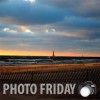
Photo Friday: Wisconsin sunrise

This picture of a clear early morning on the western side of Lake Michigan was snapped by Wisconsin resident Catherine Egger last summer. The photo was taken from the shores of Manitowoc, home to the Wisconsin end of the SS Badger car ferry, which transports cargo to and from Ludington, Mich. You’ll notice a small gathering of geese near the bottom of the picture that joined in watching the sun come up. Have a photo to submit for our Photo Friday series? Send it to us on Facebook or Twitter, or in an email to greatlakesecho@gmail.com.

Recent spill triggers closer look at tar sands shipping on Great Lakes

Last week, as much as 1,600 gallons of oil spilled into Lake Michigan from the BP refinery in Whiting, Indiana, 20 miles from Chicago. After a week-long cleanup, authorities say they have found no further trace of spilled oil in the area. However, the political ramifications of the spill are likely to remain long after this incident.

Photo Friday: Ice and snow cover Green Bay

By Evan KreagerGreat Lakes Echo 
This photograph taken recently from the International Space Station shows the city of Green Bay, Wis. Just north of the city is the ice-covered Green Bay off the west coast of Lake Michigan. The landscape is covered in snow. Because the sun poorly illuminates the area, the entire scene is set in gray. Fields can be seen purely covered in white snow, and forests look dark.

Photo Friday: Crystal clear Lake Superior

Tired of all those ice-choke pictures of Lake Superior. Here’s a view from warmer times. This picture of Lake Superior was taken by Tim Trombley in the summer of 2013. The remarkably clear water might be nearly invisible if it weren’t for the ripples of the waves. We’re always open to viewer submissions for our Photo Friday series, so feel free to message us on Facebook or Twitter, or send an email to greatlakesecho@gmail.com.

Maps show spread of aquatic invasive species over time

The Nature Conservancy has animated how six invasive species have spread across the Great Lakes over time. The group has created six maps that show population increase and spread since the appearance of each species in the Great Lakes basin and beyond. Sea lamprey, the first of the six invasive species to appear in the area, initially showed up in Lake Erie in 1921. The map shows the population of the fish expanding into the rest of the Great Lakes up until present day. Also included in the maps are Asian carp, zebra and quagga mussels, round goby, Eurasian Ruffe and black carp.