Wisconsin officials cut diseased trees at state park

Wisconsin State officials are cutting down trees in Whitefish Dunes State Park in Door County that are infected with beech bark disease. The park has lots of beech trees and those that are infected pose a safety hazard, said Linda Williams, a Wisconsin Department of Natural Resources forest health specialist. Weakened limbs and trunks can snap off or fall over during strong winds. The idea is to remove dead trees before they harm visitors or staff. Infected trees that are within 75 feet of park trails are targeted, said Arnie Lindauer, a program analyst for the park.

Short’s Brewing ties seasonal beers to Clean Water Campaign

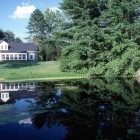
Short’s Brewing Company in Bellaire, Mich. released its American Double IPA “Superfluid” this spring. (Photo: Short’s Brewing Company)Short’s Brewing Co. in Bellaire, Mich. is using the creation of one of its popular summer beers to draw attention to an oil pipeline that the company fears could taint the waters of the Great Lakes.

Preserving the lands of the wealthy

A stretch of New York’s Hudson Valley is known for its old wealth, stately mansions–and encroaching new wealth and development.

In the words of the National Park Service, “For nearly two centuries, this place has been home to socially prominent New Yorkers.

It still is, and increasingly so. Median household income of $71,508 in 2008-12 is up by 34.70 percent since 2000.

Those pressures make it imperative to preserve what can be preserved of the land and the culture.

Photo Friday: Manitowoc Breakwater Lighthouse

This picture of a perfectly clear sunrise over Lake Michigan was taken by Catherine Egger in Manitowoc, Wisc. during the summer of 2013. The city of Manitowoc is about 40 miles southeast of Green Bay, and the lighthouse in the distance is the Manitowac Breakwater Lighthouse, which has been a part of the shoreline for over 100 years. Have a photo to submit for our Photo Friday series? Send it to us on Facebook or Twitter, or in an email to greatlakesecho@gmail.com.

Volunteers guard Michigan’s spawning sturgeon

From now through early June, volunteers will be standing guard over the Black River in Northern Michigan.

They’ll be on the banks of the river making sure that the lake sturgeon, a rare and threatened species in the state, are able to leave their homes in Black Lake and successfully spawn in the Black River.

Why do the fish need guarding?

Ann Feldhauser, who coordinates the program through the group, Sturgeon for Tomorrow, says the goal is to have a presence on the river 24/7 to prevent illegal taking of the fish.

Ohio tries to prevent foodborne Illnesses

Nearly a quarter of foodborne illnesses in the United States are cause by fresh produce, according to Ohio State University researchers. Research shows that leafy greens and sprouts cause the most illnesses, said Sarah Klein, senior attorney in Food Safety Program at the Center of Science and Public Interest in Washington D.C. Leafy greens and sprouts cause the most illnesses. She explained that leafy greens are grown in soil where manure can be used and it is fertilized with irrigation water. Sprouts can carry bacteria in their seed. Sprouts are normally grown in warm and moist conditions that cause the bacteria to grow.

Celebrate migratory bird day early

Detroit Public Television is webcasting live an interview with author, blogger, columnist, educator and birding expert Sharon Sorenson  at 1 p.m. today. Sorenson will explain how to better host birds in the backyard and around the world in the Great Lakes Now Connect program produced with The Nature Conservancy. The program is  hosted by veteran journalist Christy McDonald, and moderated by Patrick Doran, The Nature Conservancy’s director of science for Michigan and the Great Lakes. Panelists include John Hartig, the manager of the Detroit International Wildlife Refuge and a board member of the Detroit Riverfront Conservancy Refuge and Melinda Pruett-Jones, former director of Chicago Wilderness and the first-ever director of the American Ornithologists’ Union. The program and related features can be seen here:
LimelightPlayerUtil.initEmbed(‘limelight_player_418504’);
Or you can see it on TV on International Migratory Bird Day, May 10th at 3 p.m. or on May 15th at 10 p.m.

Turkey love: Even birds need a wingman

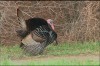
It’s spring and love is in the air for turkeys. The ritual is not an event for two, but three. As Current State’s Melissa Benmark discovered, even turkeys need a wingman to land the lady of their dreams.

Photo Friday: Historic observation tower in Michigan City, Ind.

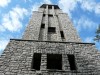
These photos of a 77-year-old observation tower in Michigan City, Ind. were taken by Echo reader and Montana resident Kathleen Stachowski last year during warmer times. Growing up in Indiana, she said one of her favorite childhood memories was making the 220-step trek to the top with her mother. The tower was designed by Fred Ahlgrim in the 1930s, according to Michigan City’s website. The 70-foot-tall Art Deco-inspired building is built of limestone and is located right next to the Washington Park Zoo on the Lake Michigan lakefront.