Lake Superior climate change grab bag

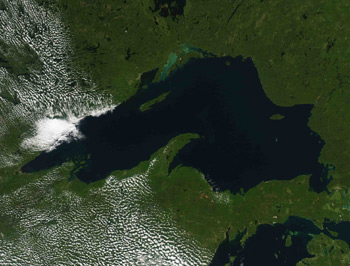
Lake Superior has a fever, and the only prescription is a pile of media coverage. The coldest Great Lake is around 15 degrees warmer than usual for this time of year and on track to beat its record high temperature of 68 degrees, reports ClimateWire’s Dina Fine Maron in the New York Times. Over at the Great Lakes Town Hall, blogger Dave Dempsey recently pointed to a report on climate change in Lake Superior from the University of Minnesota Duluth’s Large Lakes Observatory. The report (PDF) cites research findings that Lake Superior’s surface is warming twice as fast as the region’s air temperatures. “We knew that the upper Great Lakes region was warming more rapidly than the global average, but not this rapidly,” Jay Austin says in the report.

Take a hike! Suggest your favorite Great Lakes trail.

Get outside and do it simply, Detroit Free Press outdoor writer Eric Sharp urges in this article on hiking trails of the Pinckney and Waterloo state recreation areas. Hiking is a great way to get some exercise and tune into nature without spending hundreds on a bike or boat. That’s not to say that I couldn’t sink a few pay checks into ultralight tents, packs, sleeping bags and camp cookware systems. But all you really need are some shoes and a trail. Sharp profiles some the 2- to 30-mile trails in the Pinckney-Waterloo system. Some of my favorites in the state are the Manistee River Trail and some of the 13 trails that cut through the Sleeping Bear Dunes.

Gulf oil Great Lakes update: Backyard rescue efforts not much help for small birds

Last month Echo reported that Great Lakes migratory birds are threatened by the Gulf oil spill. Regional bird expert Francie Cuthbert, a University of Minnesota professor, was busy with fieldwork when we tried to reach her then. But she got back with us for this update:
Female Great Lakes piping plovers will head south for the winter ahead of the males in a couple weeks. Since nothing is cleaned up, they will almost certainly be affected by the spill, Cuthbert says. She expects only a small percentage of plovers that come in contact with the oil to survive.

Wisconsin wildlife update: Loons and whooping cranes and bears, oh my!

It’s mixed news for Wisconsin wildlife, reports Ron Seely of the Wisconsin State Journal. Seely wrote a series of three stories recently about the status Wisconsin’s black bear, whooping crane and loon. For the first time since the 1800s, the Wisconsin Department of Natural Resources believes that Southern Wisconsin is home to a population of black bears, Seely reports. Citizens report various bear sightings and research by the state has begun. And it’s good news for the endangered whooping crane.

Cougar country: Big cats confirmed in Ontario and likely in Michigan

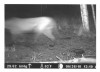
Whether cougars are prowling around Michigan and Ontario has been a small mystery. Michigan’s last known cougar was killed in 1906, and Ontario’s was shot in 1884. But evidence that they’re back is piling up. The Ontario Ministry of Natural Resources confirmed the cats are back after biologists checked out scat, tracks and DNA in a three-phase, four-year study, reports Raveena Aulakh for the Toronto Star. The Michigan Department of Natural Resources and Environment recently released a trail camera photo of a vaguely feline blur in the Upper Peninsula.

VIDEO: Michigan solar car outraces other Great Lakes universities’ “raycers”

Last Saturday a group of University of Michigan students won the American Solar Challenge – a competition where students design and build solar-driven cars and race them across the country. This year’s teams and their vehicles sped 1,200 miles from Oklahoma to Illinois. Michigan’s 700-pound machine dubbed “Infinium” – which can reach speeds over 100 miles per hour – beat 16 other U.S. and international teams and crossed the finish line in about 28 hours. In second place, University of Minnesota’s car “Centaurus 2,” finished over two hours later. Last place finisher “Mercury III,” Illinois State University’s vehicle, came in 38 hours later.

Carp bomb: Barrier break

CHICAGO – A bighead Asian Carp was apprehended Wednesday after breaching a maximum security federal barrier, officials say. No one was harmed in the capture of the 20-pounder. Officials aren’t sure how the carp escaped, but they say he was just six miles from a clean getaway. Advocates of the watery prison say it keeps the public safe from the ferocious fish.  Opponents say the barrier isn’t a cure, but a band-aid over a larger ecological problem. Click here for more on how society is putting up with carp.

Carp watch: News roundup in wake of barrier breach

Now that an actual real live Asian carp has been discovered beyond the barrier trying to keep it out of Lake Michigan, scientists are trying to discover if the adult male fish was dropped into Lake Calumet or if it is part of a larger population of fish. John Rogner of the Illinois Department of Natural Resources told the Chicago Tribune that the carp, 34 inches long and more than 19 pounds, was found east of the O’Brien Lock, giving it unimpeded access to Lake Michigan. Rogner said fish biologists will use genetic testing to try to determine whether the bighead carp was farm-raised, indicating it might have been dropped off in the lake, or whether it had lived its life in its natural environment. The latter would suggest the carp was among several that perhaps have migrated up the Chicago water system and are now poised to enter Lake Michigan, a potentially dire scenario given how Asian carp have overwhelmed native fish populations in the Mississippi River and lower parts of the Illinois River. Meanwhile, the fish has spurred Great Lakes politicians and activists into calling for immediate action.

New program encourages sustainability in Great Lakes cities

A new regional initiative encourages green energy use, economic development and water resource protection in more than 70 Great Lakes cities. The Great Lakes and St. Lawrence Cities Initiative, a bi-national network of mayors promoting the region’s restoration, recently launched the Green Cities Transforming Towards Sustainability program. The program is supposed to protect water and coastal areas and promote low-carbon energy generation and green land use and building design. Officials hope green economic development stimulates local economies.

NASA: Moon may have more water than the Great Lakes

The fight to keep Great Lakes water in the Great Lakes isn’t just regional anymore. Things just got global, if not interplanetary. That’s because new NASA-funded research suggests that the amount of water locked up in Earth’s longtime orbital nemesis — the moon — could exceed the volume of the Great Lakes. So unless the region conserves every drop it can, I’ll have to listen to my grandkids prattle on about how “The Great Lakes were cool until their volume was marginalized by the discovery of hydroxyl indigenous to lunar apatite, a water-bearing mineral.” Lousy moon-brats.