Send a valentine to the waterway you love

By Shaheen Kanthawala

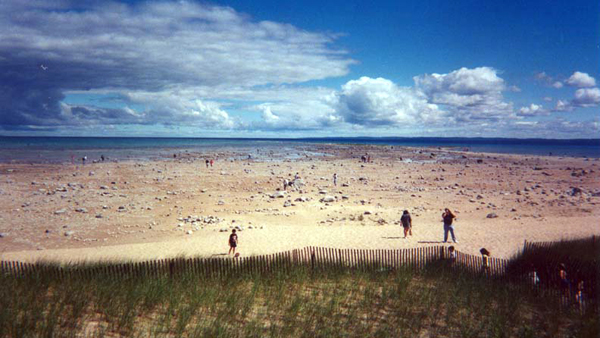
Do you love clean waterways? This Valentine’s Day you can let them know. Environment America, an organization that aims to protect air, water and open spaces, developed a campaign to support the Environmental Protection Agency’s initiative to restore the protections of the Clean Water Act. The organization says the law is under attack in the courts, putting some protections in limbo and blocking  attempts by Congress to restore them. Environment America is sending valentines submitted by supporters of the campaign to EPA Administrator Lisa Jackson.


Five great ideas for dining sustainably on Valentine’s Day

By Allison Jarrell

Go Meatless:  This Valentine’s Day falls on a Monday so go meatless! The Meatless Monday non-profit initiative hopes to improve personal health (and the health of the planet) by reducing participant’s meat consumption by 15 percent. Not only will skipping meat once a week reduce your carbon footprint, it’s a great way to try new vegetarian recipes, like Black Bean Sesame Veggie Hash or Green Tea Tofu Soba Salad! Buy Local: Supporting your local economy is a great way to live sustainably while helping others in your community. Instead of buying an expensive bottle of imported Port to share with your romantic veggie dinner, buy wine from a local winery.

Jeff Gillies

Wisconsin newspaper criticizes government outreach on lake levels

The Milwaukee Journal Sentinel has for more than a year reported on the controversy surrounding a binational study on the cause of low water levels on lakes Michigan and Huron:

– The controversy surrounding the study board’s initial results
– The controversy of whether the study board was withholding a second report that contradicted the study’s results
– The controversy of the location and timing of official public hearings on the study

Recently, the International Upper Great Lakes Study published on its website an article on some Lake Michigan property owners’ preferences against government intervention to correct Lake Michigan’s low water level. Not surprisingly, the Journal Sentinel found it controversial. I wrote about the study board’s post for Echo. The biggest point of dispute is the post’s headline, “Lake Michiganders Don’t Want to See Water Levels Raised.” That sentiment conflicts with the majority of people attending a public hearing on the issue held in Wisconsin back in March 2010.

Save a lake, eat an invasive

The next time you’re complaining about Great Lakes invasive species, do something about it. Go home, cook one up and eat it. Spoil your taste buds with some savory, smoked Asian carp or let your kitchen fill with the eel-like fish aroma of sea lamprey pie or lamprey stew. Yum. Not into smoked things or pie?

Taste of Change

This coming Saturday, February 12 the Youth Karate-Ka Association, a Michigan organization dedicated to teaching youth about farming and karate as self-defense, will host YKA Taste of Change — an event that will promote the association and show the documentary, “Kings of Flint.”

Produced by Michigan State University professor and students, “Kings of Flint” follows Flint, Mich. residents as they attempt to build a greener future for the city. Last summer Great Lakes Echo ran a series documenting the progression of the film called “The Greening of Flint.”

The event will also include a silent auction that will benefit the association. It starts at 6 p.m. at this address:

Beecher Village Hall, G-5226 N. Saginaw St. Flint, Michigan

Also check out the documentary’s soundtrack written by four Flint high school students.

Lake Michigan property owners say, “Leave them lake levels alone”

An international study board is looking into raising the levels of lakes Michigan and Huron. This is at the urging of a group of Lake Huron property owners who insist that a bad dredging job on the St. Clair River – Lake Huron’s outlet – has drained their lake to an unnatural low. But a rising Lake Huron lifts Lake Michigan’s boats: They’re the same lake. So a member of the study board’s public advisory group asked his coalition of Great Lakes property owners what they thought about the prospect of a higher Lake Michigan.

Jeff Gillies

Restoration initiative: 2011 funding still in doubt; 2012 already trimmed

While advocates are still fighting for this year’s round of Great Lakes Restoration Initiative funding, a federal budget official indicated that next year’s round is already on the chopping block. Congress approved $475 million for the restoration initiative in 2010, the program’s first year. President Obama requested only $300 million for the program in the 2011 budget, which Congress still hasn’t approved. As budget talks ramp up, some Republicans have singled out the EPA – which administers the restoration initiative – as ripe for cuts. The expectation was that the program would bounce back to $475 million in 2012.

Great Lakes water study predicts local shortages

A U.S. Geological Survey water availability study released today says Great Lakes water is great, but not infinite. Researchers behind the five-year study note uneven water distribution could lead to local shortages. Areas like Milwaukee and Chicago may see  an estimated 100-foot drop in groundwater levels by 2040 if groundwater pumping continues in these areas, the study reported.

2011 Lake Superior Environmental Stewardship Award

Do you know someone ordinary (yourself included) that is doing something extraordinary for the Lake Superior basin? Well, then you can nominate them for the eighth annual environmental stewardship award which honors “extraordinary achievement by ordinary people.”

It recognizes citizens who have worked to restore or defend the natural resources of the Lake Super basin. The award is given out by the Lake Superior Binational Program that consists of both American and Canadian federal, state, provincial and First Nations and tribal governments. Nominees can be entered into several categories including:  Youth or youth-related group, individual adult, business, industry or a community group like a municipality or a tribe. Past winners include: lakesuperiorstreams.org and the St.

Game Day waste wars

As the Steelers take on the Packers in Super Bowl XLV, university football recently made touchdowns in another area–waste reduction at home games. How much difference can one home football game make? Apparently more than 500,000 pounds of waste worth. That’s what the U.S. Environmental Protection Agency is reporting in results of their 2010  WasteWise Program Game Day Challenge. The program pits football teams against each other in more ways than one.