Echo

VIDEO: Growing cows on grass yields happier farmers, better dairies – Part 1
|
Grass or grains?
For some farmers, moving cows from the feedlot to the field yields more money for less work.
Great Lakes Echo (https://greatlakesecho.org/tag/catch-of-the-day/page/106/)
Grass or grains?
For some farmers, moving cows from the feedlot to the field yields more money for less work.

Sometimes the environmental news at Echo can be terrifying – or at least extremely gross. With tongue in cheek and in honor of Halloween, today we’re asking you to conceive of Great Lakes horror headlines. You’ve got plenty of fodder: Slimey green algae, blood-sucking sea lamprey, giant leaping carp. Some examples to get you started:
The attack of the bloody red shrimp
The e.coli that ate the beach
It came for our water
The case of the disappearing diporeia
The storm sewer that swallowed Chicago
But you can do better. Show us in the comments section below.

Another cougar was photographed by a trail camera earlier this month in the Great Lakes region – this time in Juneau County, Wisc. Wisconsin Department of Natural Resources biologists confirmed the presence of four cougars over the last three years, and seven trail cameras have documented cougar activity in the state according to a press release from the Department. Biologists believe most of these cougars are from South Dakota, making their way through Wisconsin to find territory and mates. Who knows, maybe they’ll end up in the Upper Peninsula.

Here’s a way to get from the western end of Lake Superior to the eastern end of Lake Ontario in a scant 14 minutes. This Great Lakes Tour created by the Great Lakes Environmental Research Laboratory is more than a video. The tour makes 20 stops while rattling off Great Lakes factoids about size, ecosystems and environmental threats. You’ll go scuba diving, see a ship leaving the Soo Locks, a sinkhole and more. Pause the tour and you can click and drag the image to peek at any place in the world. Push the play button to get back to the Great Lakes.

Scientists are in Washington D.C. today to present to federal lawmakers research suggesting the Great Lakes region has more problems with mercury than previously thought. Their visit comes just weeks after the GOP-led House of Representative passed two bills that would handcuff the EPA from limiting mercury emissions. As Echo reported, scientists reviewed research on mercury in the Great Lakes region and found despite overall decreases in the pollutant, concentrations are rising in some species and health risks are occurring at lower levels than expected. The new report, published by the Biodiversity Research Institute in the academic journal Ecotoxicology and the journal Environmental Pollution, summarizes the findings of more than 170 scientists, researchers and resource managers. The report is a collaboration of the Biodiversity Research Institute, the Great Lakes Commission and the University of Wisconsin-La Crosse.

If you ever find yourself wishing you for a bird-eye view of the Michigan’s Upper Peninsula’s shoreline you are now in luck. (And you and I have a lot in common)
The Superior Watershed Partnership and Land Trust just launched the Great Lakes Shoreviewer, which is an online database full of photos and maps of every inch of the peninsula’s coast. The Shoreviewer was originally conceived as a tool for city and township officials, but will also be used to assist tourism campaigns, help paddlers plan kayaking and canoe trips, and give Great Lakes nerds like yours truly another reason to procrastinate at work. The maps highlight natural features like wetlands, dunes, and hills, giving direction to conservation and protection efforts. And, of course, for those of you who are just dying to check out the Pictured Rocks National Lakeshore on the go, there’s a Shoreviewer app coming soon.

In 2008, the Michigan Natural Resources Commission prohibited hunters from baiting deer.
Some three years later northeast Michigan residents still blame a ban on deer baiting for harming the local economy.
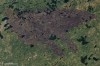
This image was sent to me by a particularly imaginative and dorky friend, who said she saw a “seal looking up.”
Actually, it is an Oct. 10 NASA Earth Observatory satellite image of the remains of a massive wildfire that raged across northern Minnesota for nearly two months. The burned areas show as the charcoal outline. Lightning ignited the blaze in the Boundary Waters Canoe Area Wilderness on Aug. 18. The fire is now 80 percent contained, according to the Duluth News Tribune.

Smashing a bottle of champagne is part of this week’s ceremony welcoming two new Great Lakes research vessels to the U.S. Geological Survey’s fleet. The ships, the R/V Muskie and the R/V Kaho, replace older vessels on Lake Erie and Lake Ontario, continuing research on predator and prey fishes, and surveying the lakes for fishery and ecosystem health. The boats are smaller than others in the fleet — they’re only 70.8 feet while others are more than 100 feet. That makes them better for testing near shore ecosystems.
A christening for the ships is Wednesday at the Sandusky Yacht Club in Sandusky, Ohio. A public open house follows from 1 p.m. to 4 p.m.
By David Poulson
Last week the Healing Our Waters coalition recognized Echo for excellence in reporting on the Great Lakes. We’ve been recognized by others for pioneering some unusual forms of journalism. But I like to think that this Great Laker award recognizes our success with a traditional function of news: Defining, creating, organizing and fostering community. Journalists most often define news communities as towns, cities, provinces, states and even nations. The Echo experiment defines a news community in relationship to a natural resource. The concept is that a watershed is more than a hydrologic feature.