Michigan lawmaker seeks to sink ships to raise tourism revenue

By PAIGE HOUPT

Capital News Service

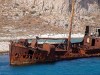
LANSING- Some lawmakers want to sink ships, aircrafts and cement structures in the Great Lakes to spur Michigan tourist revenue. Some tourism officials question if the expensive and lengthy process of cleaning and sinking a vessel or aircraft will provide enough economic revenue. Others are concerned about environmental impacts. But with nearly 10,000 shipwrecks at the bottom of the Great Lakes, recreational diving is already a popular activity in the state. “Recreational diving tourism is a huge tax revenue source in other states such as Florida and California,” said Rep. Greg MacMaster, R-Kewadin.

Echo’s Gary Wilson special guest at Great Lakes Week 2011

Great Lakes Week 2011 is underway in Detroit and Echo’s own Gary Wilson is a special guest for Detroit Public Television, which will be providing live coverage of the event. You may remember Wilson from his recent fiery criticism of Great Lakes Water Quality Agreement officials, or when he called out his own town for green-washing. Wilson will be live on air giving his take on the conference and the state of the Great Lakes. Tune in to Detroit Public Television’s live stream through Great Lakes Echo or Great Lakes Now for coverage of all the week’s  meetings and sessions. Great Lakes environmental issues are on tap all week in Detroit — Wilson is just one of the major players who have invaded Motown to discuss basin-wide problems and solutions.

An adventure a day keeps the doctor away

A dose of exercise and fresh air is just what the doctor ordered. Indiana Dunes National Lakeshore is partnering with Porter Health Systems in Indiana to prescribe walks, bike rides, kayak trips and other activities to patients through the Park Prescription Program. By getting out to the park, patients will get some exercise and stress relief, while hopefully boosting visitation. Not every prescription is the same. Before they write a prescription, Porter doctors will find the right trails and activities based on the patient’s needs and abilities.

Sporting swine listed as an invasive species

The Michigan Department of Natural Resources recently listed the sporting swine as an invasive species, stepping up the state’s fight against swine gone wild. By April 2012, sporting and breeding facilities won’t be allowed to have sporting swine because they can get loose and become feral. Feral swine have a track record for damaging property, eating domestic and wild animals, out-competing native animals for food and spreading diseases like Foot-and-Mouth disease to wildlife, livestock and humans.  


The department encourages sporting facilities to offer hunts to get rid of their sporting swine population. To help control swine that have already gone wild,  Michigan allows hunters with any kind of license to hunt swine on public and private land.

Mobile Decontamination Machine tears into zebra mussels

A high-pressure stream of 140-degree water is enough to cook a zebra mussel, not to mention blast it to bits. With the Mobile Decontamination Machine at its side, the Wisconsin Department of Natural Resources is flexing its arm in the zebra mussel battle. Instead of relying on chemicals, bacteria or toxins covered in fat to manage the invasive species, the department is adopting a physical attack. Hot water is pumped through boats’ bilge lines to kill and flush out the mussels, which often live in bilge water and the underside of the boats. When boats travel from lake to lake, they can deposit the mussels and spread the invasion.

Groups feel left out of Agreement talks

Environmental groups are continuing to complain that they’re kept out of the loop on updating the Great Lakes Water Quality Agreement. That’s a commitment of U.S. and Canadian governments to protect the Great Lakes. In September, 41 citizens’ groups submitted a list of concerns to agreement negotiators asking for a bold, urgent plan with more timelines and specific goals. I bet they’d also like to read the agreement before it’s signed. For more on the issue, check out what Echo commentator Gary Wilson has to say.

NASA shows Siberian lake painted with fog

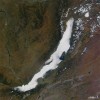
NASA recently posted a satellite image of the world’s greatest lake painted with fog. The fog’s perfect outline of Lake Baikal in Siberia is a phenomenon known as evaporation fog. It happens when surface water evaporates into cold air and forms a cloud. Lake Baikal isn’t the only great lake with fog events. The North American Great Lakes often experience lake effect, when warm, moist air blows off the lake and mixes with the cooler air over land to create fog and stratocumulus clouds.

Severe drought in Minnesota and Upper Peninsula

Even a region known for its water can get a little parched, as shown by the U.S. Drought Monitor late last month. Droughts in the Midwest are far less significant than those in the South, which looks like a swollen, red bee sting in this graphic from the U.S. Drought Monitor. But parts of Minnesota and Michigan’s Upper Peninsula clearly show areas of severe drought. The National Drought Mitigation Center classifies a severe drought as one that might result in crop or pasture losses, water shortages and imposed water restrictions. Drought in these areas of Minnesota and the Upper Peninsula don’t appear to be improving, according to the Seasonal Drought Outlook for the rest of the year.

Watch a cyclone develop over the Great Lakes

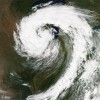
A NASA satellite caught a huge cyclone storm last week swirling over Lake Michigan and surrounding states. A cyclone is an area of low pressure where winds flow counterclockwise in the Northern Hemisphere and clockwise in the Southern Hemisphere, according to the University of Illinois cyclone webpage.  They usually develop when a warm front from the south meets a cold front from the north.  The cold and warm air wrap around a center of low pressure and the air in the center where they meet causes clouds and precipitation. Mid-latitude cyclones cause stormy weather in the continental U.S.  While their comma shape usually identifies them, I distinctly see a shrimp in the above NASA photo. Watch the shrimp, or comma, develop in a very cool animation from the Geostationary Operational Environmental Satellites that shows the storm’s progress from September 25 to September 27.

Get your hands dirty during “Big Worming Week”

Now that we’ve let you in on the big invasive worm secret, we’re letting you know how to help. Great Lakes Worm Watch is hosting the fourth annual Big Worming Week, which started Sunday and will run through Oct. 2nd. Things started in the Hartley Nature Center where the Worm Watch team taught the public how to sample plots and collect valuable data on worms.

The team offers workshops all year to prepare folks to help out during Big Worming Week.  While they encourage and will accept samples year-round, Big Worming Week minimizes the data’s seasonal variability and makes comparing the results easier. In addition to workshops telling you how to be a scientist, there’s a game show about worms, tools to identify worms, books about worms and other wormy things.