Nearshore

Cottages, invasive species, landscape fuel Lake Huron algae
|
Lined along Lake Huron’s Canadian coast stand beach cottages and vacationers… and green globs of algae.
Great Lakes Echo (https://greatlakesecho.org/tag/algae/page/6/)
Lined along Lake Huron’s Canadian coast stand beach cottages and vacationers… and green globs of algae.
Mr. Great Lakes (Jeff Kart) reports from Bay City, Michigan’s Delta College Q-90.1 FM.
Jan. 10, 2014 – Mr. Great Lakes (Jeff Kart) – Friday EDITION – Q-90.1 FM Delta College Public Radio by jeffkart
This week, Kart discusses a project to gather algae photos, Michigan’s Clean Energy Manufacturing Roadmap project and a study about Asian carp. Text at Mr. Great Lakes

Great Lakes Echo commentator Gary Wilson looks back at some of the biggest Great Lakes stories of 2013.
Click here to watch Battling the Bloom: Lake Erie
In 1970, sections of Lake Erie were declared dead due to an excess of toxic algal blooms created by industrial pollution. But a little over a decade later, the lake went through a transformation that saw a return of wildlife and recreation to the area. Over the past five years, the blooms have returned. These blooms are largely caused by fertilizer and farmland waste nearby running off into Lake Erie. The video linked above discusses the past and current threats posed to Lake Erie by these blooms, and what scientists and conservationists are doing to stop them.

Ohio officials have built an artificial wetland to help prevent blooms of toxic algae in Grand Lake St. Marys by filtering runoff from a nearby creek.
Policymakers now must decide between Great Lakes algae action with measurable results or the more familiar place of knowing what to do but unable to muster the will to do it.

Summer duty: Mapping progress, helping shorebirds and bracing for algae.

Harmful algal blooms are likely to persist on Lake Erie, primarily due to climate change, land use, invasive species and farming practices.
An active storm season this May and June may be a contributing factor.

It was first found in the St Lawrence Seaway and then Lake Erie. Now it has been identified on Lake St. Clair. The species forms thick mats and can cause skin, oral and gastrointestinal problems.
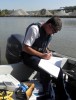
A binational group of researchers, agency officials and boat captains are developing a comprehensive monitoring program for Lake Erie. The lake is often a predictor of issues looming for other Great Lakes.