
By Ada Tussing
If you’ve noticed fewer birds in the sky recently, they haven’t all flown south for the winter.
Bird populations have been consistently declining over the last 50 years.
According to a 2019 study in the journal Science, the North American bird population has dropped about 29% since 1970 – approximately three billion birds.
That trend has been observed nationwide, including in Mariette Nowak’s home state of Wisconsin.
“A prime reason is an overall loss of habitat and plants that birds have evolved to depend upon,” Nowak said. “Land birds depend on about 90% insects for their food, and insects do not thrive on non-native plants.”
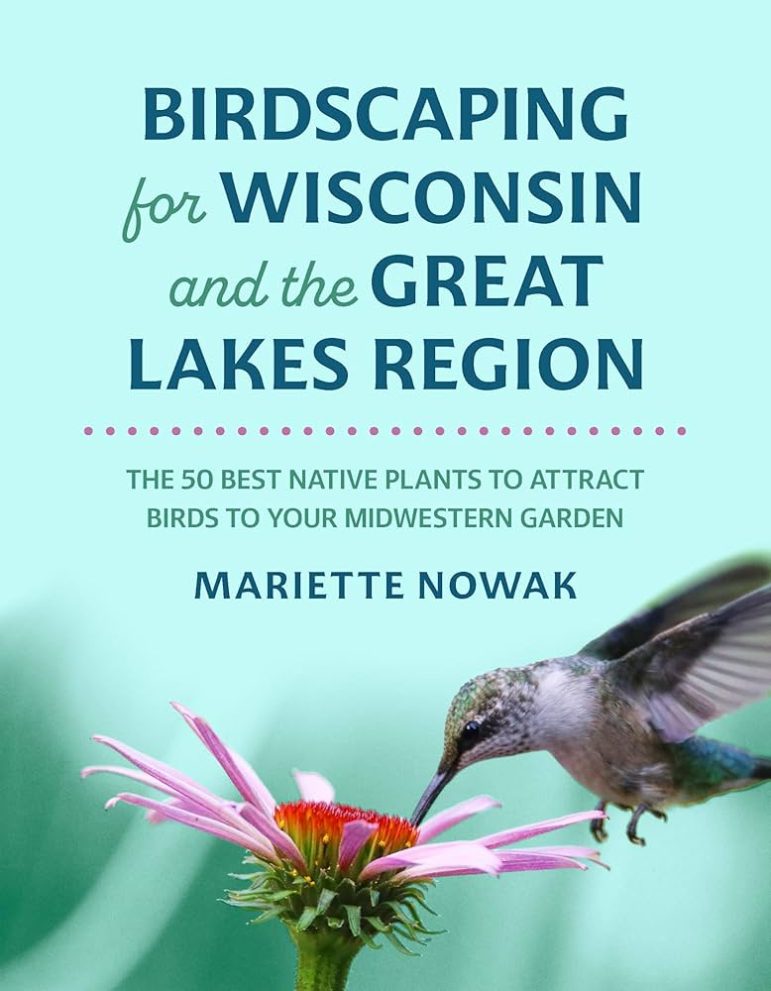
Nowak is the author of “Birdscaping for Wisconsin and the Great Lakes Region” (University of Wisconsin Press, $34.95). The recently published book offers a solution to this growing problem.
This is Nowak’s third book, and her second birdscaping guide following her 2007 “Birdscaping in the Midwest.” (University of Wisconsin Press, $34.95).
“‘Birsdcaping’ is planting plants for birds,” Nowak said, “planting native plants with which birds have evolved.”
After earning degrees in botany and biology, she became a director of the Wehr Nature Center in Milwaukee County.
“It was during that time I started writing little articles about attracting birds to your yard,” Nowak said. “Gradually, that expanded to my books.”
“In my first chapters, I talk about how to get started and how to protect your birds from things like collisions,” Nowak said. Car and window collisions, pesticides and house cats are all common threats to bird populations.
The book continues on to explain the five main groups of birds and what kinds of native plants are the most beneficial for each.
“For example, hummingbirds need nectar, so I chose plants with the highest amount of nectar, and bluebirds need about 70% insects and 30% berries in their diet,” Nowak said.
Each species requires a different diet and habitat.
“Pine warblers, for example, live almost entirely in pine trees, while cedar waxwings thrive on the berries of red cedars, after which they are named,” Nowak said.
Wisconsin is home to over 300 bird species, according to the state Department of Natural Resources, and 24 are considered threatened or endangered.
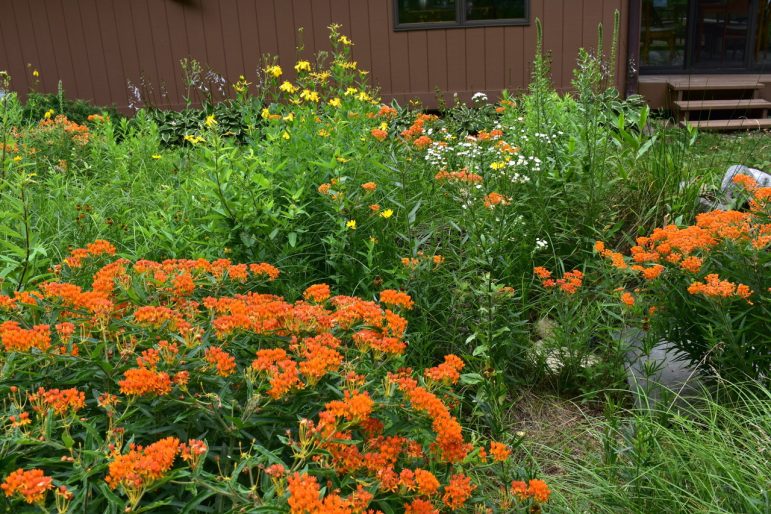
Birdscaping your yard creates a sanctuary for birds. There are many ways to incorporate native plants, from creating mini-prairies to potted plants on your balcony, she said.
“Even just at your front door,” Nowak said, “any planting, large or small, will help keep our common birds common.”
Nowak said that any little effort can make a big effect.
“There is so much we can’t do on a national or international level,” she said, “but gardening for birds gets you closer to nature and can be beneficial for you as well as birds.”
Adding native plants to your yard doesn’t help only birds.
“Many of the plants have deep roots and will help with climate change by storing carbon in their roots. It helps the soil, increasing nutrients in the soil,” Nowak said.
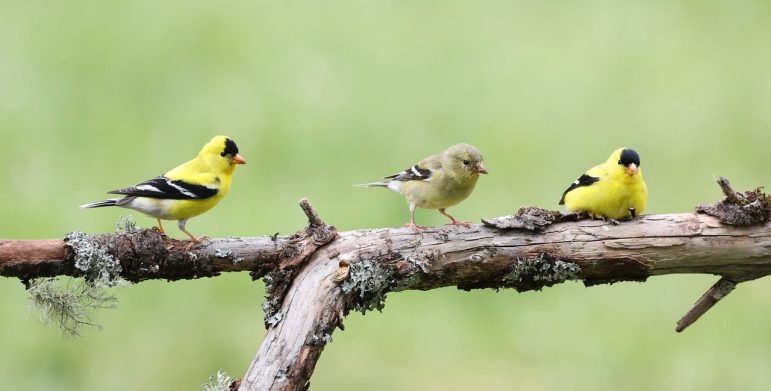
Nowak loves goldfinches.
“Native thistles are their favorite plant,” she said, as goldfinches feed on and use the down on thistle seeds to line their nests. “Native thistles also attract many butterflies including great spangled butterflies.”
“Grow those native plants!” she said.