By Isabella Figueroa Nogueira
When you think of the Midwest, you often picture it as long, flat and maybe even empty. That terrain is ideal for solar power projects.
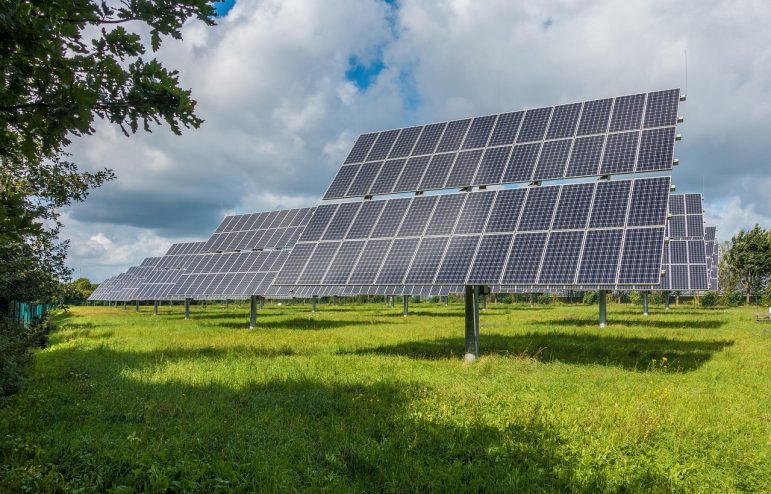
Particularly in states like Ohio and Wisconsin, work to expand renewable energy, including utility-scale solar development, is increasingly being proposed for agricultural land.
A recent study examines how such projects could be planned in ways that benefit rural communities without significantly increasing electricity costs.
Papa Owusu-Obeng, an energy researcher and engineer specializing in power system planning at the University of Michigan and the study’s lead author, said the research grew out of a broader idea to rethink how solar sites are chosen.
“Utilities do not think about how it affects local communities,” Owusu-Obeng said. “They only think about the cost, minimizing cost and not how it impacts local communities.”
Investing in solar infrastructure can bring both benefits and challenges for rural areas.
“Solar can bring a lot of benefits to local communities, and there are ways that it can also hurt local communities,” he said. Those concerns often center on farmland loss and disruptions to local agricultural economies.
The study incorporated economic benefits such as construction jobs and tax revenue, as well as negative impacts like lost agricultural productivity. When those losses were included, the positive benefits could drop by up to 16%, Owusu-Obeng said.
By balancing cost minimization with benefit maximization, the researchers found that community benefits could increase substantially without a major impact on overall costs.
Owusu-Obeng said the model showed that benefits could rise by $1 billion by 2040 while system costs increased by only a small margin.
“It doesn’t really change the costs to the developer,” he said.
Sarah Banas Mills, an associate professor of practice in urban and regional planning at the University of Michigan and a co-author of the study, said economic outcomes vary widely by county.
“In places that have big economies, those dollars recirculate because you can spend them locally,” Mills said. Smaller counties, she added, often lack the workforce or suppliers needed during construction.
Zoning and local preparedness also shape those outcomes.
Communities without clear solar guidelines may be forced into reactive decision-making, while those that plan ahead can guide development toward less productive land and achieve greater economic return, according to Mills.
The study suggests that clearer local policies can help communities better understand the tradeoffs involved in hosting solar projects.
Mills said many townships’s ordinances are silent on solar projects because it is a relatively new land use.
“It costs money to update your zoning ordinance,” she said.
Both researchers said the study shows solar does not necessarily create an economic loss for agricultural communities.
“Across these states, there is a net economic benefit associated with solar,” said Mills.
Owusu-Obeng added that more intentional planning could improve acceptance and equity.
“We can plan utility-scale solar systems more equitably,” he said, “in a way that benefits communities and also meets decarbonization goals.”
Rather than treating community impacts as a secondary thought, the researchers argue that incorporating local economic outcomes into planning models can meaningfully change where a solar facility is built.
The study appeared in the journal Science Direct.