By Emilio Perez Ibarguen
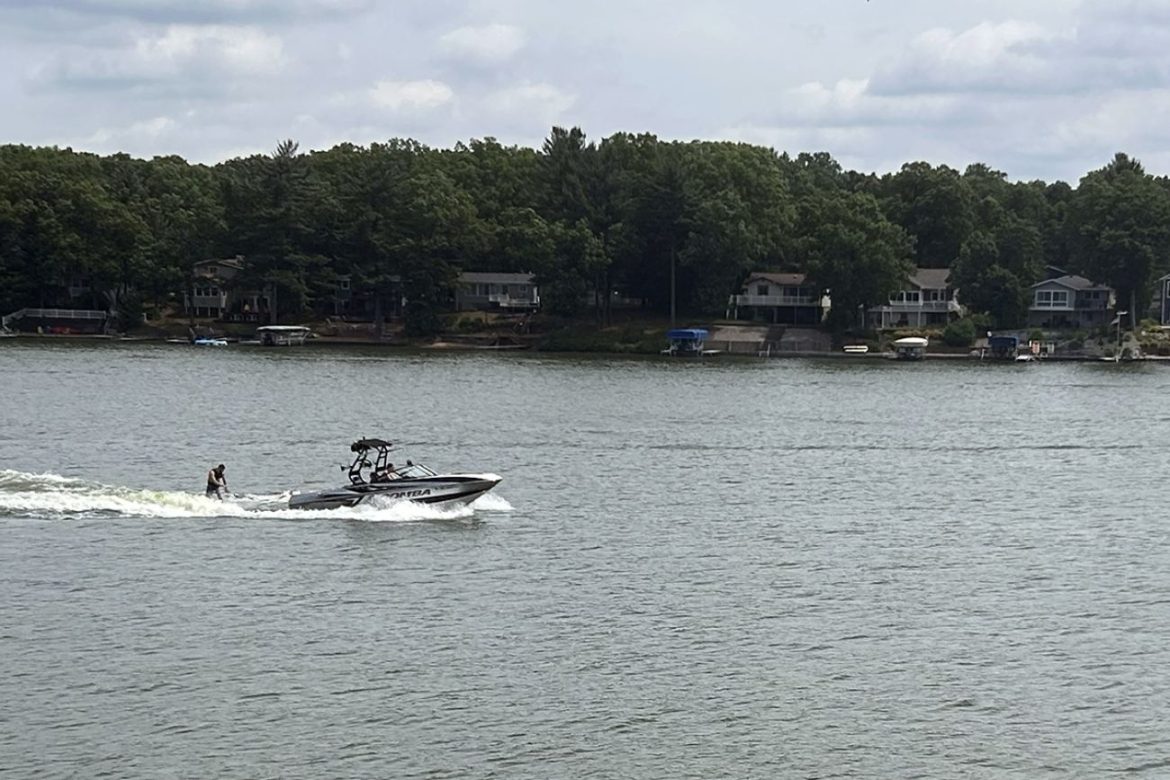
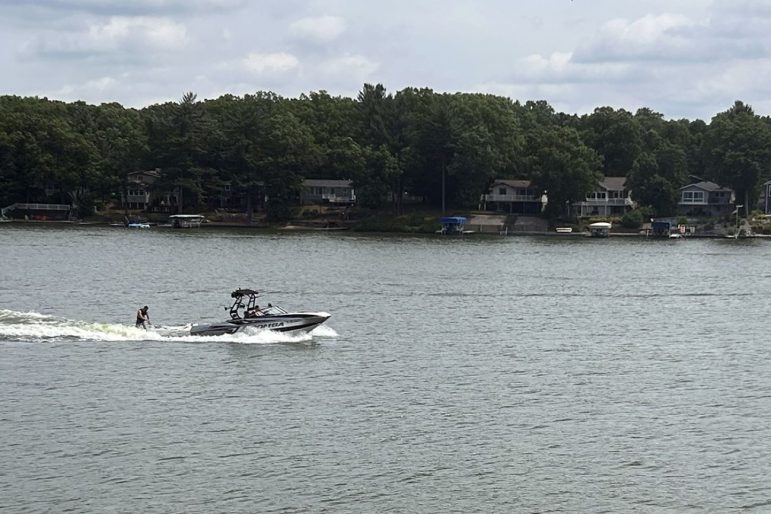
Standing on her deck overlooking scenic Brooks Lake, Sarah Cain spotted a wake boat carving
slowly across the water while a man surfed behind it.
About 45 seconds later, the resulting waves crashed into Cain’s shore.
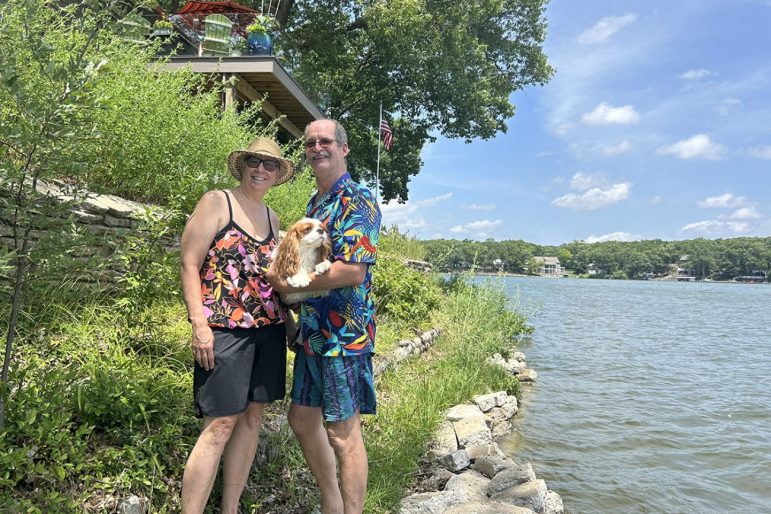
“Eventually, this whole space will erode,” she said. “Every year, we see more and more of it
gone.”
Cain and her partner, Brian Bradcoski, moved to the 293-acre lake four years ago. Since then,
they’ve grown frustrated with the damage they say wake boats cause to their shoreline and the
lake that is about 35 miles northeast of Muskegon.
Now, they and other homeowners and environmental groups are pushing for reforms to restrict
the crafts to deeper areas far from shore, aligning Michigan law with existing guidance from the
Department of Natural Resources.
A handful of states including Maine, Vermont and Tennessee in recent years have passed laws
limiting wakeboarding to specific areas or deeper waters, while a push to do so in Michigan last
year was dead in the water in Lansing.
Wake boat enthusiasts say they’re being scapegoated for a larger problem.
“There’s going to be a wake on the water regardless of what boat you have,” said Christian
Bethea, a student at Michigan State University and past president of the school’s wakeboarding
club. “The wake boats definitely amplify it, but we follow all the laws.”
Summer fun comes at a cost
Wake boats are a type of powerboat with an inboard motor, designed to create big waves for
wakeboarding and surfing.
Fans say they’re fun and safe, but some studies have concluded they can destroy aquatic plants
and stir up sediment in small, shallow lakes, causing once-buried nutrients like phosphorus to
reenter the water column.
That can increase the likelihood of unhealthy algae blooms on the lake surface and reduce fish
populations, said DNR Fisheries Division Chief Randy Claramunt.
“These lakes are just not conditioned to experience those kinds of wave forces,” he said.
And some lakefront residents say the strong waves damage property and endanger kayakers and
paddleboarders, too.
Many have responded by armoring their shores with seawalls or rock barriers to prevent further
erosion, piling one environmental problem on top of another. Experts say such armoring worsens
erosion by deflecting waves onto unprotected surfaces.
That concerns Melissa DeSimone, executive director of the Michigan Lakes and Streams
Association, who sees it as a cascading environmental problem caused by the boats.
“It’s going to cause runoff issues, it eliminates habitat or near shore critters like young fish and
amphibians,” she said.
Amid outcry from wake boat opponents last year, some lawmakers proposed depth and lake size
restrictions applying to the boats. The effort failed amid opposition from boaters and the boating
industry who argued the restrictions could be a slippery slope toward restricting other watercraft.
“That’s going to affect pontoons, that affects jet skis, that affects basically any ski boat that was
sold since 1997,” said Whitney Burnash, the director of operations at Silver Spray Sports, a boat
store in Fenton.
The boating industry disputes that wake boats cause environmental harm, pointing to their own
research that contends wakes caused by the boats “dissipate faster than typical boat wakes” and
“increase the amount of oxygen in the water which is beneficial for aquatic ecosystems.”
Old sport, new tech
Unlike past generations of speedboats used in water skiing, modern boats displace far more
water. Equipped with ballast tanks to add weight, the boats sink deep, enabling them to generate
bigger waves.
Sales of the boats skyrocketed during the coronavirus pandemic, as shutdowns of public places
fueled an outdoor recreation renaissance, said Nicki Polan, executive director of the Michigan
Boating Industries Association.
Boat dealerships nationwide sold 13,900 inboard wake sport boats in 2021, a 24% increase from
just two years prior, according to the National Marine Manufacturers Association.
Michigan overall has about 830,000 registered boats, according to industry records, but it’s
unknown how many are wake boats because the Michigan Secretary of State categorizes all
inboard boats together.
Enthusiasts like Bethea, the MSU student, relish the water-based recreation for its thrills and the
social scene.
After joining Wake Club his freshman year, “I was on the boat, like, every day in my first
semester of college,” he said.
Lake problems
For the big waves caused by wake boats to dissipate as quickly as waves from other boats, wake
boats would need more than 500 feet of water from the shoreline, researchers at the University of
Minnesota concluded in a 2022 study.
And “when these waves hit the shoreline, they do all sorts of things that would not naturally
occur or would occur with other motor boats that are used today,” said Claramunt, of the DNR.
Polan, of the boating industries association, said she’s skeptical of those findings. She pointed to
an industry-funded study that concluded wake boat waves require only 200 feet to dissipate to
normal levels. The DNR has criticized that study, which relied on a modeling method that is
inaccurate beyond distances of 100 feet.
Attempts to regulate
State law prohibits people from operating all types of boats at wake-generating speeds when
within 100 feet of the shoreline and in waters less than 3 feet deep.
But wake boat foes want that buffer zone expanded.
In 2023, the DNR concurred, calling for boats operating in wake-surfing mode to be at least 500
feet away from any docks or shorelines and only in waters at least 15 feet deep.
Such a change would require legislative approval, and last year state Rep. Julie Rogers, D-
Kalamazoo, sponsored a bill to require motorboats with “wake-enhancing equipment” to stay
500 feet from shore and in water 20 feet deep.
That would put many smaller lakes in Michigan off-limits to wake boats, including the one on
which Cain and Bradcoski live. In the only part of the lake deeper than 15 feet, a wake boat
cannot get further than 450 feet from shore.
The bill never made it out of committee. Michigan has 11,000 inland lakes.
Polan, the boating advocate, argued more regulations on wake boats are unnecessary because
“user issues come from users, not boat types.”
A Water Sports Industry Association campaign advises boaters to stay at least 200 feet away
from the shore and avoid repeat passes over the same stretches of water.
Polan says that an education-based approach is enough.
On Brooks Lake, Bradcoski and Cain are still hoping for action. Last year, they purchased a
$14,000 boat lift to protect their pontoon from getting banged up when wake boats pass.
“This isn’t the appropriate lake for them,” Cain said.
Emilio Perez Ibarguen has an environmental reporting internship under the MSU Knight Center
for Environmental Journalism’s diversity reporting partnership with the Mott News
Collaborative in cooperation with Capital News Service. This story was produced for Bridge
Michigan.