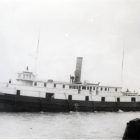
Great Lakes coal shipments are down
Shipments of coal on the Great Lakes have gone down recently after a storm near Duluth, Minn. temporarily shut down one of the busiest energy terminals in the region.
“The shut down had a major impact,” said Glen Nekvasil, vice president of the Lake Carriers’ Association, an organization that represents American operators of multiple Great Lakes cargo ships. “The coal trade in June was 2.6 million tons, a decrease of almost 10 percent compared to May and a 13 percent decrease compared to a year ago,”
The Superior Midwest Energy Terminal shut down on June 19, and did not resume loading until July 8., Nekvasil said. The nearly three-week shut down was a result of severe flooding from the storm, which damaged a lot of the loading equipment.
Superior Midwest Energy is the largest energy terminal on the Great Lakes, Nekvasil said. Of the 2.6 million tons of coal traded in June, 1.2 million tons went through the Superior Midwest Energy Terminal, according to a report by the Lake Carriers’ Association.
A number of other factors also contributed to this year’s decrease in coal shipments on the Great Lakes, Nekvasil said.
Ontario is moving toward banning the use of coal for power generation, Nekvasil said. “So we’ve been seeing a decrease in the coal trade as Canadians are switching to other fuel services,” he said.
Nekvasil also attributes the decrease in coal shipments to the lack of dredging Great Lakes harbors. Dredging helps maintain the depths of waterways so cargo ships can successfully pass through.
Shallow passages means ships cannot be loaded as heavily.
“Our largest ships are designed to carry more then 70,000 tons each trip, but the Great Lakes ports and waterways have not been dredged adequately for a number of years, and as a result they are not carrying full loads.” Nekvasil said.
The U.S. Army Corp of Engineers oversees dredging. The Army Corp needs about $200 million to get the Great Lakes’ ports and waterways back to where they need to be, Nekvasil said. Although the agency has sufficient money for dredging in the Harbor Maintenance Trust Fund, Nekvasil said most of it goes elsewhere to balance the federal budget.
“The problem is the government only spends about one of every two dollars they collect for dredging,” Nekvasil said.
Members of the Lake Carriers’ Association are working to pass legislation that would allocate that money back to dredging.
Total coal shipments on the Great Lakes have decreased every year since 2007, according to a report from the Lake Carriers’ Association. Year-to-date coal shipments for 2012 totaled 8.9 million tons. For 2011, coal shipments totaled 9.6 million tons.
The association will most likely release the coal shipment report for July in mid-August.


The coal shipments to Muskegon will be less after 2015 when they close the dirty BC Cobb Power faciltiy on Muskegon Lake.
Like or Dislike:
1
1
Note the planned $200 million for Army Corp of Engineers dredging is paid with our tax dollars. While this will help all shipping, it is another subsidy to coal. There are many tax and infrastructure subsidies for coal which probably exceed the PTC wind receives per MW.
Also, this Superior Midwest Energy Terminal is owned by Midwest Energy Resources Company (MERC), a wholly owned subsidiary of Detroit Edison Company and BNSF Railway. They have great plans to ship PRB coal to Europe through this terminal the Great Lakes. http://www.midwestenergy.com/cms_uploads/reports/In%20The%20News/MERC_opens_a_new_market_Nov_2011.pdf
Like or Dislike:
1
0
I can’t be more pleased of the news. Further closings for what ever reason will only help the environment.
Like or Dislike:
2
0
Leave your response!
Interact
Special Reports
Recent Comments
“I am fascinated with the photos and...”
“Sunken Treasure”: Documentary explores Great Lakes shipwrecks, promotes respectful diving
“What these young ladies are doing is valuable, however it...”
Aspiring policymakers hit the road to learn about climate change adaptation
“When will it be screening in Duluth, Minn. and at Michigan Technological University?”
Fifty Lakes, One Island: Exploring Isle Royale
“There is no comparision between that which is lost by not succeeding, and that which...”
Spring brings fish stocking, regulation changes
“To see someone create and enact their dreams is inspiring. Desort makes it look easy...”
Fifty Lakes, One Island: Exploring Isle Royale
GLIN News archive
Submit a story
Great Lakes Tweets
Other Resources
Most Commented
Who We Are
Great Lakes Echo is a project of the Knight Center for Environmental Journalism at Michigan State University.
Additional content provided by MSU's Capital News Service.
Technical assistance by MSU's Department of Telecommunications, Information Studies and Media with support from the Michigan Agricultural Experiment Station.