Wildlife

Ohio’s Department of Agriculture to treat Gypsy Moth
|
Parts of Ohio will be treated to slow the spread of the destructive gypsy moth early this spring.
Great Lakes Echo (https://greatlakesecho.org/tag/insects/page/5/)
Parts of Ohio will be treated to slow the spread of the destructive gypsy moth early this spring.
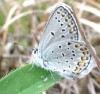
Heavy snowfall is proving to be helpful for some of Michigan’s endangered species, like Karner blue butterflies.
A recent University of Wisconsin study looked at whether genetically modifying poplar trees to more easily produce ethanol could also make them vulnerable to insect pests.

While homeowners may not be thrilled with Asian lady beetles, researchers are examining how the beetles control aphids, a pest that eats away at soybeans and other plants.
MSU entomologist Rufus Isaacs talks about declining bee populations, and that Michigan bees that pollinate the state’s blueberry, cherry and apple crops.

Scientists are using small, dead animals to trap the endangered American burying beetles. They are raising the beetles in Ohio and introducing them into forests. Other researchers are looking for them in Michigan.

It’s a complex world. How best to explain it? That’s the challenge facing journalists — particularly those who cover the environment. Technology increases our communication tools. But can we also use less techy techniques?

Insecticides used on corn and soybeans are linked to honeybee colony deaths. But there may be other factors to blame.

A small, aphid-like insect was recently found infesting a stand of hemlock trees in south central Ohio and has increased fears that it is spreading.
Researchers are increasingly recruiting different wasp warriors in the battle against the emerald ash borer, a destructive, tree-eating beetle that has infiltrated the entire Great Lakes region.
Costly insecticides, tree-removal strategies and bans on moving firewood have provided some defense against the critter.
But a bug-on-bug battle strategy appears to hold promise.