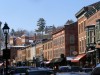
Great Lakes region has some of best small towns

Three Great Lakes locales are listed by Business Insider as among the 10 best small towns in America. Traverse City, Mich., Door County, Wis. and Galena, Ill. are among those recognized March 31 for unique atmospheres, charming shops and restaurants and scenic beauty. “In a time when “authentic” is a travel buzzword, these hamlets are attracting visitors with an often unexpected–and surprisingly sophisticated–array of independent and locally-minded cultural, outdoor, and culinary offerings,” reports Business Insider, a business and technology news website.


Wolf hunting weighed in Michigan

Michigan and other Great Lakes states are weighing wolf hunting seasons.

Michigan wolves, numbering less than 1,000, were taken off the Michigan endangered species list in December.

Youth symposium highlights Great Lakes stewardship, research

For four days in May, the Lake Superior Youth Symposium will bring students, teachers and scientists together to promote better stewardship of the Great Lakes. The symposium starts May 16 in Houghton, Mich. at Michigan Technological University’s Great Lakes Research Center. The goal of the symposium, now in its 10th year, is to work with middle and high school students and their teachers to improve their understanding of environmental science and encourage the conservation of the Great Lakes. Attendees participate in hands-on workshops, challenge courses and art and music programs that highlight careers aimed at protecting the Great Lakes.

Where’s the Concern? Week 11

Each week, Great Lakes Echo features a photo story about a different Area of Concern designated by the U.S. or Canadian governments in the Great Lakes basin. Guess where the area is located, based on the description of the site.

Photo Friday: Snow moon over Lake Ontario

According to photographer Rick Stankiewicz, February’s full moon is called the snow moon, signaling the deepest snows of winter in the Northern Hemisphere. On February 25, the moon rose over Lake Ontario’s Bay of Quinte, witnessed by Stankiewicz and his friends while ice fishing for walleye. This photo was contributed to Earth Science Picture of the Day, a service of NASA’s Earth Science Division and the Universities Space Research Association.

Dredging can churn up historical contaminants

Though low water levels in the Great Lakes make it necessary, dredging can harm the ecosystem by stirring up contaminanted sediment, exposing chemicals such as arsenic and PCBs.

Eating carp and catfish that have been exposed to such toxins puts both humans and predatory fish at risk.