Land

Restoration success and work in progress: Illinois
|
In this series, Echo samples successful and ongoing restoration projects in each Great Lakes state.
Illinois projects include cleaning up Waukegan Harbor and statewide efforts to contain
Great Lakes Echo (https://greatlakesecho.org/tag/echo/page/37/)
In this series, Echo samples successful and ongoing restoration projects in each Great Lakes state.
Illinois projects include cleaning up Waukegan Harbor and statewide efforts to contain

by Lacee Shepard
Local officials could restrict ownership of carrier pigeons on a community—by-community basis under a new Michigan proposal. Sen. Hoon-Yung Hopgood , D-Taylor, introduced a bill that would allow cities and townships to decide their own restrictions on carrier pigeons. The bill began after Hopgood received a constituent complaint about a neighbor owning too many carrier pigeons. “We thought we should give the cities the ability to do what make sense for a given community,” Hopgood said. “Then they can look out for the health and welfare of local residents.”
The proposal wouldn’t allow a local ban on the bird but would allow local governments to impose a limit on ownership if they see fit, Hopgood said.

A Department of Natural Resources (DNR) early warning program is trying to prevent the invasive species frog bit from destroying native aquatic plants.

A football stadium may have green grass but does it have green habits? Each week, Great Lakes Echo highlights a Big Ten football stadium’s attempts to do the most to impact the environment the least. All schools have information on the stadium’s diversion rate – the amount of waste recycled instead of put in a landfill. Stadium: Michigan Stadium (“The Big House”)
School: University of Michigan
Built: 1927
Capacity: 107,521
2012 diversion rate: 22.7 percent. Scouting report: Recycling efforts at the stadium began almost 20 years ago in 1994, and the University of Michigan currently has the biggest stadium recycling program in the nation.
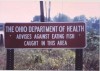
In this series, Echo samples successful and ongoing restoration projects in each Great Lakes state.
Ohio projects include saving the rare Lake Erie watersnake and the removal of the Euclid Creek dam.

Gary Wilson takes a look at some of the common myths surrounding the Great Lakes and how they have come to be perceived as realities.

Better rules for sustainable fish farms could provide the state with a $1 billion a year industry, says a coastal conservation research group called the Michigan Sea Grant.

Smart meters are easy to read and an accurate way of measuring how much electricity is used by utility customers.
The Michigan Public Service Commission recently approved rules to control how data collected by the meters is used.
But some customers worry that the meters are a technological invasion of privacy.
Mr. Great Lakes (Jeff Kart) reports from Bay City, Michigan’s Delta College Q-90.1 FM. Nov. 29, 2013 – Mr. Great Lakes – Jeff Kart by jeffkart
This week, Kart discusses the savings of energy efficiency in Michigan, the Electric Reliability Project and avian botulism. Text at Mr. Great Lakes