Researchers study how climate change chases fish from streams

Facing an inhospitable habitat, fish have to move or die, says Bryan Pijanowski of Purdue University. “Some of the fish live in aquatic systems that are completely compartmentalized – they’re dammed off,” he says. “So they can’t move.”

Great Lakes governors attend White House carp summit

Michigan environmental agencies hope Monday’s White House Asian carp summit will prompt the closing of the Chicago Sanitary and Ship canal to the invaders.

We want “to keep the carp out of the lakes, protect the $7 billion Great Lakes fishery and nearly a million Michigan jobs,” said Nick De Leeuw, a public information officer for Michigan Attorney General Mike Cox.

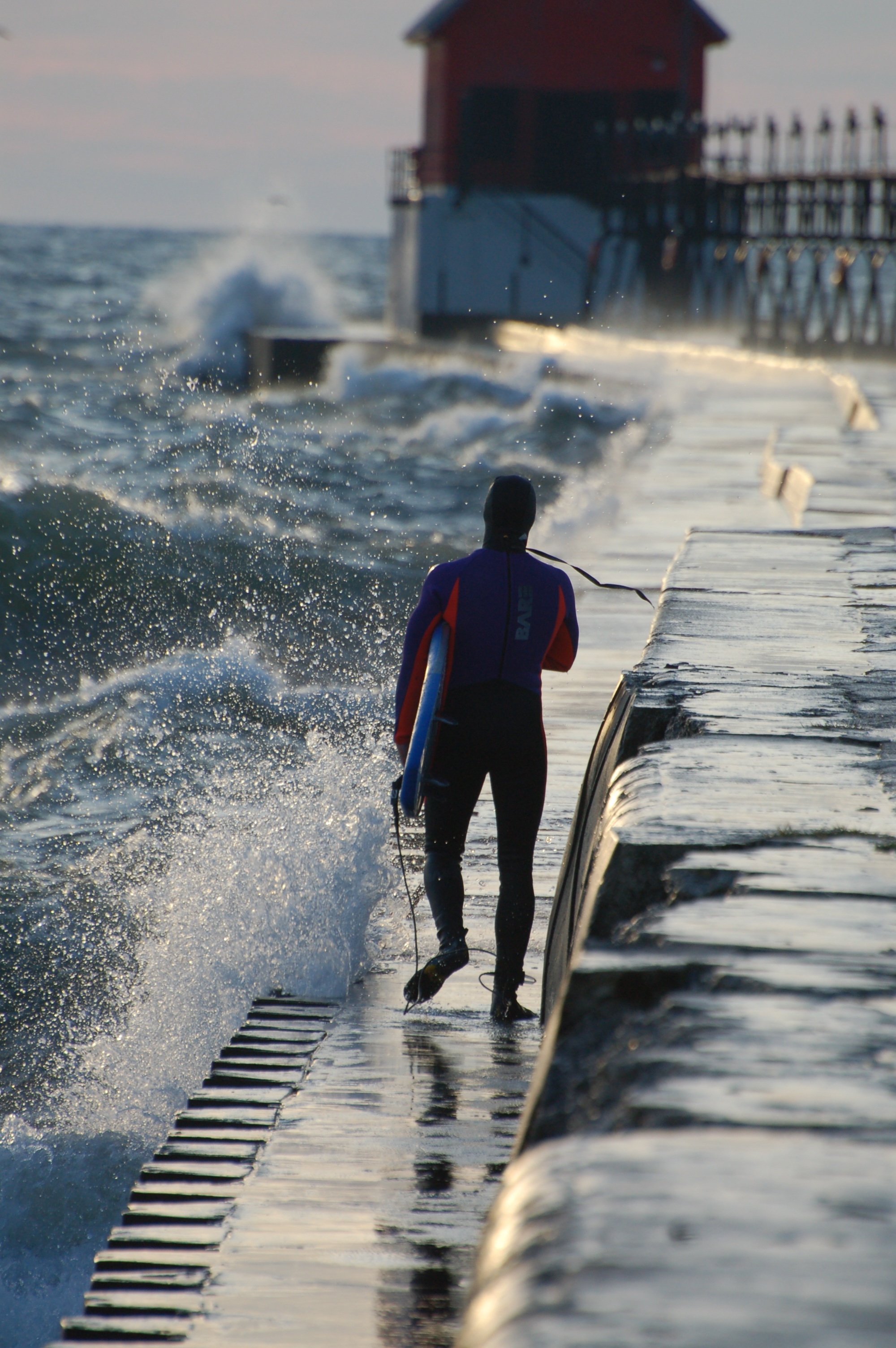
VIDEO: Freshwater surfers are Great Lakes activists

Last February, Deur was asked by the Healing Our Waters Coalition, a group working to restore the Great Lakes, to lobby in Washington, D.C. on Great Lakes Day. He was the only surfer among 100 business leaders, lobbyists and activists discussing the restoration and protection of the lakes on Capitol Hill.

Climate change may spur northward advance of Great Lakes invaders

Amid concern and confusion over Asian carp possibly finding their way into the Great Lakes, many experts involved in the controversy agree that other invasive species are likely to show up too.

Non-native wildlife are common in the Great Lakes, with more than 140 species living in them. Sea lampreys were first found in Lake Ontario in the 1830s.

Robot week: Remote-controlled Stealth II reveals nearshore landscape

Editor’s note: This is the third in a series of stories on how new technology is  giving researchers a glimpse of the critical nearshore area of the Great Lakes. With researchers hunched over remote controls, operating the Stealth II looks more like playing a video game than doing science. The Environmental Protection Agency purchased the underwater vehicle in May 2009. Using a hand control, agency scientists can operate the Stealth II as it hovers at various depths of the Great Lakes’ nearshore. The Stealth II’s camera allows scientists to map the bottom of nearshore areas and better understand habitat types.

Robot week: Triaxus reveals Great Lakes sunken ships and data treasures

Editor’s note: This is the second in a series of stories on how new technology is giving researchers a glimpse of the critical nearshore area of the Great Lakes

One of the Environmental Protection Agency’s newest members uses side-scan sonar to look at the watery depths of Lake Michigan. Fanning its sound waves down to the lake floor, it searches for the returning signals bouncing off the bottom in search of bounty–it found a shipwreck last year. But the Triaxus Towed Undulator does more than treasure hunts. Beneath the water, it glides behind the Lake Guardian, the agency’s research vessel. With its quick data collection, the agency can do in days what would otherwise take a year, said Glenn Warren, team leader for the agency’s environmental monitoring and indicators group in the Great Lakes National Program Office.
Nearshore navigators

Wednesday:  Triaxus reveals Great Lakes sunken ships and data treasures

Thursday: Stealth II’s underwater camera watches the lake bottom

Friday: Lure of data prompts buoy arms race

A tale of three cities: Winners of the GM cleanup lotto are more like survivors

By Brian Laskowski, Shawntina Phillips and Jeff Gillies
Jan. 21, 2010
Editors note: This is part three of a three-day series on the environmental implications of GM’s bankruptcy. Massena, Flint and Bedford are three towns that rose in the industrial might of the General Motors manufacturing era. Now Motors Liquidation Co., the company that owns GM’s worst assets, is preparing to close the door on the automaker’s legacy in these cities. But before it leaves, Motors Liquidation or GM must account for decades of pollution at former factories and waste sites.